Hospitality Technology Trends in India 2025–2026: What Hotels Must Know
Explore the hospitality technology trends shaping Indian hotels in 2025-2026, from cloud ERP and AI-powered guest communication to voice ordering, direct bookings and revenue management.
 By Anjali Daksh·August 4, 2026
India's hotel industry is at an inflection point. After the demand rebound post-2022, Indian hotels are now investing in technology at a pace not seen before, driven by rising guest expectations, the push for operational efficiency, and the arrival of AI-powered tools that were inaccessible just two years ago. Here are the hospitality technology trends India that will define hotel operations through 2025 and into 2026.
1. CLOUD ERP REPLACING LEGACY PMS SYSTEMS
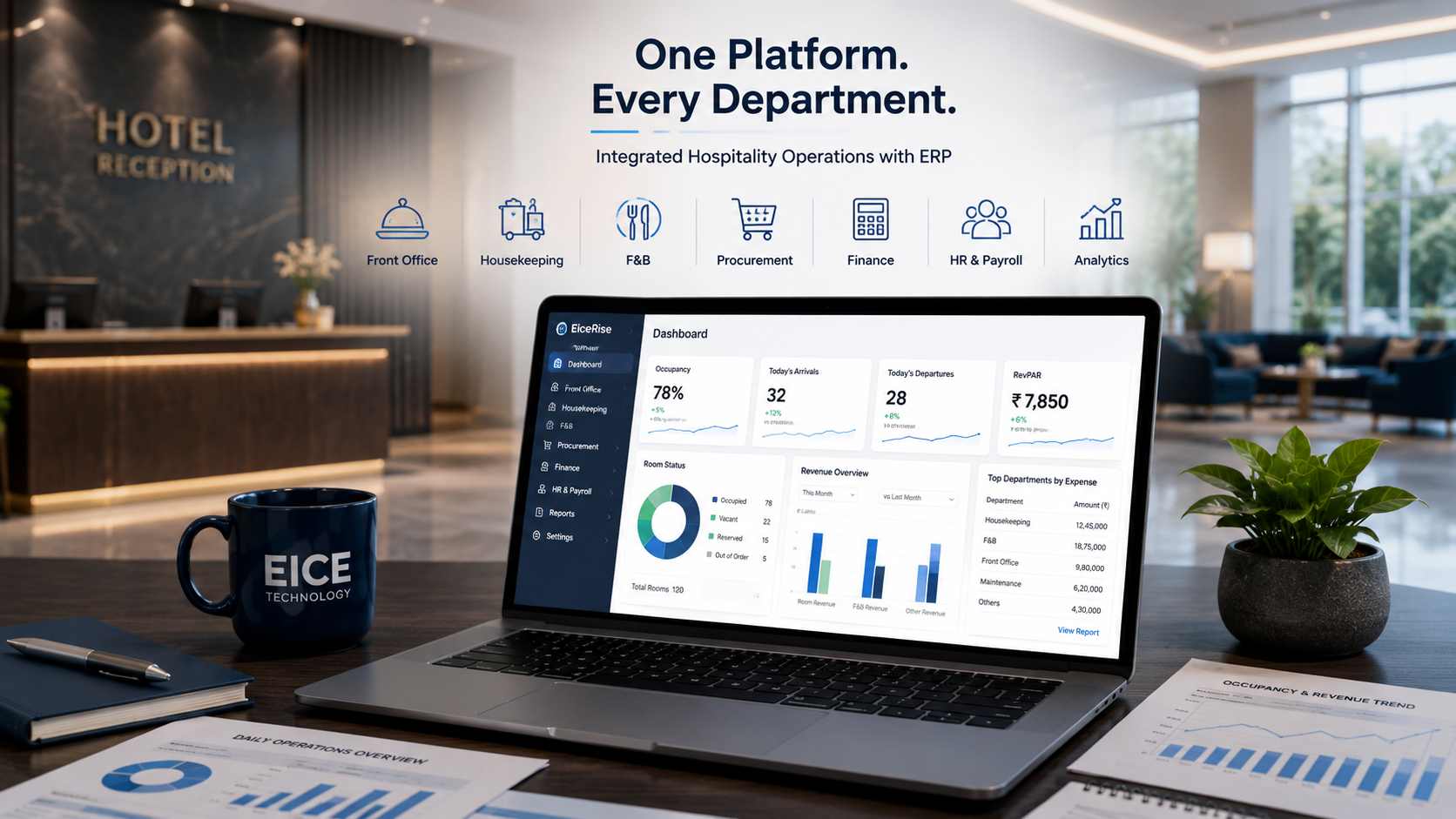
The shift from on-premise hotel software to cloud-based hospitality ERP India is accelerating across all property categories. Hotels are moving to cloud platforms that combine PMS, F&B, procurement, and finance, eliminating the IT overhead of local servers and enabling real-time access from any device. For independent and mid-market Indian hotels, this shift is now financially accessible for the first time.
2. AI-POWERED GUEST COMMUNICATION
Indian hotels are deploying AI agents for guest communication, handling pre-arrival messages, room upgrade queries, check-out reminders, and post-stay feedback collection autonomously via WhatsApp, email, and chat. Platforms like EiceAgent enable hotels to run these multi-step guest communication workflows without any manual staff involvement, at scale across multiple properties.
3. VOICE-BASED ORDER MANAGEMENT IN F&B
One of the most visible emerging trends in Indian hotel restaurants and room service operations is voice AI for order management India. Instead of traditional order-taking, guests speak their order into a device or WhatsApp voice note, and the system transcribes, confirms, and routes it to the kitchen automatically. EiceVoice brings this capability to Indian hotels, reducing order errors and saving F&B staff time on high volume meal periods.
4. DIRECT BOOKING ENGINE INVESTMENT
OTA commission rates, averaging 15-25% per booking, are now a major cost of acquisition for Indian hotels. The smart response is investing in a hotel booking engine India that converts website visitors to direct bookings. Modern hospitality ERPs include integrated booking engines that offer real-time availability, dynamic pricing, and instant confirmation without any OTA middleman.
5. REAL-TIME REVENUE MANAGEMENT
Indian hotels have historically set room rates based on gut instinct and seasonal experience. Hospitality ERP with revenue management India now offers dynamic pricing tools, adjusting rates in real time based on occupancy, competitor pricing, and demand signals, enabling even small properties to optimise ADR without a dedicated revenue manager.
6. INTEGRATED GST AND E-INVOICING COMPLIANCE
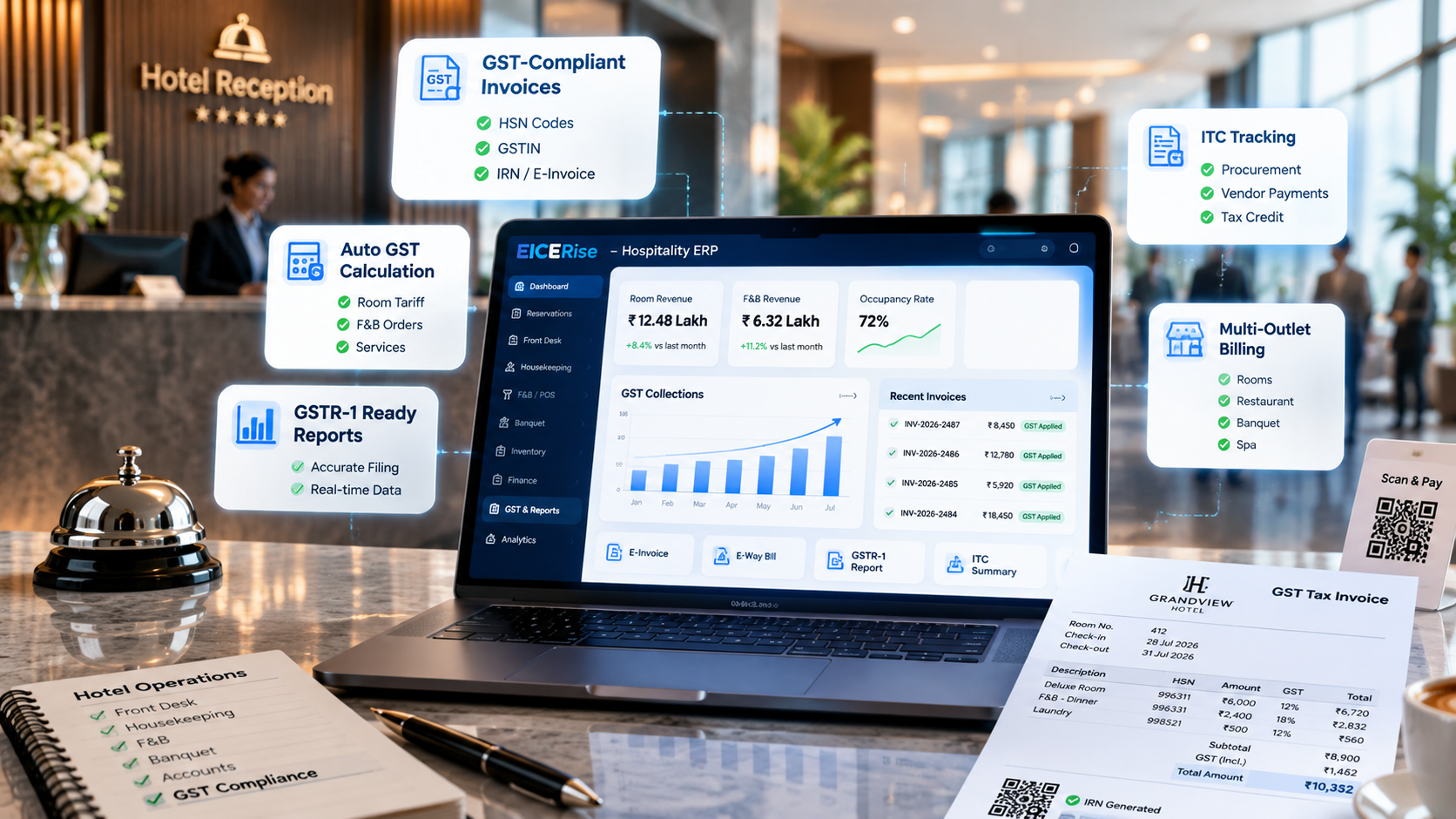
With the e-invoicing threshold now covering most mid-market Indian hotels, technology that handles IRN generation, GSTIN validation, and GSTR-1 filing automatically is no longer optional. Purpose-built hotel software with GST India is the baseline expectation for any new technology investment in 2025.
WHAT THIS MEANS FOR INDIAN HOTELIERS
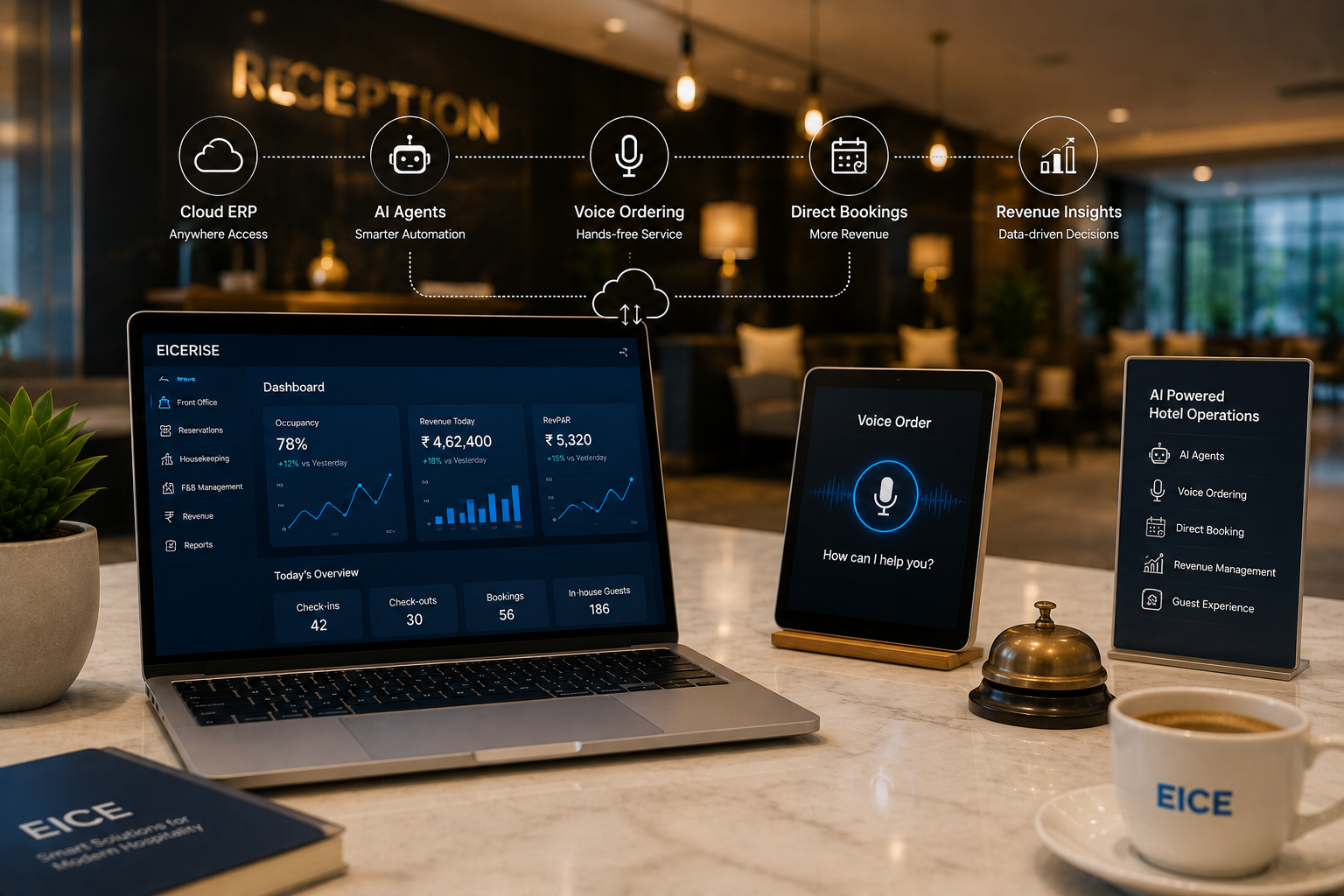
The hospitality technology landscape India 2025 is moving toward unified, AI-augmented hotel management platforms, where cloud ERP, AI agents, voice ordering, and revenue management coexist in one ecosystem. Hotels that adopt this approach early will build significant operational and cost advantages over competitors still running on disconnected legacy tools.
EICE Technology's hospitality suite, EiceRise (Cloud ERP), EiceAgent (AI automation), and EiceVoice (voice ordering), is designed precisely for this shift in the Indian market.
Frequently Asked Questions
Q. What are the top hospitality technology trends in India?
A. Key trends covered in this article include cloud-based hospitality ERP, AI-powered guest communication, voice-based F&B ordering, direct booking engines, real-time revenue management, and integrated GST and e-invoicing technology.
Q. Why are Indian hotels moving from legacy PMS to cloud ERP?
A. According to the article, hotels are moving toward cloud platforms that combine PMS, F&B, procurement and finance while reducing dependence on local servers and enabling real-time access from different devices.
Q. How are AI agents being used in hotels?
A. Hotels can use AI agents for guest communication workflows such as pre-arrival messages, room upgrade queries, check-out reminders and post-stay feedback across channels including WhatsApp, email and chat.
Q. How can voice AI help hotel restaurants and room service?
A. Voice AI can capture spoken guest orders, transcribe and confirm them, and route the order to the kitchen. The article positions this as a way to reduce order errors and save staff time during high-volume periods.
Talk to an EICE Expert
Discover the right enterprise solution tailored to your business needs.
Related in Hospitality Technology