How to Digitise Your Logistics Operations in India: A Step-by-Step Guide
Learn how Indian logistics companies can digitise operations step by step — from booking and real-time fleet tracking to E-Way Bill automation, digital POD, billing, and reporting.
 By Anjali Daksh·August 3, 2026
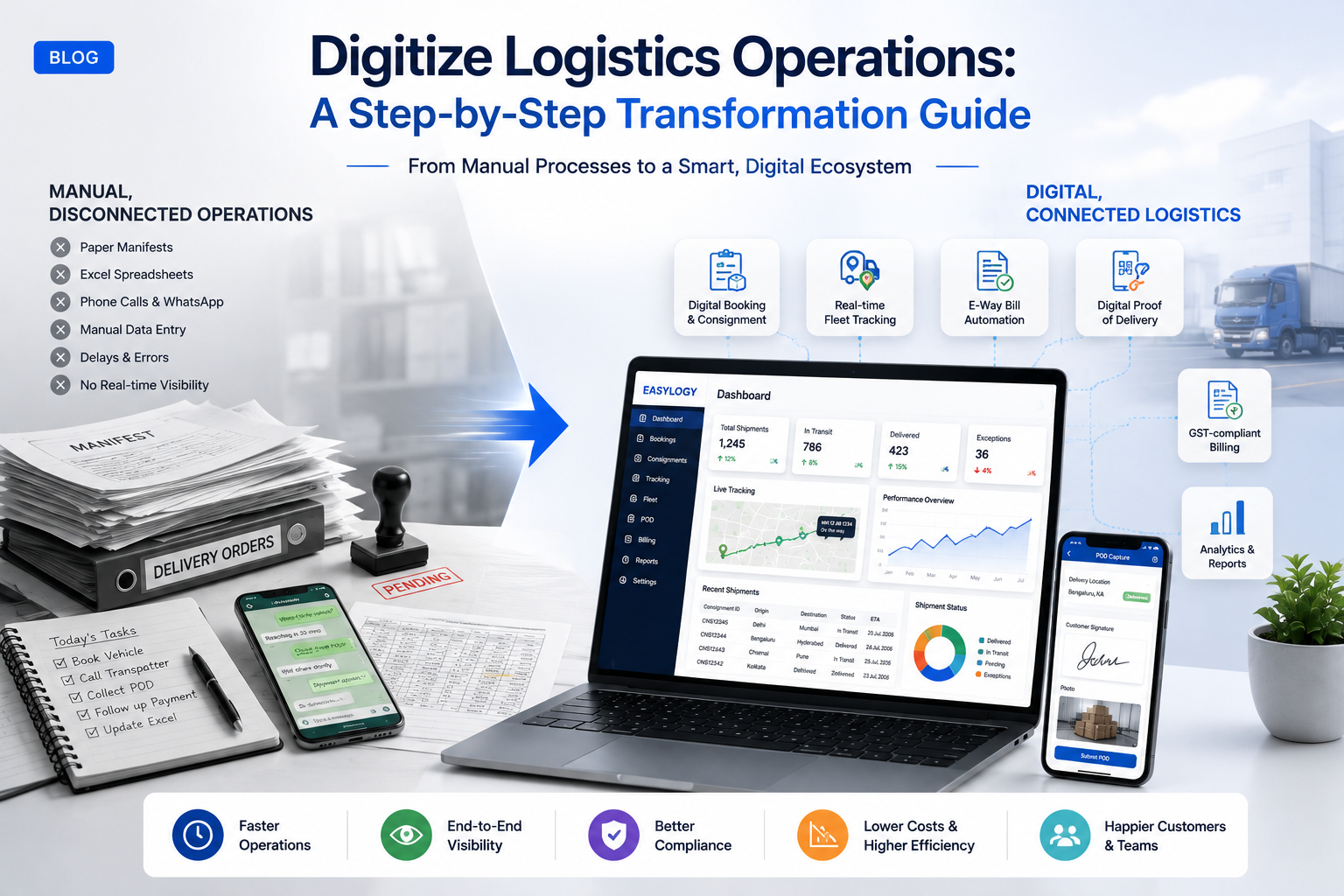
India's logistics industry is one of the most competitive and margin-sensitive in the world. Despite this, a large proportion of Indian transport, courier, and freight companies continue to manage operations through WhatsApp messages, paper manifests, and Excel sheets. The business case for digitising logistics operations India is now overwhelming, lower costs, faster billing, better compliance and real-time visibility are not advantages reserved for large corporations; they are accessible to every size of logistics business through cloud software.
STEP 1: AUDIT YOUR CURRENT WORKFLOWS
Before selecting any software, map how work currently flows, from order receipt to final delivery. Identify where data is re-entered, where delays occur, and where errors most commonly appear. Common pain points in Indian logistics companies include: manual E-Way Bill generation, paper PODs, verbal dispatch instructions, and manual invoice creation.
STEP 2: DIGITISE BOOKING AND CONSIGNMENT CREATION
Start with the source, the consignment booking. A logistics management software India captures shipment details once at the booking stage and carries them through the entire workflow. This eliminates re-entry, reduces errors, and creates a digital record for every consignment from origin to destination.
STEP 3: IMPLEMENT REAL-TIME FLEET TRACKING
GPS-based vehicle tracking is now affordable for Indian fleets of any size. Integrating fleet management software India with your operations gives dispatchers, customers, and management real-time shipment visibility, eliminating the 'where is my truck?' calls that consume hours of operations time every day.
STEP 4: AUTOMATE GST AND E-WAY BILL COMPLIANCE
Compliance automation is the highest-ROI step for any Indian logistics company digital transformation. Integrating E-Way Bill generation, GST invoicing, and FASTag data into one system removes the single largest source of operational delay and checkpoint risk.
STEP 5: SWITCH TO DIGITAL PROOF OF DELIVERY
Digital POD, captured via mobile app with photo, timestamp, and electronic signature, closes the loop on every delivery. It accelerates invoice release, reduces disputes, and provides an auditable delivery record. For Indian logistics companies processing hundreds of deliveries daily, this single change can cut billing cycles from weeks to days.
STEP 6: CENTRALISE BILLING AND REPORTING
Once your operational data is digital, billing becomes automatic. Logistics billing software India generates accurate freight invoices from live shipment data, with GST applied correctly and
management dashboards give you KPI visibility across your entire operation in real time.
EASYLOGY AND SMARTFIT: YOUR DIGITAL LOGISTICS PARTNERS
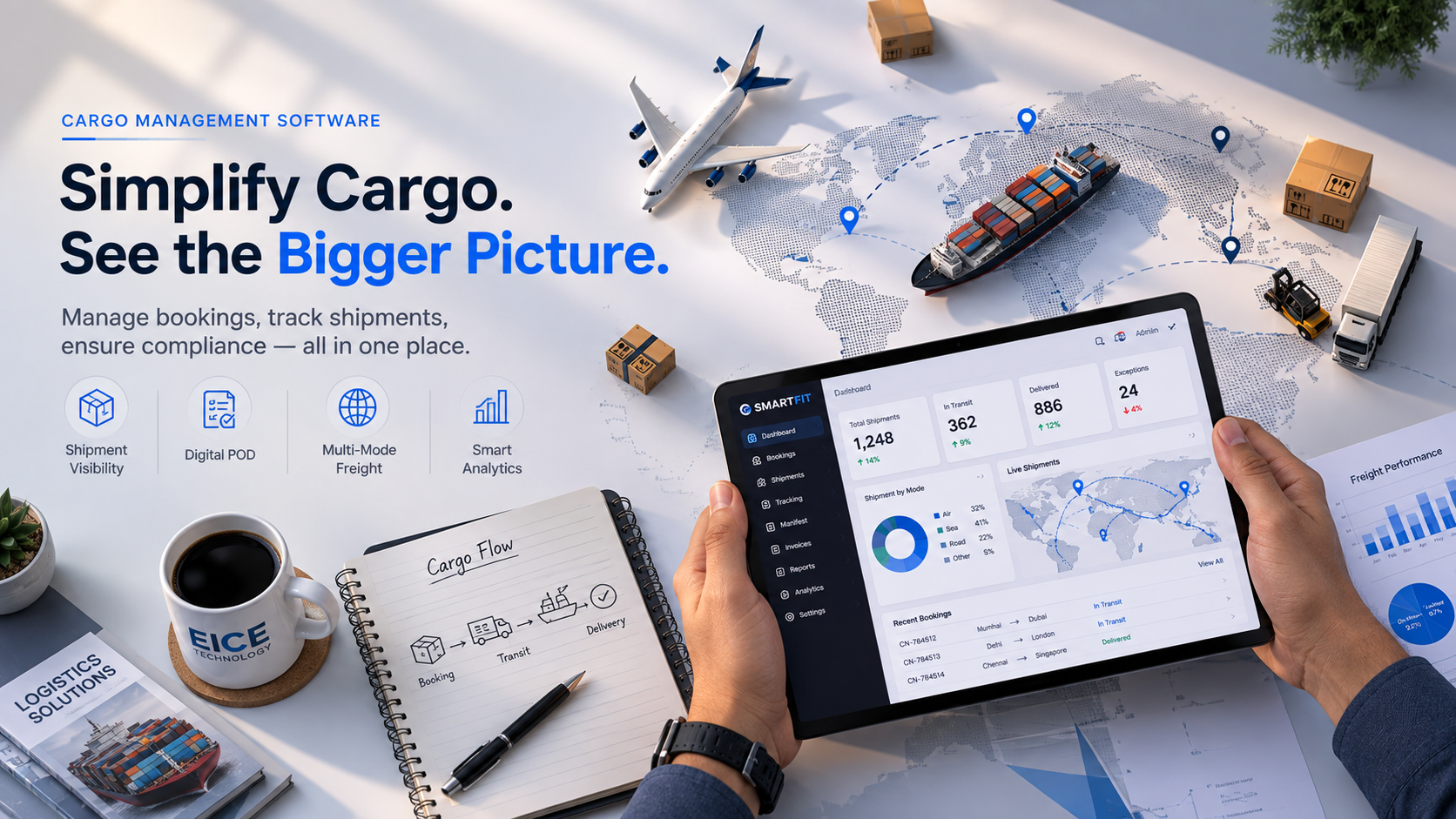
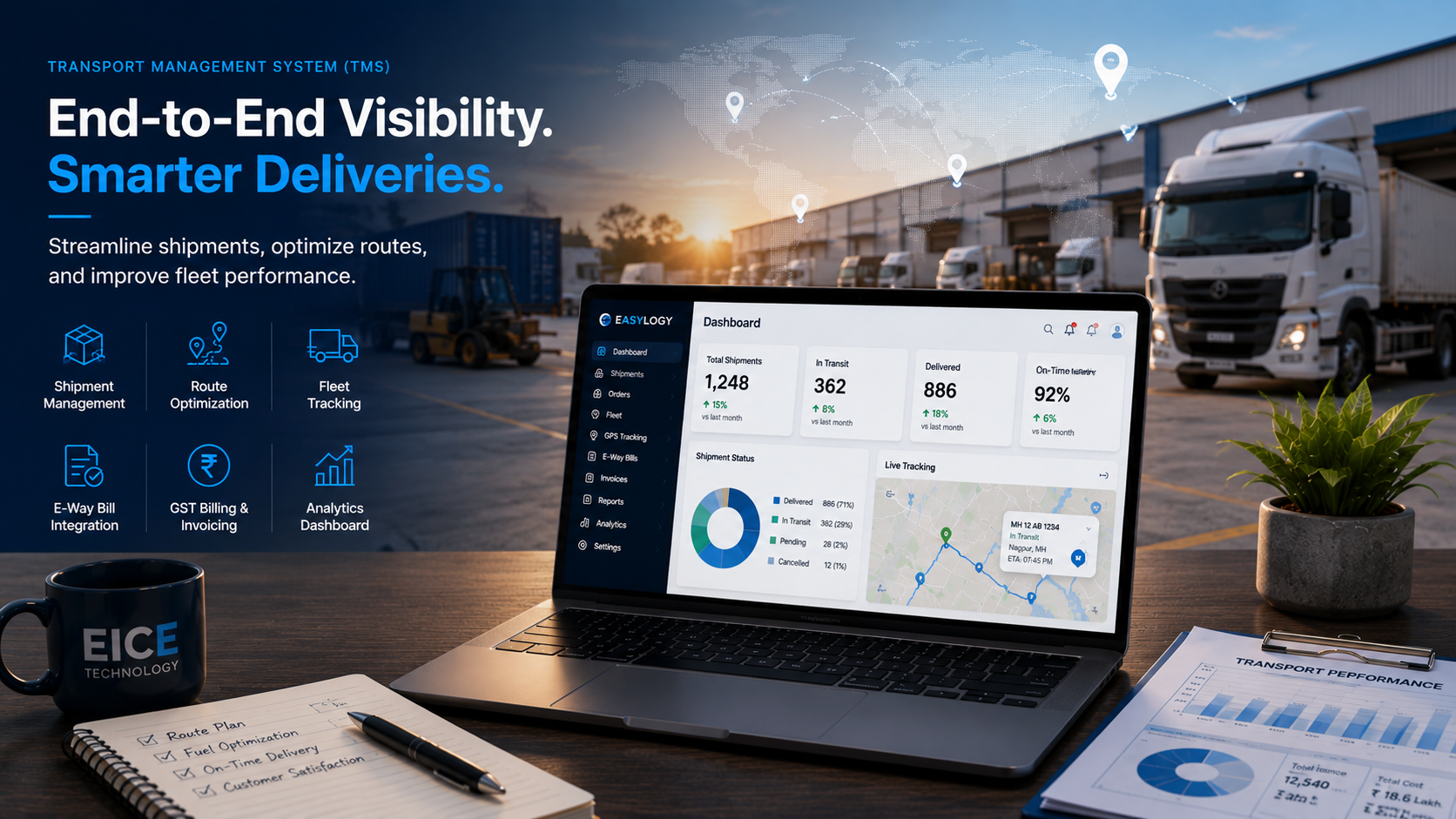
EasyLogy handles the complete road logistics digitisation workflow for Indian transport and courier companies, from booking to billing. Smartfit extends this to cargo and freight forwarding operations. Both platforms are cloud-based, GST-ready, and deployable within days, not months.
Frequently Asked Questions
Q. Where should logistics companies begin their digital transformation?
A. The first step is auditing existing workflows to identify manual processes, duplicated data entry, operational delays, and compliance bottlenecks before implementing software.
Q. Why is digital proof of delivery (POD) important?
A. Digital POD provides an electronic delivery record with photos, timestamps, and signatures, helping reduce disputes while accelerating invoice generation and payment cycles.
Q. What are the benefits of digitising logistics operations?
A. Digitisation improves shipment visibility, automates GST and E-Way Bill compliance, reduces manual errors, speeds up billing, and provides real-time operational reporting.
Digitize Your Logistics Business
Replace manual processes with a connected logistics platform that improves visibility, compliance, and operational efficiency.
Related in Logistics Technology