AI Agents vs. Automation Scripts in India: What Makes an Agent Genuinely Different
Understand the difference between AI agents and automation scripts, where each approach works best, and how enterprises can balance flexibility, cost, and risk when choosing an AI solution.
 By Ankit Rawat·Published: October 9, 2026 at 11:40 PM IST
A lot of IT and operations leaders are asking about AI Agents vs. Automation, but the problem is that some of the vendors call every AI tool an agent. This creates difficulties in understanding the difference between them. Here’s a plain way to tell the two apart, and when each one makes sense.
Indian enterprises are adopting AI fast, and agents are the next step
Deloitte's State of AI in the Enterprise 2026 report, published in March 2026, is based on its Indian findings. According to this report, 40% of the Indian respondents report significant or full use of AI, compared to the global average of about 28%, and around 94% of Indian respondents have expectations for their AI spending to increase over the next year.
Now companies are moving ahead from chatbots and pilots; a lot of them have questions about whether their current automation is enough or if they need an AI agent.
The hype needs a reality check
Gartner predicts that, by 2028, 33% of enterprises' software applications will include agentic AI. That was less than 1% in 2024. Also predicted that more than 40% of Agentic AI projects will be cancelled by 2027. The reasons will be rising costs, unclear business value, or weak risk controls. Also gave warnings about “Agent washing”. This shows that existing assistants, RPA tools, and chatbots are being presented as AI agents. It is estimated that only 130 of the thousand Agentic AI vendors are genuine. These are not just Indian numbers; instead, these are global numbers. Still, they are more relevant for Indian businesses when comparing with different options.
AI agents and automation: What an automation script or RPA bot does
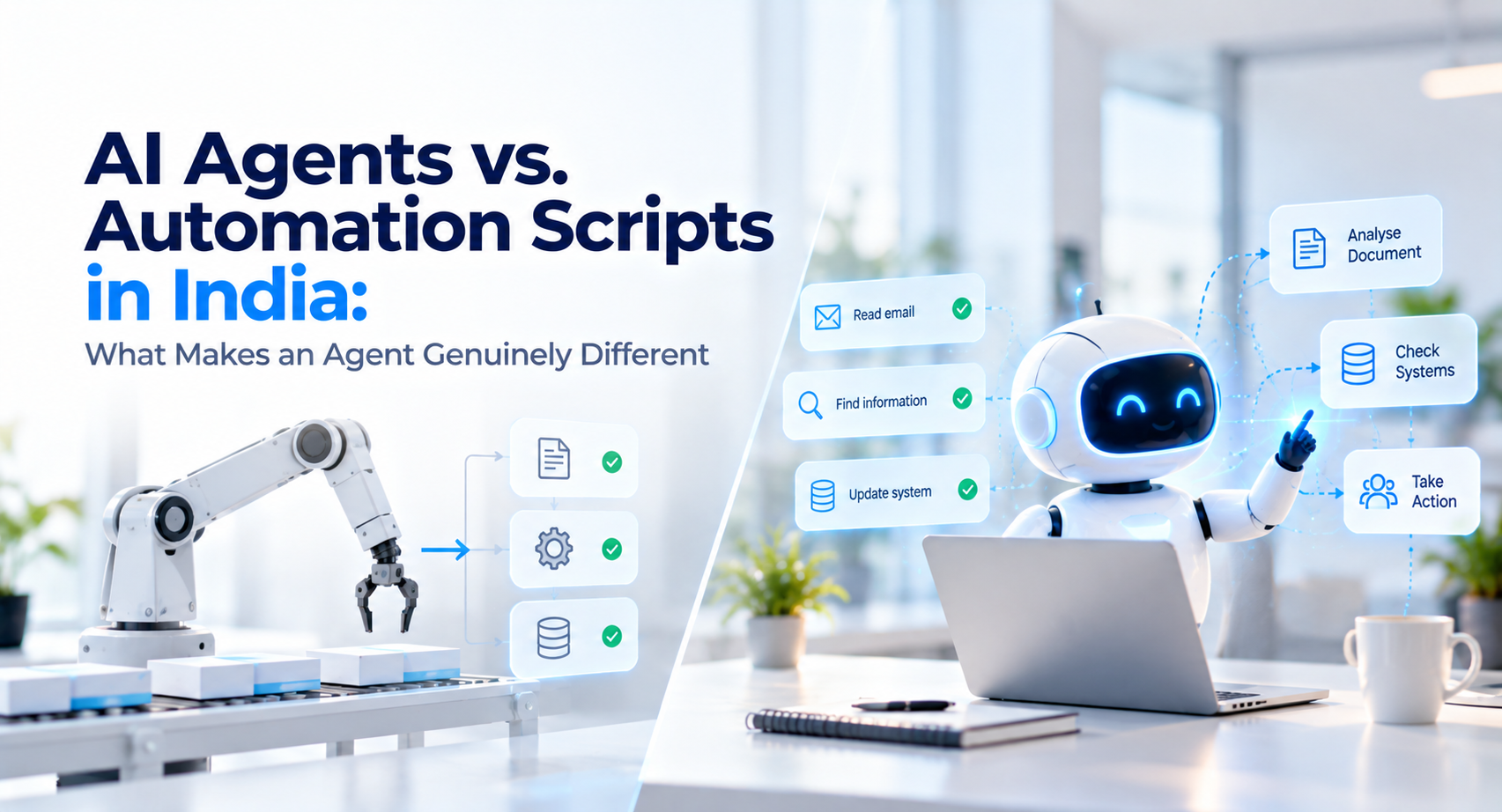
The following is our analysis, not from the reports of Deloitte or Gartner. A script or robotic process automation (RPA) bot follows a fixed process. Like, when an invoice comes in from a known source, it goes to the fields, checks them with set rules, and posts the entry. This way, it becomes faster, cheaper, and more predictable. But if something goes outside the rules, the automation stops or fails. This is what you want for stable, high-volume processes with consistent inputs.
AI agents and automation: What makes an agent different
An agent is given a goal rather than just a fixed path. This can help in deciding the steps to take, using several tools, understanding unstructured inputs like email or scanned documents, and adjusting when something unexpected happens. Like, if there is an invoice and it has a missing field, AI can look it up in the purchase order, ask the sender about the missing detail, or it can flag the issue for a person instead of simply failing. The main difference between the agent and the fixed automation is flexibility. But it has the risk that Gartner pointed to. An agent can cost more to run, is hard to predict, and needs clear limits on what it can do by itself.
AI agents and automation: A simple test for choosing
You can ask these three questions about the process:
- Are the inputs consistent every time?
- Can every decision be written as a rule in advance?
- Is a wrong action easy to undo?
If the answer is yes, a script will be better to choose. If the inputs change, decisions need judgment, or many systems are involved, an agent will be good to test. For actions that are expensive or difficult to reverse, can consider a human for approval checkpoints. Many of the businesses go for both: scripts for predictable work and agents for exceptions.
What tends to go wrong in India
Deloitte India’s data shows some of the points where AI projects face challenges. These challenges also matter when deciding how to use AI agents and automation. The top barriers were Regulatory and compliance requirements, at 39%, and then resistance to change, at 34%. According to the respondents, security and compliance controls were the top investment priority for scaling AI, at 68%. When an AI agent works with your systems and data, you need to decide from the start:
- What data can the agent access?
- What actions can it take?
- How will every action be logged?
How EICE Technology supports AI agents in India
Our AI service covers end-to-end AI development, from strategy to implementation. This includes generative AI development, machine learning and analytics, deep learning, natural language processing, computer vision, chatbots, and dataset generation. This helps businesses choose between an agent and simpler automation based on the process, instead of forcing the process to fit the technology.
If you are working out where an agent makes sense and where a script is enough, we'd welcome the conversation. See more on our services page.
Frequently asked questions
Q. What is the difference between AI agents and automation scripts?+
A. Automation scripts follow predefined instructions and rules. AI agents can work towards a goal, select actions, and use tools to handle less predictable situations, depending on their design and permissions.
Q. When should a business use traditional automation instead of an AI agent?+
A. Traditional automation is often suitable when inputs, decisions, and outputs are consistent and can be described clearly through rules.
Q. When does an AI agent make sense for an enterprise?+
A. An AI agent may be useful when a workflow involves unstructured information, multiple tools, or exceptions that cannot be handled easily through fixed rules.
Q. Can AI agents and automation scripts work together?+
A. Yes. A business can use scripts for predictable steps and an AI agent for interpreting information or handling exceptions, with human approval where necessary.
Q. How does EICE Technology support AI development?+
A. We offer AI development capabilities spanning generative AI, machine learning, NLP, computer vision, chatbots, and related implementation services.
Choose the Right Approach to AI Automation
Identify where traditional automation is enough and where AI agents can add value with EICE Technology's AI development expertise.
Related in AI & Digital Transformation
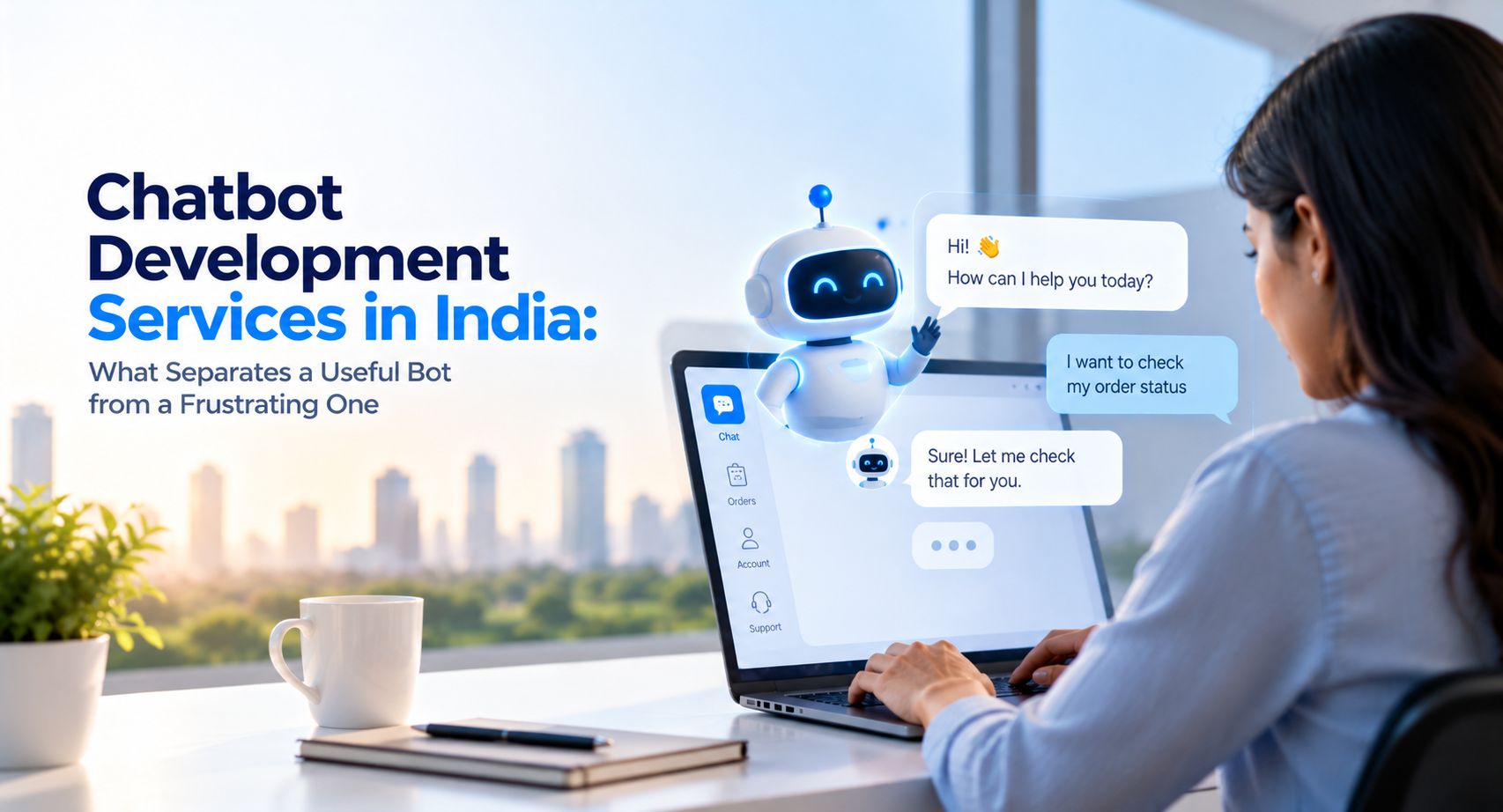
Chatbot Development Services in India: What Separates a Useful Bot from a Frustrating One
Discover what makes a business chatbot useful, from accurate answers and CRM integration to multilingual conversations, human handoffs and ongoing performance monitoring.
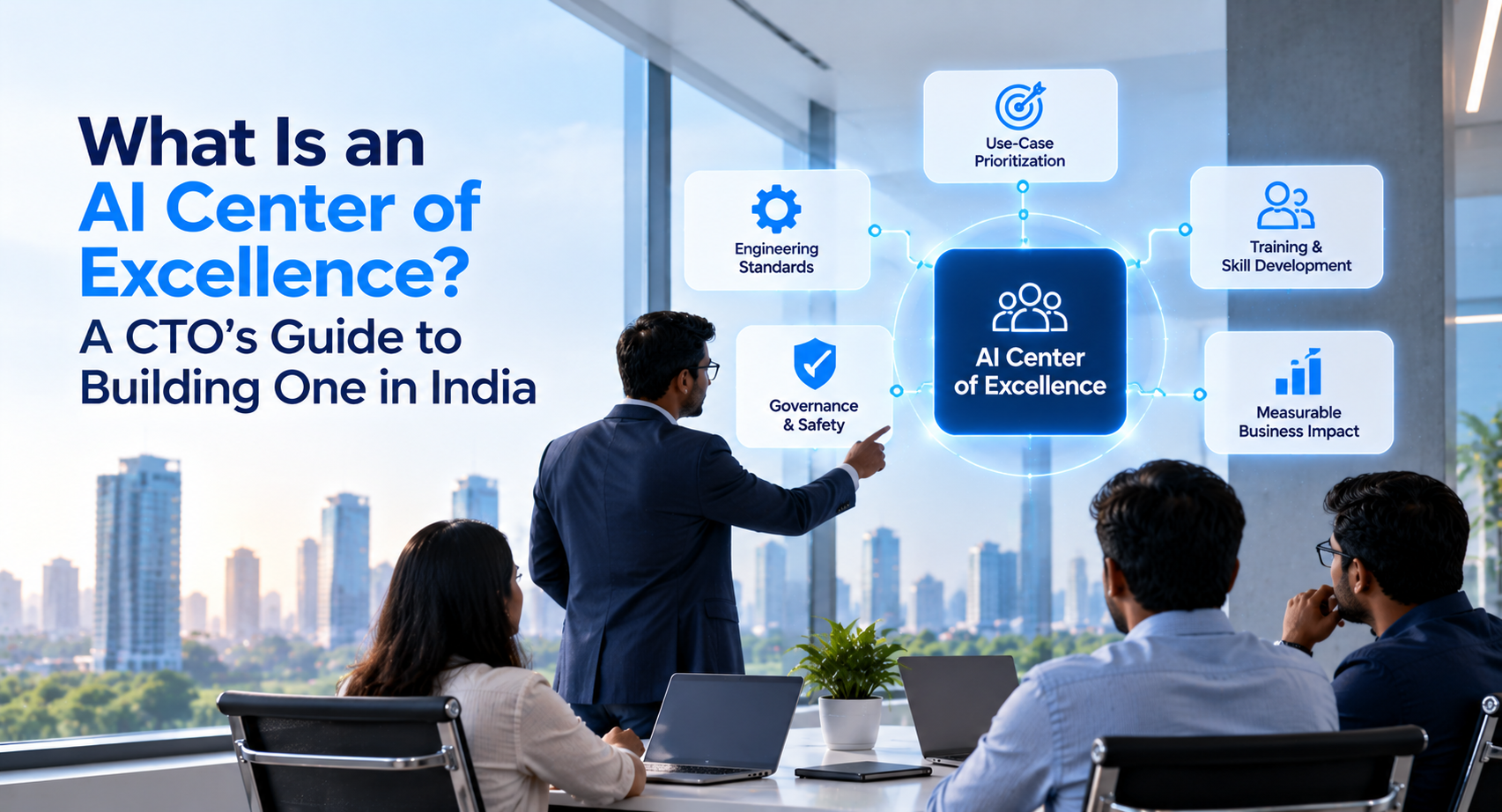
What Is an AI Center of Excellence? A CTO’s Guide to Building One in India
Discover how an AI Center of Excellence helps enterprises standardize AI adoption, manage governance, develop engineering capabilities and measure AI's impact across software teams.