API Integration for Indian Enterprises: Connecting Old and New Systems
Connecting legacy systems with modern applications can be more complicated than expected. Learn how enterprises can plan API integration, manage interface failures, address security and keep connected systems working reliably.
 By Ankit Rawat·Published: November 19, 2026 at 10:47 PM IST
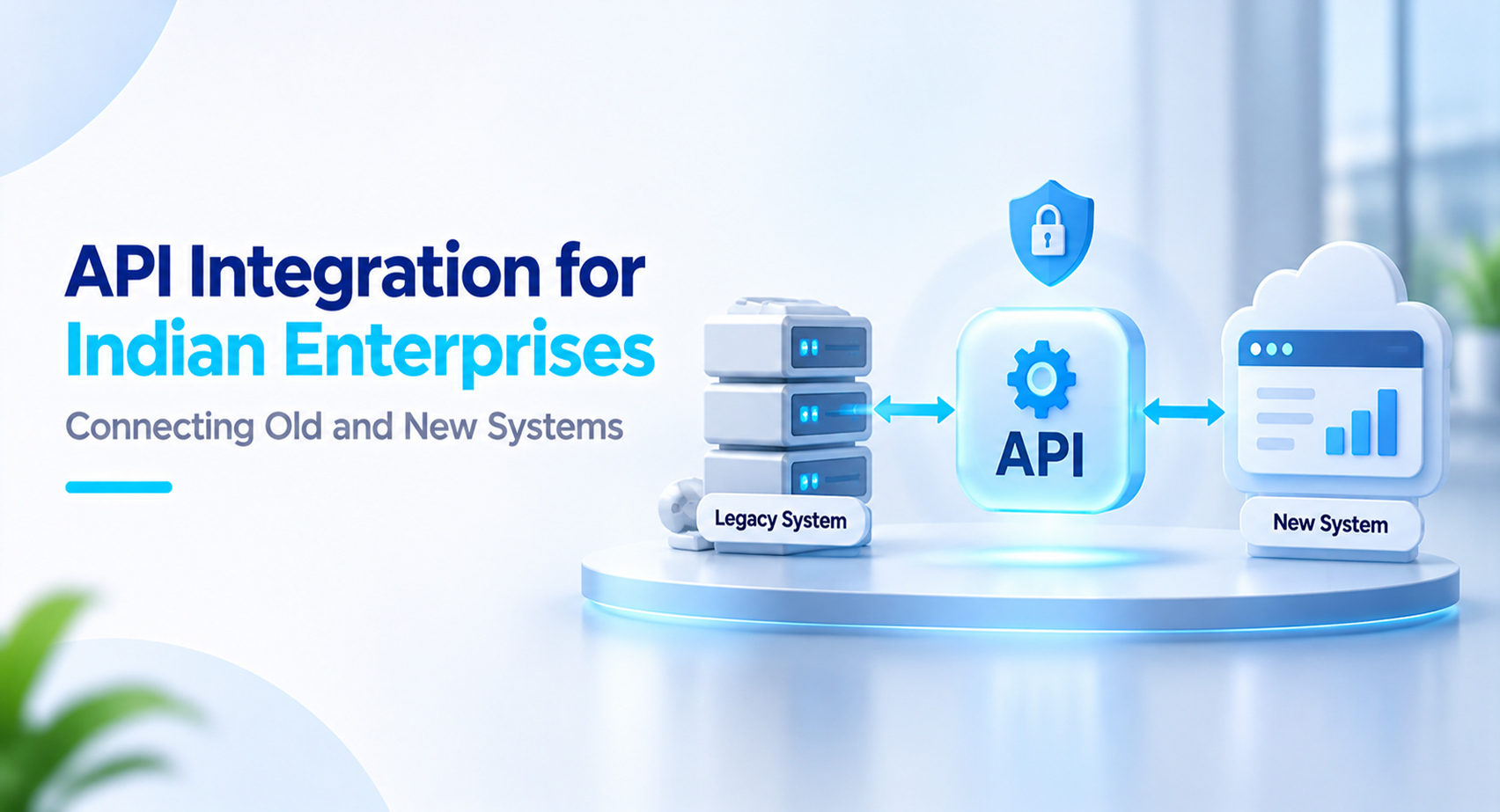
Although many businesses do have modern systems in place, connecting legacy systems to new systems such as a mobile application can be challenging. Integrating the systems via APIs ensures secure data sharing but is often overlooked.
Insight from data in India
According to Business Standard (5 March 2025), a survey carried out by IDC on behalf of Zoho into SaaS implementations within Indian enterprises found that 75% of enterprises ran into delays. On average, delays were 57% longer than expected and costs increased by 43%. 38% of enterprises said the delays were caused by ‘unforeseen integration or security issues’, along with talent or technical challenges.
Considerations:
This research was carried out on behalf of a software provider. There is no information on sample size or methodology. As ‘integration or security issues’ are grouped together it is unclear how much of the delay was specifically due to integration. This research is focused on SaaS implementations, rather than bespoke or legacy solutions.
Common issues in enterprise API integrations
In most cases, problems occur during planning.
- Unowned integration: While individual systems may have owners, there may be no individual responsible for the integration. Identify which individual is responsible for each integration.
- Unexpected formats: A legacy system may provide integration via file exports, database views or an outdated SOAP API. This should be identified in the first week of integration, not the fifth.
- Poor error handling: Network errors may occur, or duplicates. Decide what happens in the event of timeouts, duplication, and failed records. Decided where failed records are recorded.
- No test data: Risks can be taken in testing with real customer data. Testing with no data means errors may not be caught. Decide on a safe set of test data early on.
- No version plan: If a field is changed on one system, the other system may break. Version numbers should be assigned to interfaces and a process decided on for informing people of changes.
Middleware may be needed, however this is an additional system. If many systems need to be connected, middleware may be useful. If just two systems need to connect, it may not be necessary.
Questions to ask
- What systems need to be integrated? Who owns them?
- Do they provide a REST API? Or just file access and database access?
- What happens if the API call fails, times out, or duplicates?
- How will we secure the calls, and restrict what can be accessed based on the call?
- Who will be monitoring the integration post deployment?
- How will we version changes in the interfaces, and notify people of changes?
How We Approach API Integration
Our fleet and logistics platform, Easylogy, allows integration with other business systems via APIs. In App Development we use 2 week agile sprints following OWASP security best practice. We identify the systems and interfaces you have, decide on a single integration to start with and present it for review. Once approved we can move onto additional integrations.
Frequently asked questions
Q1. What is API integration?+
API integration is the process of connecting different software applications or systems so they can exchange data and communicate with one another. It helps businesses connect existing systems with newer applications without necessarily replacing their entire technology infrastructure.
Q2. Why is API integration important for Indian enterprises?+
Many enterprises use a combination of legacy applications and modern software. API integration helps these systems exchange information, reducing the need for disconnected workflows and manual data transfers.
Q3. What are the common challenges in enterprise API integration?+
Common challenges include unclear system ownership, incompatible data formats, weak error handling, limited test data and a lack of interface change management. Identifying these issues early can help reduce integration delays.
Q4. What is the difference between REST APIs and SOAP services?+
REST and SOAP are different approaches to enabling communication between software systems. REST APIs commonly use HTTP-based requests and lightweight data formats, while SOAP uses a structured messaging protocol. The integration approach depends on what the existing systems support.
Q5. When should a business use middleware for API integration?+
Middleware can help manage connections when multiple applications and systems need to exchange information. For a simple connection between two systems, a direct integration may be sufficient. The decision should consider the number of systems, complexity and ongoing maintenance requirements.
Q6. How can businesses make API integrations more reliable and secure?+
Businesses should define system ownership, authentication requirements, access permissions, error-handling procedures, test data, monitoring responsibilities and interface versioning before implementation. These decisions help teams manage integrations beyond the initial development phase.
Planning to connect your existing and new business systems?
EICE can help your team assess existing systems, identify available interfaces and plan integrations in manageable stages.