Human-in-the-Loop AI Agents in India: Approval Workflows
Learn how human-in-the-loop AI agents help Indian businesses automate routine workflows while keeping people involved in high-risk actions through approval checkpoints, exception reviews, and audit trails.
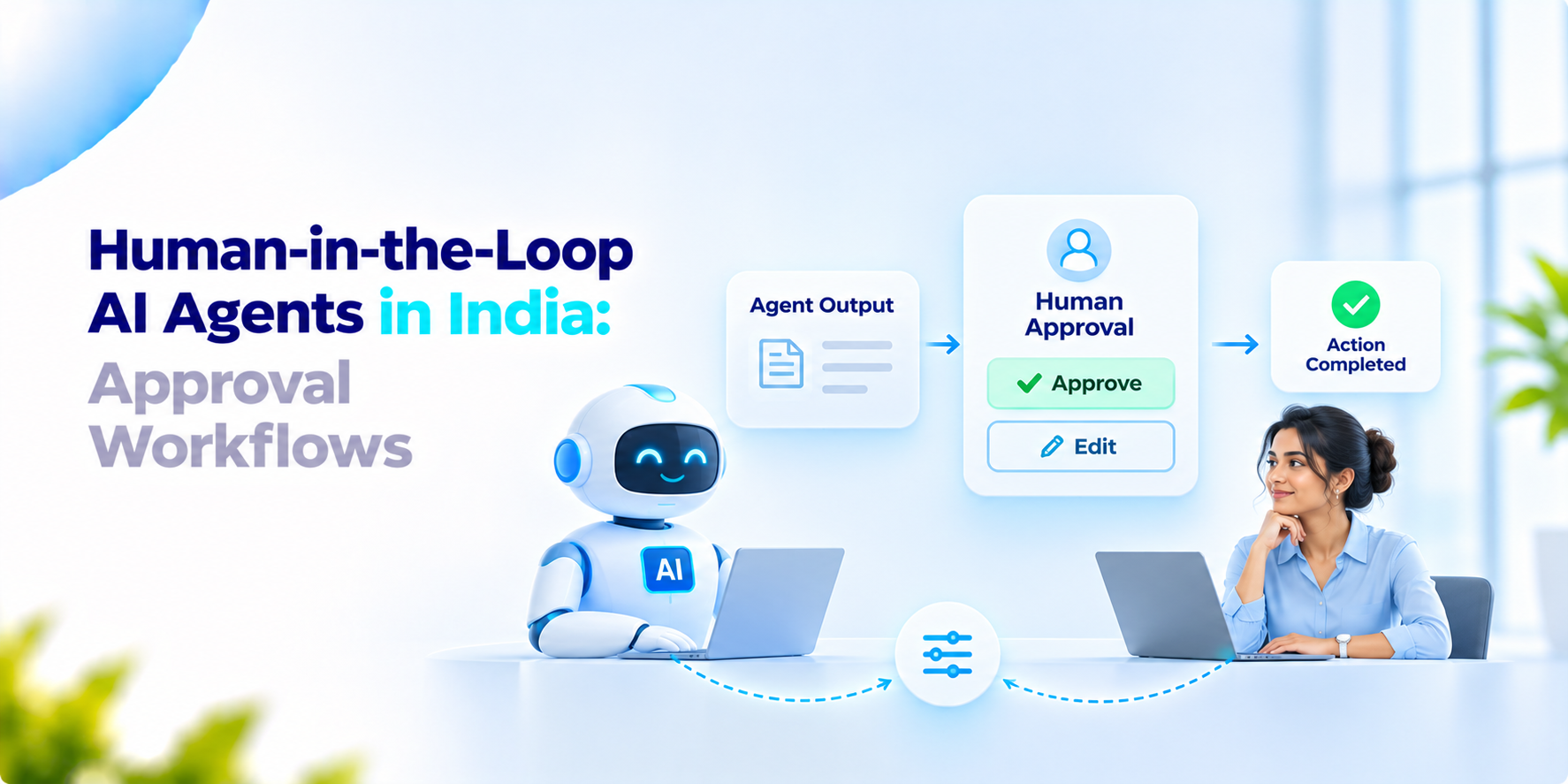
An AI agent that drafts an email is one thing. An AI agent that issues a refund, changes a record or messages a customer is another. Human-in-the-loop AI agents keep a person in charge of the steps that carry risk. The Human-in-the-loop AI agent does the work and a person approves what matters.
If the AI agent is writing an email, that is just one thing but the AI agent that sends money, changes records or coordinates with customers through messages is another thing. Human-in-the-loop AI agents in India permit AI to work, while the human just checks and approves the important tasks. This is helpful for businesses in using AI while maintaining control over critical or risky decisions.
What the India data says
EY’s India page on AI, displayed as 16 November 2025 says most Indian enterprises are implementing strict monitoring, limited autonomy and clear oversight to prevent operational failures.
Three cautions. The statement is. Gives no percentage. The page cites an AIdea survey without a respondent count or method. The page’s displayed date differs from its metadata date. Treat it as a direction of travel, not a measurement.
Three approval patterns for human-in-the-loop AI agents
This section is our view. There are three main ways for adding human approvals to the AI workflows.
Action approval. The Human-in-the-loop AI agent prepares the action. Waits for a yes before it runs. Use it for payments, deletions and anything sent outside the company.
Draft approval. The Human-in-the-loop AI agent writes a draft and a person edits and sends it. This suits customer replies, reports and summaries.
Exception- review. The Human-in-the-loop AI agent handles low-risk cases alone and passes unusual ones to a person: low confidence, high value or an unfamiliar customer.
When the system is new, start with more checks. Once you get to know where it is working nicely, you can adjust the approval rules. You should keep all the records of approvals, changes, and rejections. This will help you in understanding the AI performance and where it needs improvement. If there are a lot of approvals, this can also become a problem as if the employee approves many tasks, they may stop checking them carefully. To prevent this, ask for approvals only when it is really important. You can also group similar, low-risk tasks for review and track how often people change or reject AI’s suggestions.
What to ask before you deploy human-in-the-loop AI agents
1. Who's the approver and how fast must they respond?
2. What happens when nobody answers?
3. Does the approver see the evidence, the proposed action and the Human-in-the-loop AI agent’s reasoning?
4. Can they edit the action not accept or reject it?
5. Is every decision logged and searchable?
6. Can we loosen the gates without rebuilding the Human-in-the-loop AI agent?
How We Approach Human-in-the-Loop AI Agents
EICE Catalyst is our integrated enterprise AI platform. Its Agentic Delivery capability builds step-by-step workflow agents with Human-in-the-loop checkpoints and its Responsible AI and Governance capability covers security, privacy, compliance and observability guardrails. We start from the steps in your process that carry risk and place the checkpoints there.
If your team is designing Human-in-the-loop AI agents, we would welcome the conversation.
Frequently asked questions
What are human-in-the-loop AI agents?+
Human-in-the-loop AI agents are AI systems designed to involve people at defined points in a workflow. A person may review a draft, approve a consequential action, or handle exceptions that the agent cannot safely resolve on its own.
Why do AI agents need human approval workflows?+
Approval workflows help organizations control actions that could affect money, customers, records, security, or compliance. They also provide a way to review uncertain cases and maintain accountability for important decisions.
What are the main types of human-in-the-loop approval workflows?+
Three useful patterns are action approval, draft approval, and exception-based review. Action approval requires a person to authorize an action before execution. Draft approval lets a person edit and send AI-generated content. Exception-based review allows routine, low-risk cases to proceed under defined rules while unusual cases are escalated.
Should every AI agent action require human approval?+
Define a timeout policy before deployment. Depending on the risk, the system might keep the action pending, send a reminder, escalate to another authorized reviewer, or cancel the action. High-risk actions should not execute automatically simply because nobody responds.
How can businesses audit human-in-the-loop AI agents?+
Record the proposed action, relevant evidence, approver identity, decision, changes made, timestamps, and final outcome. Access to the records should be controlled, and the logs should be searchable enough to support investigations and performance reviews.
Put Human Oversight Where AI Actions Matter Most
Design AI workflows with risk-based approval checkpoints, clear escalation paths, and auditable decisions. Explore EICE Catalyst to see how enterprise AI agents can work within defined governance controls.