RPA in Finance India: What to Automate First
Finance teams can save time by automating repetitive, rule-based tasks such as invoice processing, bank reconciliation and GST data checks. Discover how to choose the right starting point for RPA in finance, manage exceptions and measure automation results.
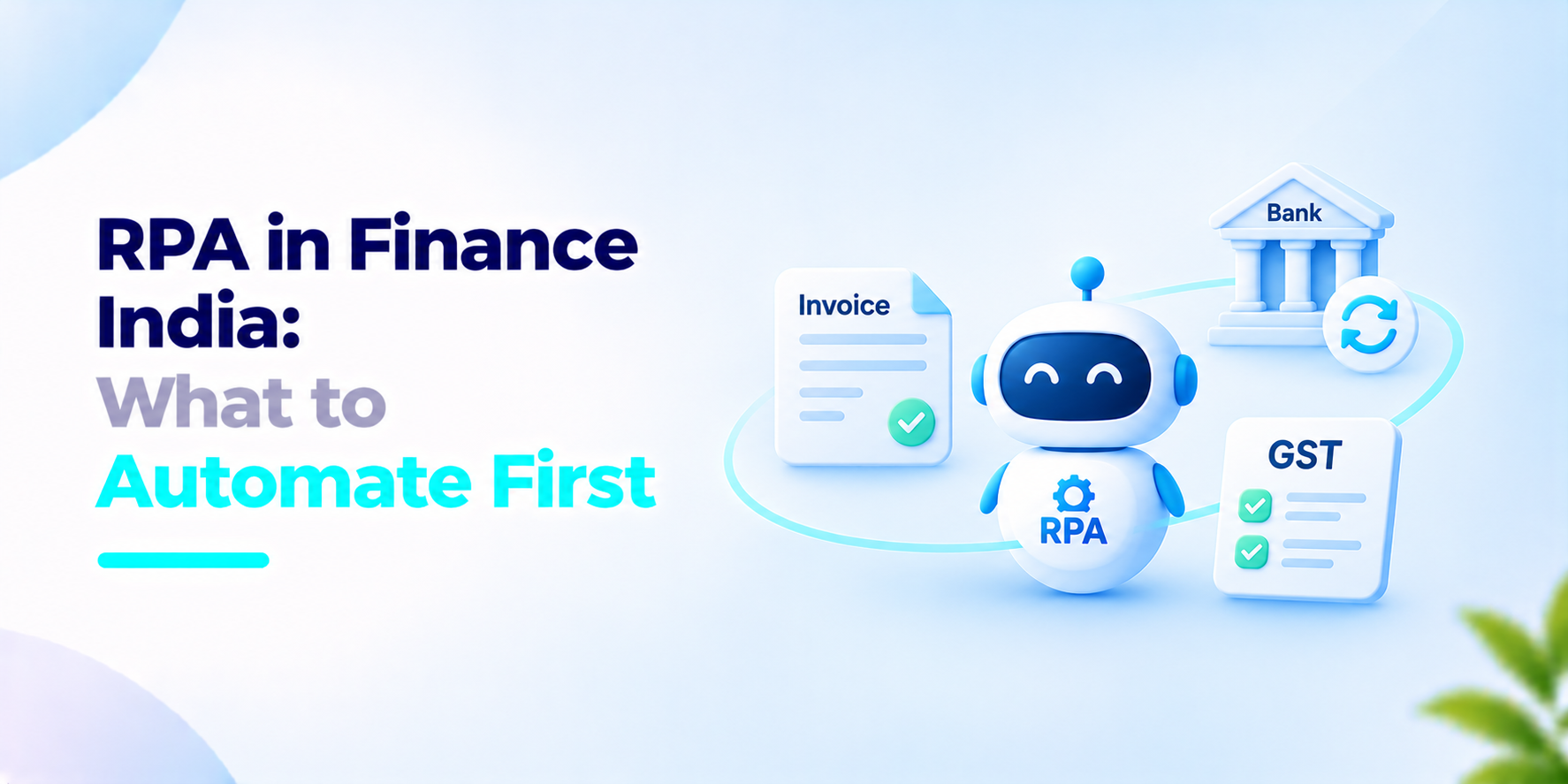
Finance teams often have plenty of ideas for automation. They usually struggle to pick the right first task. RPA in finance works best when the first bot takes over one rule-based job that the team already finds boring and does it the same way every time.
What the India data says
CXOtoday, in a report dated 3 August 2026, shared an analysis by AI Accountant, an accounting automation vendor. Based on 2,400 product demonstrations between January and July 2026, 69.6 percent of businesses said bill and accounts payable processing was their top accounting pain point. Bank and credit card reconciliation came next at 14 percent, GST reconciliation at 8.1 percent and reporting and financial visibility at 3.1 percent.
Three cautions. The data comes from a vendor’s sales demonstrations, not from a random survey. The vendor sells the automation it describes. The article gives no method for the percentages or their denominator. The headline says businesses. The body counts demonstrations. The article frames the findings around medium businesses so large finance teams may have different priorities.
Where to start with RPA in finance
This section is our view. The ranking above points to accounts payable. We agree it is a sensible first candidate. Choose by volume, rules and risk.
Invoice entry. Many invoices come in by email. Upload and they follow repeating formats. A bot can read the fields, check them against a purchase order and send exceptions to a person.
Bank reconciliation. Matching statement lines to ledger entries follows clear rules and mismatches go to a human.
GST data checks. Comparing purchase records against filed data is repetitive and rule-based. The rules change. Keep a person reviewing the output.
Leave until any step that needs judgement, such as disputed invoices, vendor negotiations or write-offs. Those need a person and a bot adds little.
Whatever you pick, document the process first. A bot that copies a process only makes the mess worse, faster. Measure the baseline before launch, such as invoices per person per day and error rate so you can tell later whether it helped. Plan the exception path too. The bot will meet cases it cannot handle. Someone must own them.
What to ask before you start RPA in finance
Which process has the volume and the clearest rules?
Is the input structured. Do we need document extraction first?
Who owns the exceptions the bot cannot handle?
What approvals and audit trail do our finance controls require?
How will the bot log in who holds its credentials?
What happens when a source system or format changes?
How We Approach RPA in Finance
We start from your process, not from a tool. We map the steps with the people who do the work, agree which ones are rule-based enough to automate and set out how exceptions, approvals and access will be handled. We then build in stages so your team can check each one.
If your team is considering RPA in finance, we'd welcome the conversation.
Frequently asked questions
What is RPA in finance?+
Robotic Process Automation (RPA) uses software bots to perform repetitive, rule-based tasks in finance applications. Examples include transferring invoice information, updating accounting records, matching transactions and generating routine reports.
Which finance processes should businesses automate first?+
Businesses can start with high-volume, repetitive processes that follow consistent rules. Invoice data entry, accounts payable processing and straightforward bank reconciliation are common candidates. The right starting point depends on transaction volume, exception rates, process stability and business risk.
Can RPA automate invoice processing?+
RPA can automate invoice-related tasks such as transferring extracted data into accounting systems, checking fields and routing records. However, scanned invoice extraction may require OCR or document AI, while approval workflows may require a separate workflow automation component.
Can RPA automate bank reconciliation?+
Yes. RPA can retrieve statements, match transactions using defined rules and flag unmatched records. Transactions that require judgement or investigation should be routed to finance staff rather than automatically forced into a match.
Can RPA help with GST reconciliation in India?+
RPA can assist with collecting, comparing and validating GST-related records, including purchase data and relevant return information. However, changing rules, mismatches and tax-related decisions require appropriate human review and controls.
Automate Repetitive Finance Workflows with Confidence
Identify high-volume finance processes, streamline repetitive tasks and build automation workflows with clear approvals, exception handling and accountability.