Cloud-Native App Development: When Indian Teams Need It
Not every application needs a cloud-native architecture. Explore when Indian teams should consider independent scaling, automated releases, and resilient cloud infrastructure—and when a simpler, managed approach may be more practical.
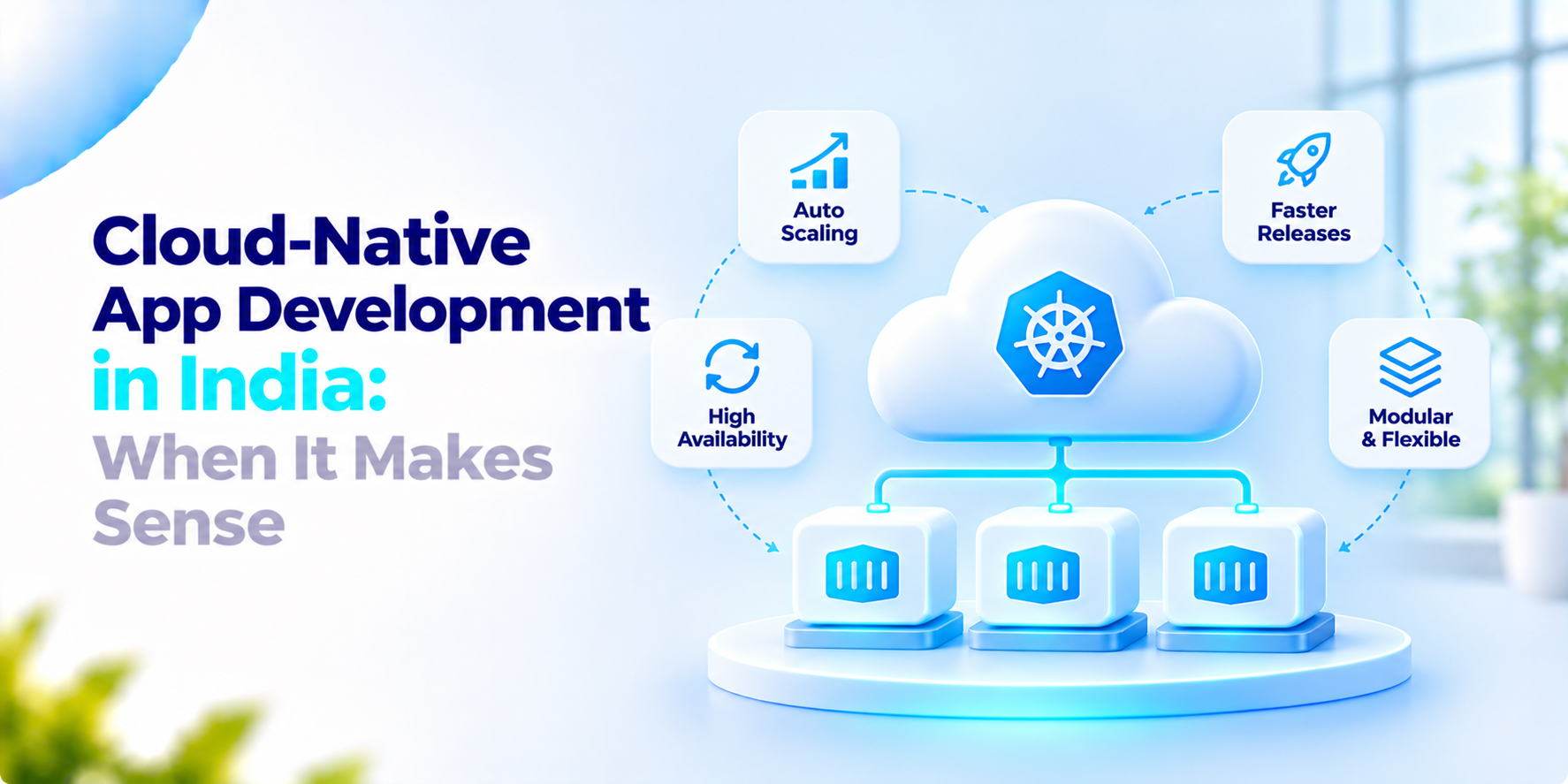
Not every app needs to be cloud-native. Native app development means building software for the cloud from the very beginning. It involves breaking the app into services, packaging them in containers and running them so they can scale and recover automatically without manual help. This approach works well for some teams. It can be costly and unnecessary for others.
What the India data says
A report by CNCF and SlashData published on June 17 2026 says India has 2.25 million native developers compared to 19.9 million worldwide. It also says cloud at 44% is the most common deployment model among Indian developers.
There are three things to keep in mind. The report doesn’t share sample sizes, survey dates or how it collected data. We haven’t reviewed the PDF. It counts developers, not companies that actually use native practices. And CNCF is a group that promotes native technology so the data may reflect a positive view from within that community.
When native app development pays off
This part is our opinion. It pays off when traffic changes quickly or grows fast. It helps when different teams need to ship parts of the product on their own. It works when one hour of downtime is expensive. It also makes sense when frequent releases are needed.
It does not pay off for apps with steady usage. It doesn’t help if one team manages the app. It’s not a fit if the team has no experience with containers. It’s not worth it if there is budget for operations. Often a simple app on a managed platform is better than rebuilding it into services.
There is also a cost over time. Native systems need monitoring tools, release pipelines and people who understand them. The team structure matters as much as traffic. Native design lets teams own their services from start to finish. It also requires managing versions across services, shared data and failures that cross service lines. If your team already struggles to coordinate releases for one app, splitting it into services won’t fix that. It will just move the problem into the gaps between services.
A test: Can you name the part of your app that must scale separately from the rest? If not, start with something
What to ask before you start native app development
- Which part of the app needs to scale independently?
- What does one hour of downtime cost us?
- Which cloud will we use—AWS, Azure or GCP—and why?
- Who will run the system after launch?
- Can we begin with one service and add the others later?
- What will the monthly running cost be at our expected load?
How We Approach Cloud-Native App Development
Our App Development service builds native applications on AWS, Azure and GCP. We also build platform apps. We work in two-week sprints. We start by asking which parts of your app truly need the native approach and we begin there.
If your team is thinking about cloud-app development, we would be happy to talk.
Frequently asked questions
Explore App Development+
Cloud-native app development involves designing and building applications to take advantage of cloud environments, including automated deployment, elastic scaling, and resilient infrastructure. The architecture may use containers, microservices, managed services, or other cloud technologies depending on the application's requirements.
When should a business choose cloud-native app development?+
It can make sense when workloads change significantly, components need to scale independently, frequent releases are important, or downtime has a high business cost. The decision should also consider the team's operational skills and the long-term cost of running the architecture.
Does every cloud application need microservices?+
No. A cloud application can use a modular monolith or a managed application platform without splitting everything into independent services. Microservices are useful when independent deployment or scaling provides a meaningful benefit, but they also add coordination and operational complexity.
Is cloud-native development more expensive?+
It can be. Costs may include cloud infrastructure, monitoring, deployment pipelines, security controls, and specialist engineering time. The overall cost depends on the workload, architecture, service choices, and the team's operating model.
What is the difference between cloud-native and native mobile app development?+
Cloud-native development focuses on application architecture and cloud operations. Native mobile development refers to building applications specifically for platforms such as Android or iOS using their platform-specific technologies. The two concepts address different aspects of software development.
Build the Architecture Your Application Actually Needs
Evaluate scalability, release frequency, reliability, and operating costs before choosing your architecture. Explore EICE App Development services to plan a cloud solution around your team's real requirements.