MFA Audit Logs in India: What Enterprises Should Record
MFA helps protect enterprise accounts, but audit logs show how authentication controls work in practice. Learn which sign-in events, failed attempts, exemptions and configuration changes to record, and how to manage log retention and retrieval for security reviews.
An auditor will usually ask a question: who logged into the finance system last month and how did they prove who they were? If the answer is a shrug, that means MFA is on paper. MFA audit logs are the evidence that the control is actually working.
What the India rules say
NSEs 49/2023 dated 9 June 2023 is an advisory for entities regulated by SEBI on cyber security best practices. It says that all users who connect online must use multi‑factor authentication for virtual private networks, webmail and accounts that access critical systems. It also calls for a log retention policy that follows SEBI regulations, CERT‑In requirements and the IT Act 2000. Additionally, it advises that all logs should be audited to ensure they are being collected.
Three cautions. First, the circular is an advisory for SEBI regulated entities so it may not bind your firm. Second it does not specify a retention period. Third it does not state what an MFA log must contain, how to protect logs from tampering or which events should be recorded. We read the circular itself not the SEBI circular that it cites.
What MFA audit logs should capture
This part is our perspective. Good authentication logs allow someone who was not present to reconstruct what happened.
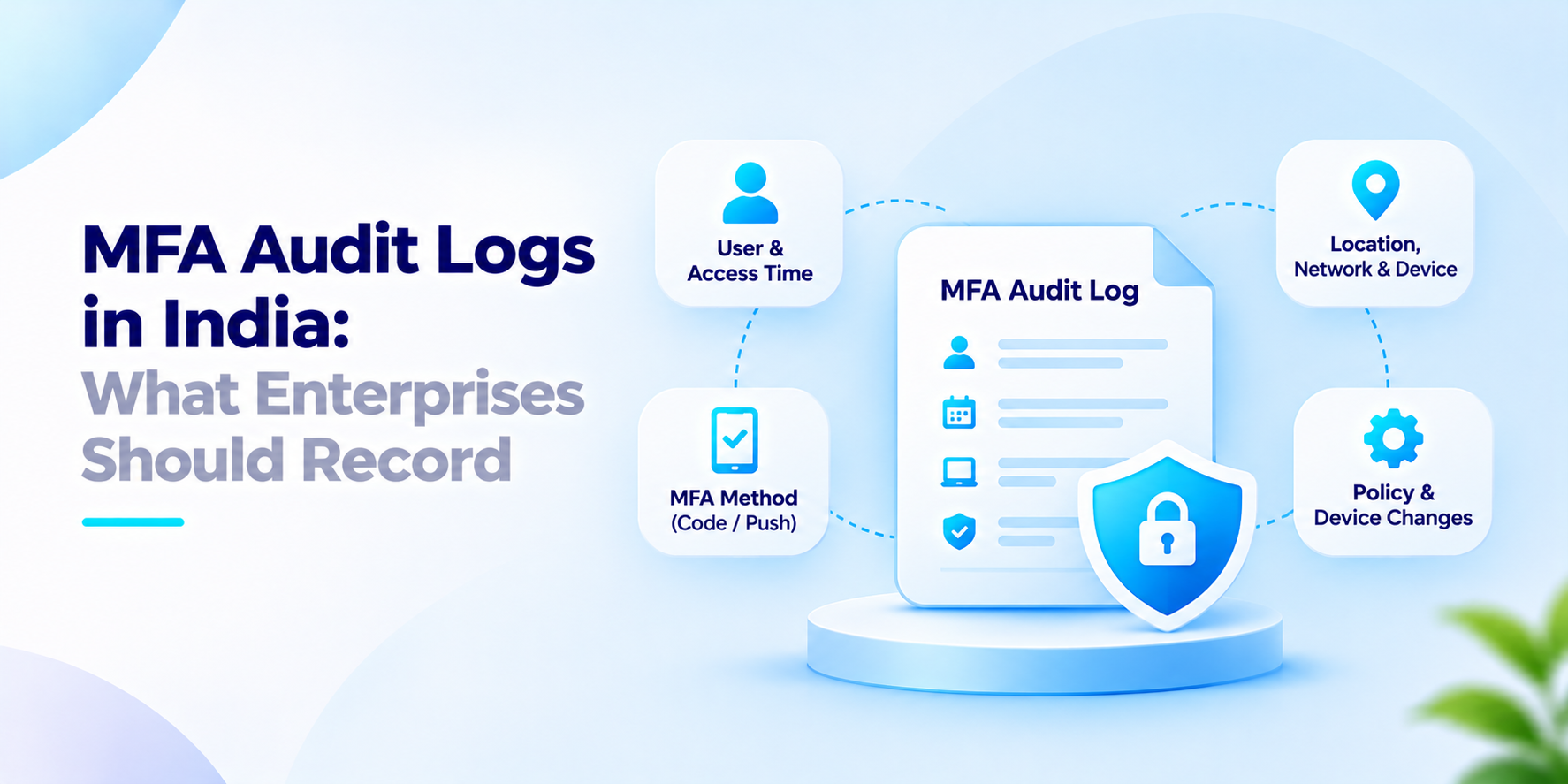
The basics. Record the user, the time, the application, the outcome and the method used such as a code or a push approval.
Exceptions. Log failed attempts, lockouts and any user who is exempted from MFA. Also record who approved the exemption and until when. Auditors often ask about exceptions first, so keep that information easy to list.
Context. Note the source location, network and device so that unusual sign‑ins stand out.
Changes to the control. Note who enrolled or removed a device, reset a secret or changed a policy.
Then the logs themselves. Store them in a place that an administrator cannot edit quietly. Set a retention period that your regulator or contract requires. Test that you can pull a month of records quickly. Evidence that cannot be found in an hour will not help in an audit. Name one person who owns the log process so that a gap has someone to answer for it.
What to ask before you rely on MFA audit logs
- Does every sign‑in, success or failure, create a record?
- Are exemptions listed with an owner and an end date?
- Who can Delete log entries?
- How long are logs. Who sets that period?
- Can we export a user’s history on request?
- Are enrolment and reset events logged too?
How We Approach MFA Audit Logs
Verilock is our enterprise MFA product. It offers TOTP‑based two‑factor authentication. Push approval, geo‑fencing at the country level and full audit logging, with centralised management of apps and secret keys. We start by listing the events that your auditors expect and checking that each one is recorded.
If your team is preparing MFA audit logs for review, we would welcome the conversation.
Frequently asked questions
What are MFA audit logs?+
MFA audit logs are records of authentication activity, including sign-in attempts, verification outcomes and changes to authentication settings. They help security teams investigate incidents and demonstrate how authentication controls operate.
What information should MFA audit logs contain?+
A useful record includes the user or account identifier, timestamp, application, authentication method, outcome and relevant event details. Depending on the system, it may also include device context, source IP address, exemption details and administrative changes.
Should failed MFA attempts be logged?+
Yes, recording failed attempts helps teams investigate repeated failures, suspicious activity and potential account compromise. Logs should distinguish between primary sign-in failures and failures during the MFA verification step where the system supports that distinction.
Should MFA enrolment and reset events be recorded?+
Yes. Enrolment, device removal, credential reset and authentication-policy changes can affect account security. Recording who performed the change and when it happened helps investigators establish the sequence of events.
How long should MFA audit logs be retained in India?+
The retention period depends on applicable regulatory requirements, the organisation's sector and contractual obligations. CERT-In's 2022 directions establish a rolling 180-day requirement for ICT-system logs for covered entities. This should not be interpreted as a universal MFA-specific rule that overrides other applicable requirements.
Make Every Authentication Event Accountable
Review how your organisation records MFA activity, manages authentication exceptions and retrieves audit evidence. Explore Verilock's authentication and centralised management capabilities for your enterprise security workflow.