Data Quality for Analytics: Clean Data Before Dashboards
Poor-quality data can make even a well-designed dashboard misleading. Learn how to check completeness, accuracy, duplicates, consistency and freshness, assign data ownership and validate business metrics before publishing analytics reports.
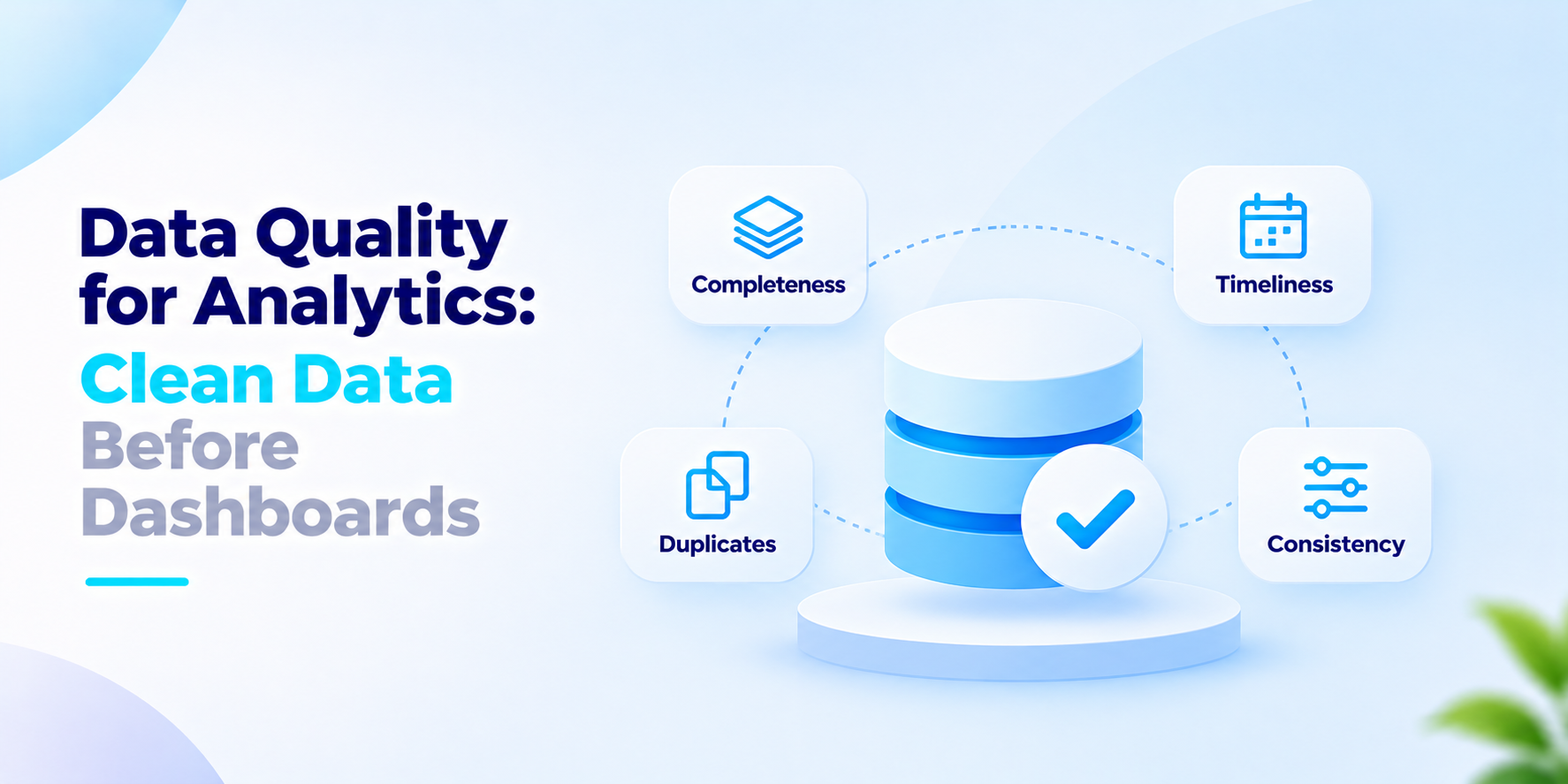
A dashboard can look right but still be wrong. Duplicate customers, missing dates and mismatched codes flow into the charts. Data quality for analytics means fixing those problems before anyone builds a view on top of them.
What the India data says
NITI Aayog released "India’s Data Imperative: The Pivot Towards Quality" in June 2025 as reported by the All India Radios news site on 24 June 2025. It is the edition of the Future Front series. The report says it examines the " challenges posed by poor data quality" and introduces practical tools. The article names the need for data quality to support digital governance.
Three cautions. The article is a news summary, not the report. It gives no figures. Does not list the problems or the tools. The report concerns public-sector data and governance so it points to the issue without measuring it in company analytics.
Data quality for analytics: a checklist
This section is our view. Check the data in the order the problems appear.
Completeness. Which fields are empty? Does the report depend on them? A sales view with blank regions misleads.
Duplicates. The same customer under two spellings splits totals. Agree on one rule for matching records.
Consistency. Dates, currencies and category names should mean the same thing in every source system.
Timeliness. Know when each source last refreshed. A figure from last week may sit beside one from today.
Ownership. Every key field needs a named owner who can approve a correction.
Before working on dashboards, you should fix these problems first. It is better to correct the source at once instead of telling wrong numbers to managers on repeat. Also, you should have a record of the changes so that others can see why you made that change. Whenever the source system changes, review these rules. A new field, renamed category, or different export format can affect numbers that were correct before.
Also, you should compare the figure you trust with the result. Such as, check the dashboard's total sales for last month against the figure approved by your finance team before sharing the dashboard with others.
What to ask before you trust data quality for analytics
- Which source system is the record of truth for each field?
- What share of fields is empty or invalid?
- How are duplicate records merged?
- Who approves a correction and is it logged?
- How often does each source refresh?
- How will we spot a break after the dashboard is live?
How We Approach Data Quality for Analytics
We start from the business questions your dashboards must answer then trace each figure to its source. Before we build any views, we agree the cleaning rules with you. Name an owner for each key field.
If your team is planning data quality for analytics, we'd welcome the conversation.
Frequently asked questions
What is data quality for analytics?+
Data quality for analytics refers to how accurate, complete, consistent, valid, unique and up-to-date data is when used for reporting and decision-making. Poor-quality data can produce misleading dashboard results even when the visualisation itself is correct.
Why should businesses clean data before building dashboards?+
Cleaning data before dashboard development helps identify missing values, duplicate records, inconsistent formats and incorrect entries before they affect business metrics. It is generally easier to address source-data problems early than to repeatedly correct downstream reports.
What are the main dimensions of data quality?+
Six useful dimensions are accuracy, completeness, consistency, timeliness, validity and uniqueness. Together, they help teams assess whether records are correct, sufficiently populated, compatible across systems, current, properly formatted and free from unintended duplication.
How can businesses detect duplicate records?+
Start by defining which fields identify a unique record, then use matching rules to flag exact and potential duplicates. Review uncertain matches before merging records, and document the rules so the process remains consistent.
What is data validation in analytics?+
Data validation checks whether information meets defined requirements, such as allowed values, date ranges, required fields and relationships between fields. Validation can take place when data is entered, transferred, transformed or prepared for reporting.
Build Dashboards on Data You Can Trust
Identify data-quality gaps, define cleaning rules and validate key business metrics before they reach your dashboards. Let’s create a practical data-quality process for your analytics needs.