Backup Retention Policy in India: How Long to Keep What
Learn how to create a backup retention policy in India that balances recovery needs, storage costs, legal holds, and applicable data-retention requirements. Discover practical ways to manage backup versions and plan for reliable recovery.
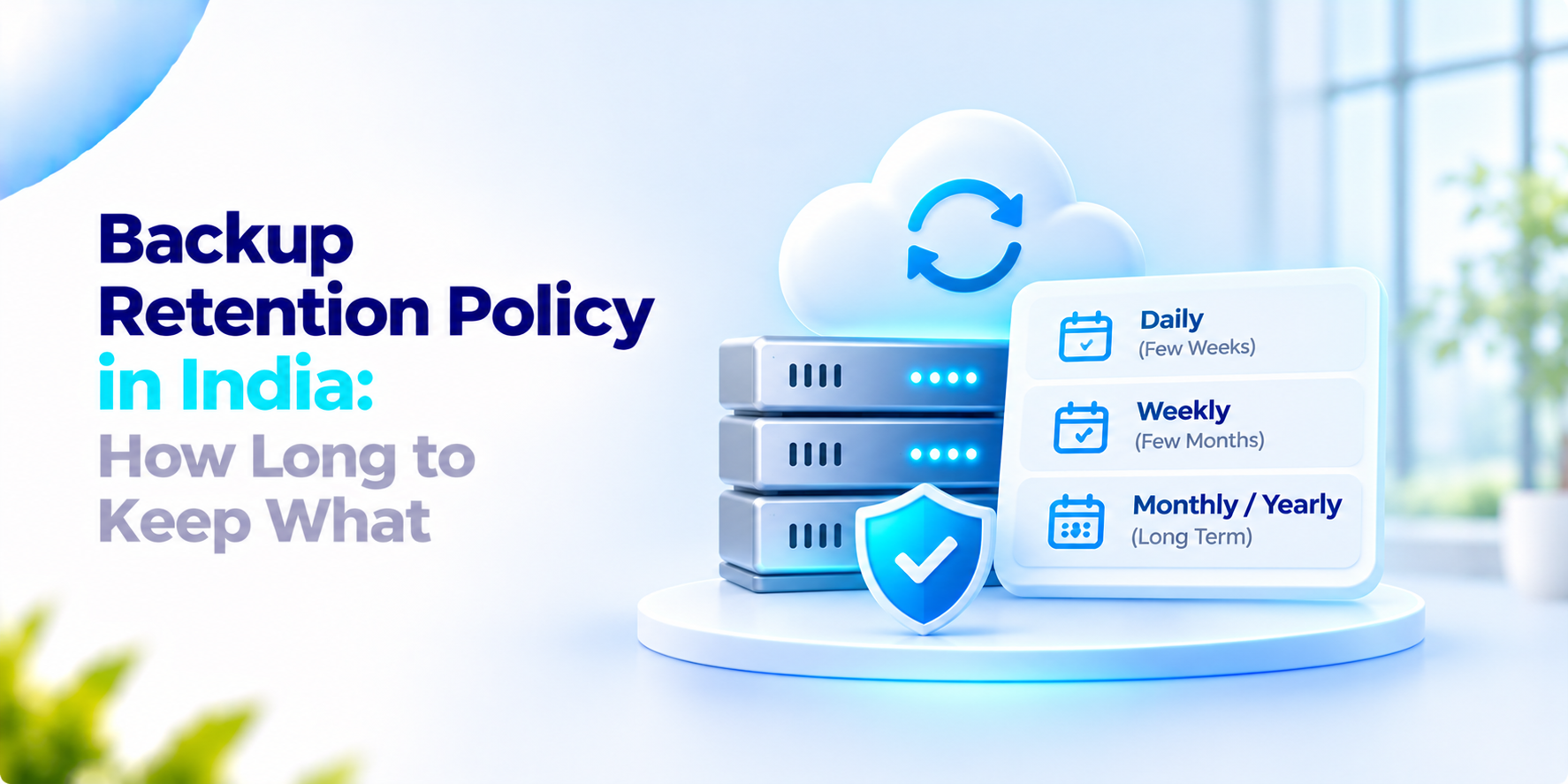
It is always costly to keep backups forever. But deleting data can be problematic when you have to recover your lost data. A backup retention policy in India can help your business in deciding the how long to keep backups based on their needs, data rules and storage cost.
What the India rules say
According to ManageEngine's summary of CERT-In's April 2022 directions, organisations should keep ICT system logs at least for 180 days. These logs can be stored outside of India if a copy of them is stored in India or it can be accessed in India. The cyber incidents also must be reported within six hours of being noticed to CERT-In. These rules also apply to logs, not the backups. It does not tell the businesses about how long the backup copies should be kept.
ManageEngine provides log-management software and a summary or it does not show the date of publication. Backup requirements can be changed according to the industry and contract. Before deciding how long to keep backups, you should check with your legal team about the rules that apply to your business.
Setting a backup retention policy in India: our view
This section is our view. Think in tiers, each with its purpose.
Recent copies. Keep your daily backups at least for a few weeks. Such as, this can be helpful in recovering files that have been deleted by mistake or restoring data after finding the problem.
Middle copies. Weekly backups kept for a month cover problems that are noticed late, such as a corrupted file nobody opened.
Long-term copies. Monthly or yearly backups kept for long as your business, contracts or regulators require.
The periods above are examples, not rules. A sound backup retention policy India teams can defend is one they have written down and tested. Set yours from how a problem can go unnoticed in your business and what a lost record would cost.
Two points belong in any backup retention policy. First, a legal hold: if a dispute or audit is open the relevant copies must not expire. Second, deletion: keeping backups that contain data longer than you need adds risk so the policy should say when copies are removed and who confirms it.
What to ask before you finalise a backup retention policy in India
Ask these questions before choosing a backup retention policy in India. These will help you in creating a policy that your team can follow.
1. How long could a problem go unnoticed?
2. Which records must be kept by law or contract?
3. Who can place or remove a legal hold?
4. Can we restore data from older backups?
5. How much will extra storage cost?
6. Who approves changes to the policy, and where are they recorded?
How We Approach a Backup Retention Policy in India
iSyncLite is our backup and recovery platform. This helps you automate backups, keep different versions and lets your business decide how long a backup can be stored. You can run it on your own server, in the cloud or you can run it in a combination of both. For backup retention policy in India, iSyncLite helps you with managing your backups according to their needs of retention period and recovery. If your team is reviewing backup policy, we’d be happy to discuss your needs and help you get started.
Frequently asked questions
What is a backup retention policy?+
A backup retention policy defines how long backup copies are kept, which backup types are retained, when they expire, and how they are deleted. It should reflect recovery requirements, applicable legal and contractual obligations, and storage costs.
How long should businesses keep backups in India?+
There is no single retention period that fits every business. The appropriate period depends on how quickly problems are detected, the importance of the data, recovery requirements, applicable regulations, contracts, and any legal holds. Businesses should document and periodically review their retention schedule.
Does CERT-In require businesses to keep backups for 180 days?+
The CERT-In directions specify a rolling 180-day retention period for covered ICT system logs. This is not a universal requirement to keep all backup copies for 180 days. Backup retention should be determined separately based on applicable requirements and business recovery needs.
What is the difference between backup retention and log retention?+
Backup retention determines how long backup copies of data and systems are kept for recovery. Log retention determines how long system and activity records are preserved for monitoring, investigation, and compliance. They serve different purposes and may have different requirements.
What is a legal hold in backup retention?+
A legal hold suspends normal deletion or expiration for relevant records when they must be preserved for a dispute, investigation, or audit. Businesses should define who can apply or release a hold and how affected backup copies are identified and protected.
Keep the Right Backups for the Right Amount of Time
Simplify backup management with automated backups, version history, and configurable retention periods. Explore how iSyncLite can support your business's backup and recovery requirements.