CI/CD Pipeline Services in India: Reliable Release Setup
Learn what reliable CI/CD pipeline services in India should include, from automated builds and testing to secure deployments, versioned artifacts, rollback plans, and release monitoring.
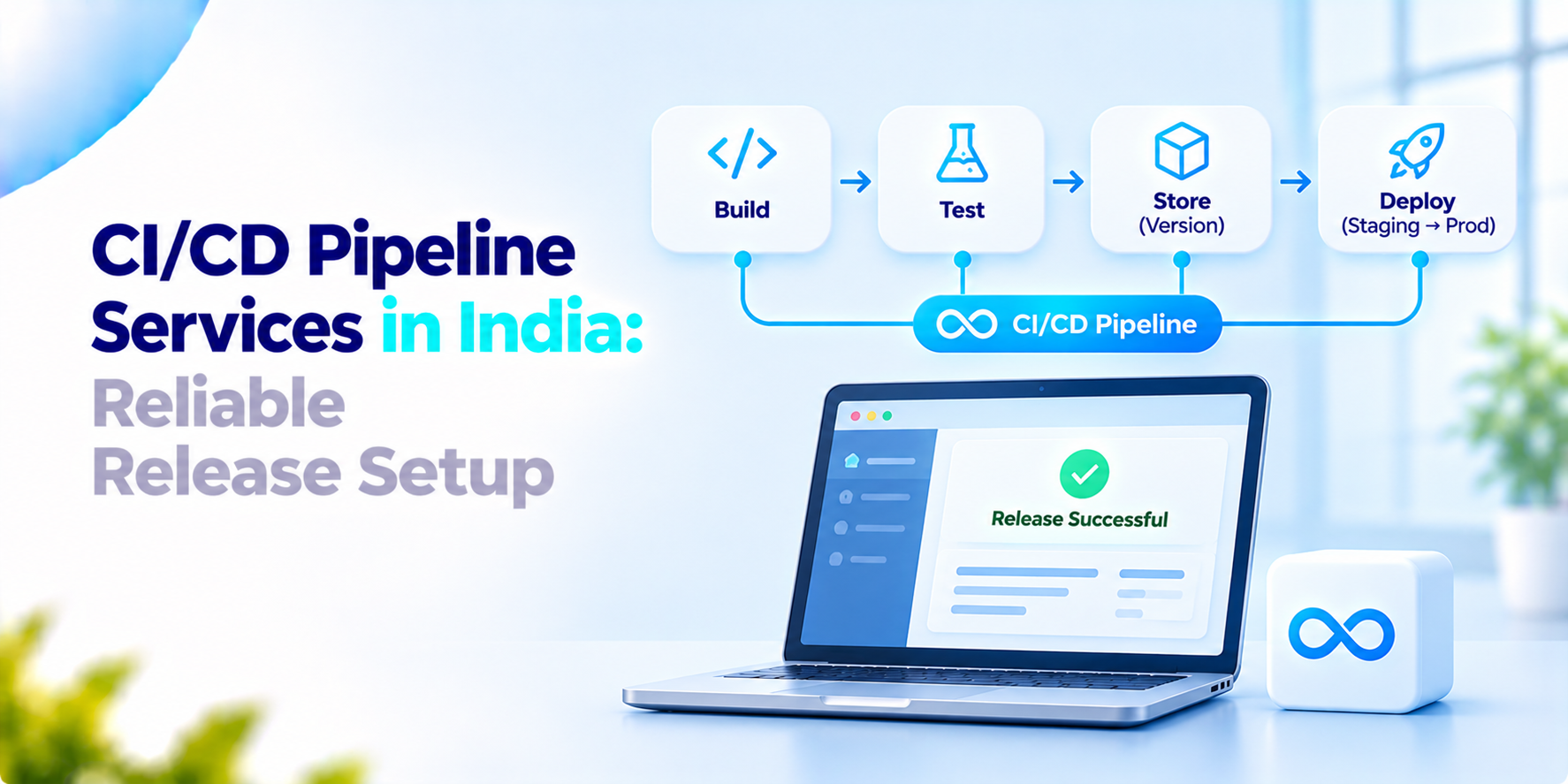
Many teams still ship software the same way. Someone builds on a laptop and copies files to a server. Hoping nothing was missed. CI/CD pipeline services in India are designed to replace that process with a clear, repeatable path from code commit to live release. This post explains what a reliable release pipeline should include and what questions to ask a provider.
What the India data says
Tech Monitor published a report on June 5, 2018 based on Puppet’s State of DevOps surveys. The report covered over 27,000 professionals across six years. India and Japan ranked highest among performing teams with 24 percent success compared to 11 percent in the UK. Performance was measured by how code was shipped and how quickly teams recovered from failures. 40 Percent of all respondents still used manual configuration and deployment methods.
Three things to keep in mind. This is a summary written by a staff reporter, not the survey. Puppet sells tools related to configuration, so they have a stake in the results. The article does not give a sample size for India. The 40 percent number is global, not specific to India. Since the data is from 2018 it should be used as background, not as a current benchmark.
What reliable CI/CD pipeline services in India should include
This section reflects our perspective. A release pipeline is a series of automated steps that run the same way every time.
Build. Every code change is built on a machine. This stops the excuse "it works on my laptop."
Test. Automated tests run before anything moves forward. If a test fails, the release stops.
Store. The build output is versioned; you know exactly what is running in production.
Deploy. Releases go to staging, then to production. There is a plan to roll back if needed.
Visibility. Anyone can see what was released when and who approved it.
Tools like Jenkins or GitHub Actions can run these steps. The tool is less important than the discipline behind it. A pipeline that people don’t trust will be ignored. So, make it fast and keep failures. Add secrets handling and dependency scanning early, they are hard to add
What to ask before you buy CI/CD pipeline services in India
- Which tools will be used in the pipeline? Can we run it ourselves after handover?
- How are secrets, keys and access permissions managed?
- What happens if a release fails halfway? How is it rolled back?
- Who owns the pipeline definition? Is it stored in our repository?
- How will we track build times and failure rates over time?
- What kind of support is available after the pipeline goes live?
How We Approach CI/CD Pipeline Services in India
Our DevOps service includes six areas: CI/CD pipelines, configuration management with Ansible, Puppet, and Chef, and DevSecOps. We work from offices in Noida and Houston. We start by mapping how your code currently moves to production. Then we agree on which steps to automate. We document the pipeline so your team can run it.
If your team is considering CI/CD pipeline services in India, we’d be glad to start the conversation.
Frequently asked questions
What are CI/CD pipeline services?+
CI/CD pipeline services help teams automate and standardise the steps between code changes and software releases. These services may include build automation, automated testing, artifact management, deployment workflows, security checks, monitoring, and rollback planning.
What should a reliable CI/CD pipeline include?+
A reliable pipeline typically includes repeatable builds, automated tests, versioned artifacts, controlled deployments, appropriate security checks, release visibility, and a tested rollback or recovery process. The exact stages depend on the application and its delivery requirements.
Which tools are used to build CI/CD pipelines?+
Common options include Jenkins and GitHub Actions, along with other CI/CD platforms. The right choice depends on the team's existing repositories, infrastructure, security requirements, skills, and maintenance preferences.
How does CI/CD improve software releases?+
CI/CD can reduce manual steps, make releases more consistent, and help teams detect failures earlier through automated checks. The benefits depend on the quality of the tests, the reliability of the pipeline, and whether teams trust and maintain the process.
How should secrets be managed in a CI/CD pipeline?+
Secrets such as API keys, deployment credentials, and tokens should be stored in an appropriate secrets manager or secure platform facility—not hard-coded into repositories or exposed in logs. Access should follow least-privilege principles, with rotation and auditing where appropriate.
Make Every Software Release More Reliable
Reduce manual deployment steps with a documented CI/CD pipeline built around your tools, testing needs, security controls, and rollback process. Explore EICE DevOps services to create a release workflow your team can operate with confidence.