DevSecOps in India: Moving Security Earlier in the Lifecycle
DevSecOps brings security into code reviews, builds and deployment pipelines instead of waiting until release time. Learn how teams can introduce dependency scanning, configuration checks, secrets management and risk-based release gates while keeping security findings actionable and delivery measurable.
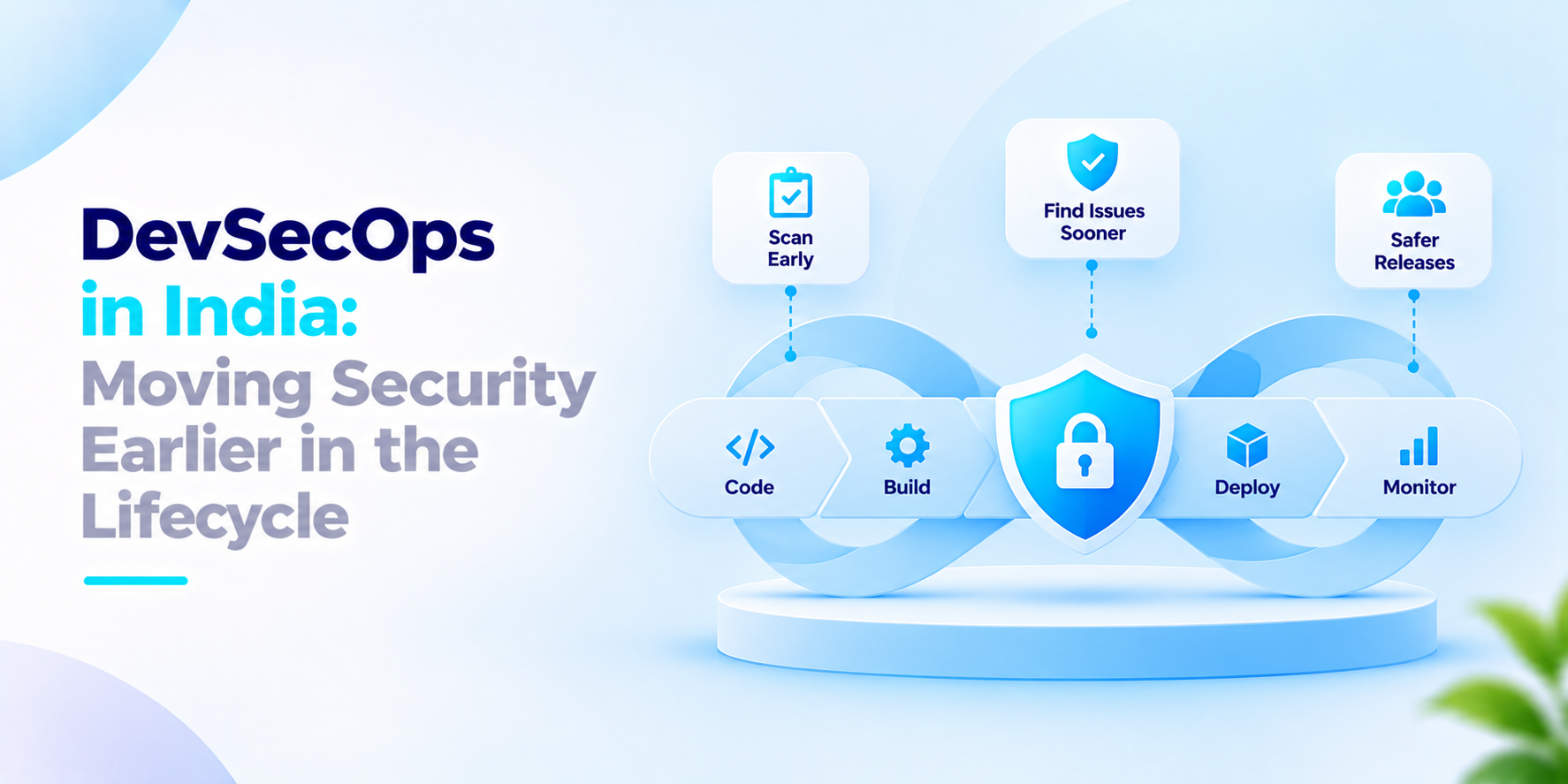
Many teams still wait until the end of a release to run security checks. When a problem shows up then it means rework and missed deadlines. In India, some DevSecOps projects are trying to shift those checks into code review and the build pipeline. That way issues are found when they are easier and cheaper to fix.
What the India data says
IT Voice reported on November 15 2022, on a survey by Progress conducted by Insight Avenue. The survey was titled "DevSecOps: Simplifying Complexity in a Changing World." It included 606 interviews with IT, security and DevOps decision makers at organizations with 500 or more employees across 11 countries. For India, the report said 62 percent agreed that security is the technological driver behind DevOps adoption and evolution.
Three cautions. This is a report of a vendor-sponsored survey and Progress sells software in this area. The India sample size is not stated. The 62 percent may be based on a small number of responses. The survey is from 2022 and asks about agreement with a statement, not about what teams actually do.
What DevSecOps India teams change first
This section is our view. Moving security earlier is not about buying a tool. It’s about building habits.
Check dependencies at build time. Flag the build if a library has a known vulnerability. Decide in advance who handles the issue.
Scan. Configuration on every pull request. Send findings directly to the developer who made the change while that change is still fresh in their mind.
Keep secrets out of repositories. Use a secrets store. Scan commits regularly for keys that accidentally get checked in.
Test the running application before release. Some issues only show up when the app is deployed not when it’s being built.
Set a rule for exceptions. Teams that cannot ship with a known issue must bypass the pipeline. Give them a recorded, time-limited way to accept the risk.
Culture is the part. If security findings feel like blame, developers will argue against fixing them. Share findings with the team. Review them in the meeting where bugs are discussed.
What to ask before you start DevSecOps India work
- Which stage of the pipeline can block a release. Who makes the call?
- How do security findings reach the developer who owns the code?
- How are false positives marked so they don’t keep showing up every build?
- Where are secrets stored and who has access to read them?
- What is the process for approving a time-limited exception?
- How will we know the pipeline is catching issues or just slowing down releases?
How We Approach DevSecOps India
DevSecOps is one of six areas in our DevOps work. The others are CI/CD pipelines, configuration management, containerisation and orchestration, monitoring and cloud infrastructure. We have offices in Noida (India) and Houston (USA). We start with your pipeline. Then we add security checks, one stage at a time. We work with your team to decide which findings should block a release.
If your team is planning DevSecOps India work, we would welcome the conversation.
Frequently asked questions
What is DevSecOps?+
DevSecOps integrates security practices into software development and operations. It brings security checks, risk decisions and remediation into the development lifecycle rather than leaving all security testing until the end.
What does shifting security left mean?+
Shifting security left means identifying and addressing relevant security risks earlier in development, such as during design, coding, code review and builds. It complements—not replaces—testing of deployed applications and production monitoring.
Which security checks should be added to a CI/CD pipeline first?+
A practical starting point includes dependency vulnerability scanning, secret detection, static application security testing and infrastructure-configuration checks. Teams should prioritise checks based on their technology stack, threat model and ability to triage findings.
What is the difference between SAST and DAST?+
Static Application Security Testing (SAST) examines source code or related artefacts without executing the application. Dynamic Application Security Testing (DAST) tests a running application to identify certain vulnerabilities that may not be visible through static analysis alone.
How should teams manage secrets in DevSecOps?+
Store credentials, API keys and other secrets in an appropriate secrets-management system rather than source code. Restrict access, rotate credentials when needed, scan repositories for accidental exposure and revoke any compromised secrets promptly.
Build Security Into Every Release
Integrate security checks into your development pipeline, define risk-based release gates and help developers address findings before they become release blockers.