Vehicle Trip Report in India: Review Delays and Breakdowns
A delayed truck doesn't always explain what went wrong. Vehicle trip reports help fleet managers review planned and actual timings, halt locations, route deviations and reported breakdowns. Discover what to include in a useful trip report and how fleet tracking can improve operational visibility.
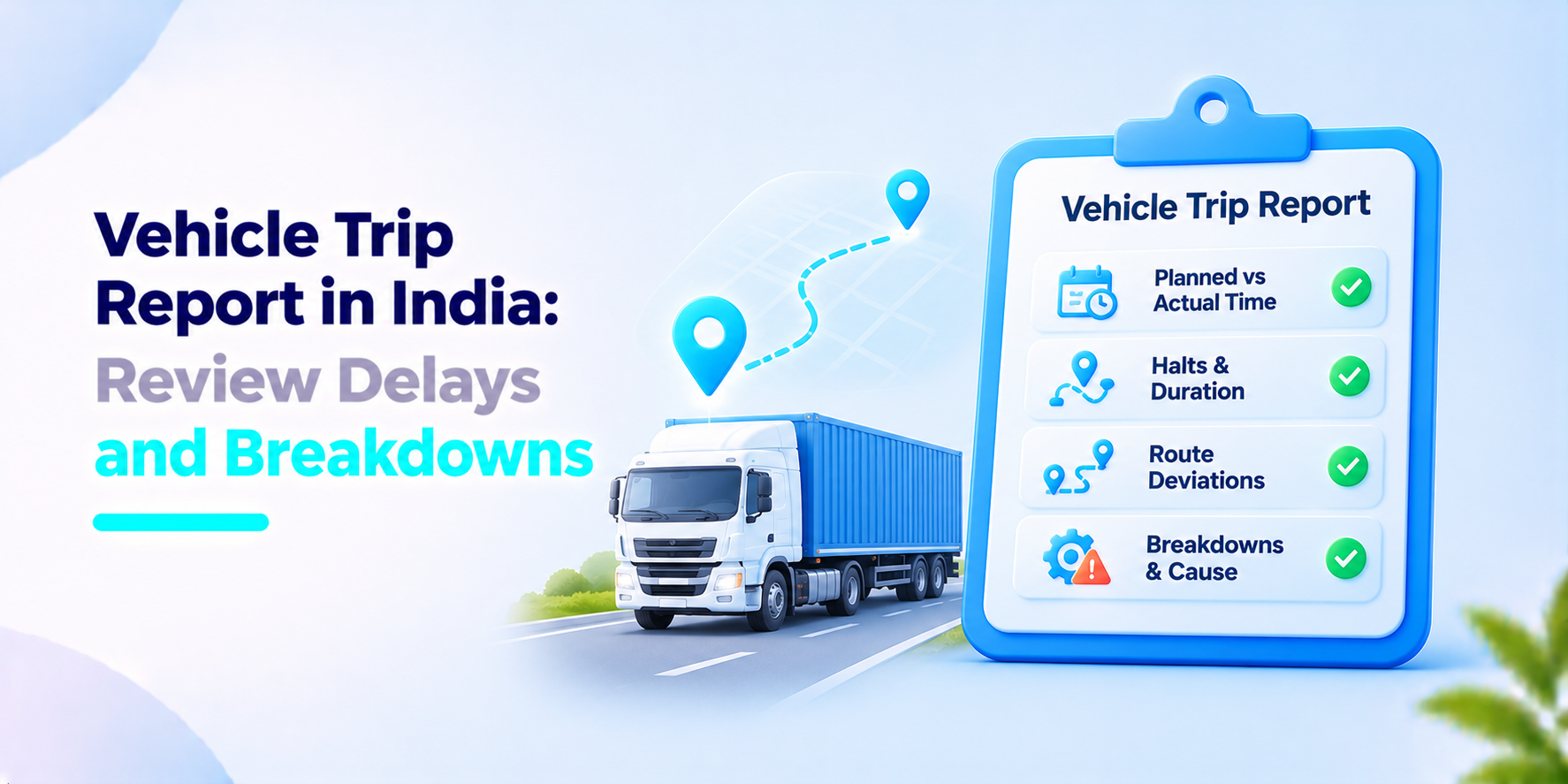
A truck leaves at six. Arrives late. Why? Without records, the answer is a phone call and a guess. A vehicle trip report records what each trip actually did so a fleet manager can review delays and breakdowns with facts. This post covers what to look at.
What the India data says
The report Fast Tracking Freight in India published in June 2021 says trucks in India cover 300 km a day while the world average is 500 to 800 km. It says empty running can be as high as 40 percent. 75 Percent of the market is run by owner‑operators with up to five trucks. It also says practices such as load planning and vehicle routing are not digitised, standardised or automated.
Three cautions. The report is from 2021. It gives no figures on detention, breakdowns or vehicle trip reports. And it describes averages so your own routes may differ a great deal.
What a vehicle trip report should show: our view
This section is our view. A good vehicle trip report answers four questions about every trip.
When did it end, compared with the plan? A late start is easy to miss when you only check arrival times so record both.
Where did it end? For how long? Long halts at loading points, fuel stops and borders add up.
Did it leave the route? A deviation may be sensible. May be a problem. The vehicle trip report should let you tell which.
What went wrong? Record the time and place of any breakdown with a note on the cause and how long the vehicle was stopped before help arrived.
Review fleet trip reports on a fixed rhythm. A weekly look at the five trips usually points to a pattern, such as one route or one loading point. Keep the format short so people read it. A one‑page summary per trip with a link to the detail is more likely to be reviewed than a long export. Trip history is also useful when a customer disputes a delivery time because you can show what happened.
What to ask before you rely on a vehicle trip report
- Does the report compare actual times?
- Can we see halts and their length?
- Are route deviations flagged as they happen?
- Is the cause of each delay or breakdown recorded?
- Who reviews the reports and how often?
- Can we search trip history by vehicle, driver and route?
How We Approach the Vehicle Trip Report
Easylogy is our fleet tracking and logistics platform. It offers GPS tracking, trip history and alerts for route deviations, breakdowns and delays. A driver mobile app records trip status, location, fuel and images. We start from the questions your operations team asks after a trip and we agree which of those the vehicle trip report must answer.
If your team is reviewing its vehicle trip report, we would welcome the conversation.
Frequently asked questions
What is a vehicle trip report?+
A vehicle trip report is a record of a vehicle's journey, including departure and arrival times, route information, stops, delays and other recorded trip events.
What information should a vehicle trip report include?+
It should ideally include vehicle and driver details, planned and actual trip timings, route history, halt locations, stop durations, deviations and reported breakdown events.
How does GPS tracking help with vehicle trip reports?+
GPS tracking provides location and movement information that can help fleet managers review routes, identify unexpected stops, examine deviations and compare actual journeys with planned routes.
Get Better Visibility into Every Vehicle Trip with Easylogy
Track vehicle movements, review trip history and identify delays, unexpected stops and route deviations. Give your operations team better information to understand what happens on the road.