Hotel Revenue Management in India: Setting Rates Based on Occupancy
Hotel revenue management connects occupancy and room rates to support better pricing decisions. Learn how hotels can use booking trends, guest segments, ADR and RevPAR to review rates and improve revenue planning.
 By Ankit Rawat·Published: November 15, 2026 at 1:10 AM IST
For many standalone hotels in India, occupancy and rates live in two different places. Occupancy lives in a report, rates live in the channel extranet. Implementing good hotel revenue management means putting these figures together.
What does India data says:
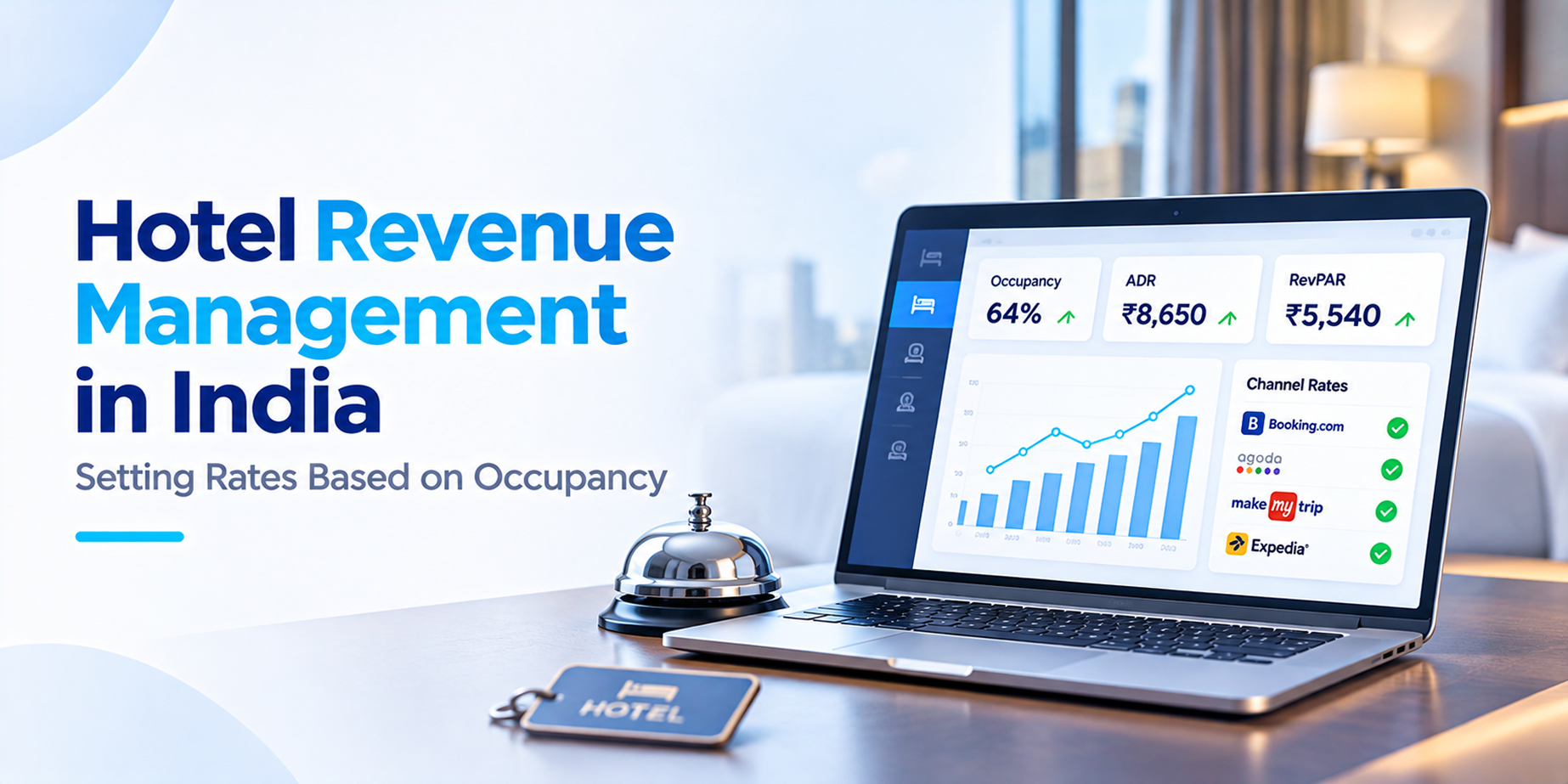
A report by Hospitality Net on 11 th May 2026 entitled HVS ANAROCK India Hospitality Industry Overview 2025 found that India had an average hotel occupancy of between 63-65% in CY 2025. Average daily rates were around INR 8500 to 8700 and RevPAR was around INR 5400 to 5600. This indicates a solid increase compared to last year and pre-pandemic.
It’s important to note that these are estimates for the whole country. There is no information about how the data was gathered or the hotels used. Therefore these are averages and there will be large variances depending on the city, segment and time of year. This is just for reference and should not be considered as a goal for your property. It is also a consultancy report and does not provide any guidance on how hotels should be setting their rates.
How to use your occupancy data to set rates
ADR and RevPAR are straightforward metrics but are only useful when taken together. RevPAR is calculated by dividing room revenue by available rooms, meaning it fluctuates depending on your rates and occupancy.
- Look at the trend of your occupancy: How many rooms have been booked for the future date compared to last year? If you are seeing a high number of bookings for the date then you may want to increase your rates. If there are few bookings then look to find out why before reducing your rates.
- Look at your segments: Corporate, leisure, groups and OTA bookings all behave differently. It is unlikely to be possible to make one change to your rates.
- Ensure your rates are the same across all channels: If you change them in one channel and not another, guests will want to book in the cheapest channel. Rate parity can be achieved by having one place to make changes.
Once the guests have left, look to analyse how your forecasts compared to actuals. Make changes to your rules. Note why you are making the changes.
Questions to Consider Before Investing
- Is there daily occupancy, ADR and RevPAR by segment and channel?
- How do we know how many bookings have been made on the books?
- Can we make one change and apply it to all channels?
- Who can make changes to the rates and are they being recorded?
- How are group blocks and special events displayed in the forecast?
- What reports will we be looking at and how often?
How We Can Help With Hotel Revenue Management
EICE Rise is our cloud based hospitality ERP designed for Indian hotels. It includes a PMS/front desk, meaning all your reservations and channel rates are in one place. We would start by looking at the reports your revenue owner currently has. We can then agree what metrics you would like to track and create a regular review schedule to ensure your rates are decided based on the same data each week.
If your team are looking to implement hotel revenue management, then we would love to talk!
Frequently asked questions
Q1. What is hotel revenue management?+
Hotel revenue management is the process of using occupancy, booking patterns, room rates and demand trends to make informed pricing decisions. It helps hotels review rates based on expected demand rather than relying on fixed pricing.
Q2. How does occupancy affect hotel room rates?+
Occupancy trends help hotels understand how quickly rooms are being booked for a particular date. Strong booking demand may indicate an opportunity to increase rates, while lower-than-expected bookings should prompt hotels to investigate demand before reducing prices.
Q3. What are ADR and RevPAR in hotel revenue management?+
Average Daily Rate (ADR) measures the average revenue earned per occupied room. Revenue per Available Room (RevPAR) measures room revenue against the total number of available rooms. Both metrics should be reviewed together to understand hotel revenue performance.
Q4. Why should hotels analyse occupancy by booking segment?+
Corporate, leisure, group and OTA bookings can follow different booking patterns. Reviewing occupancy by segment helps hotels understand where demand is coming from and make more informed pricing decisions.
Q5. How can a channel manager help with hotel revenue management?+
A channel manager helps hotels manage room rates and availability across connected booking channels from one place. This reduces the need to update each channel separately and helps maintain consistent rates.
Q6. How often should hotels review their revenue management data?+
Hotels should establish a regular review schedule based on their operations and booking patterns. Reviewing forecasts against actual results after guests check out can also help teams identify differences and refine their pricing rules.
Want to make better decisions with your hotel occupancy data?
EICE Rise brings reservations, front desk operations and channel rates together. Talk to our team about reviewing your current reports, defining the metrics that matter and establishing a regular revenue review process.
Related in Hospitality Technology

Hotel Night Audit in India: What to Check Before the Day Closes
A hotel night audit does more than close the day's accounts. Learn how Indian hotels can check GST billing, room and restaurant postings, payment totals and guest folios before the date rolls over.

Payroll Software for Hotels and Resorts in India
Hotels and resorts manage employees across multiple shifts, departments, and employment types. Discover how payroll software can simplify attendance, salary calculations, accounting integration, and payroll administration in hospitality.