Modbus to MQTT Monitoring for Industrial IoT in India
Legacy industrial machines can provide valuable operational data without being replaced. Learn how Modbus-to-MQTT gateways connect machine registers to modern monitoring systems, with practical guidance on register mapping, polling intervals, MQTT topics, data quality and alert management.
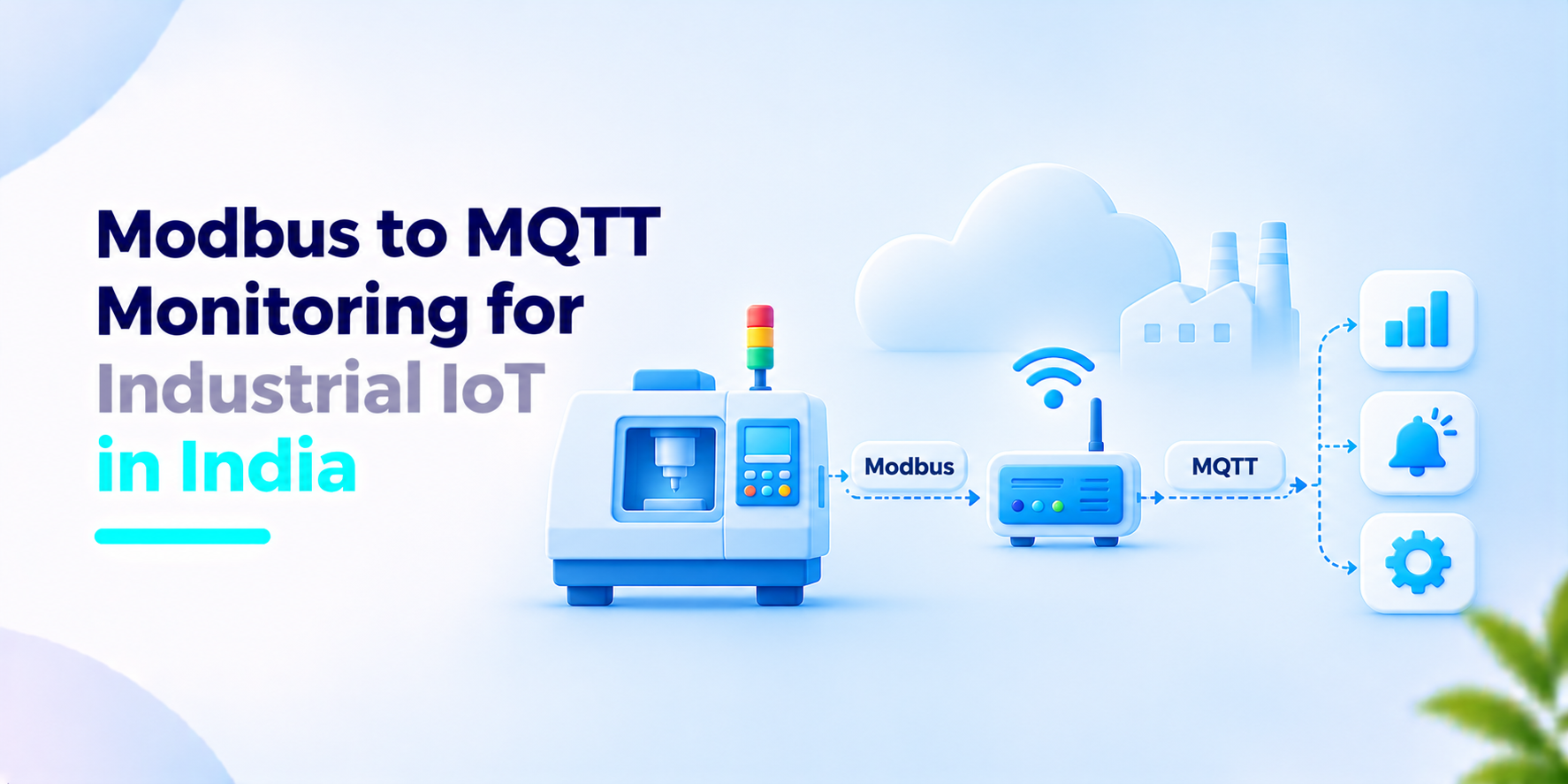
Across many plants in India, there are machines that use Modbus protocols and do not intend to connect to a dashboard. The most common goal is simply to know if a machine is running, stopped or failing. A lot of the time, this is done using a Modbus to MQTT conversion. In this blog we’ll explain the concept, and some key considerations.
What the India data says
In an interview published by Electronics for You (a trade magazine in India), the CEO and CTO of METI M2M India (based in Mysore) stated:
"If the legacy machines are going to remain in place for quite some time, then they’re worth getting connected up. Small manufacturers can start with simple monitoring of their production and downtime for one machine. Around 30-45 mins per machine was deployed at an automobile parts manufacturer. The entire line was connected without interrupting any machine."
Note: This interview is from 2017 and the page has been updated to April 2024. The interviewee works for an organisation that provides these systems. The plant isn’t named. The article doesn’t mention any protocols or gateways.
How Modbus to MQTT works in practice
Modbus is a request/reply protocol. The master requests a value from a register (numbered). The device replies. MQTT is a publish/subscribe protocol. The client publishes a message to a specified topic.
The gateway is used to poll the registers at regular intervals. Each register will be published to an MQTT topic. The monitoring solution will then subscribe to whatever topic it needs.
There are three main considerations. Firstly, knowing exactly what each register contains. Temperature, running, unit and scaling should be noted down. Secondly, how often to poll the devices. If the polling interval is too fast, it will overwhelm the old device. If it is too slow, then issues will go unnoticed. Thirdly, the topic names. We recommend keeping the topic names simple and consistent. Include site, line and machine.
Monitoring after Modbus to MQTT
You will still need to know what normal looks like, who will be notified, and how to escalate. Start with a few signals per machine, such as running, temperature and fault codes.
What to ask before you move from Modbus to MQTT
- Which machines have a known register map?
- How often can each device be polled?
- Who owns and patches the gateway?
- Will topic names be consistent across sites?
- What values will cause an alert, and who will be notified?
- Can both IT and plant teams view the data?
How We Approach Modbus to MQTT Monitoring
InfraSight is our agentless IT Infrastructure Observability product. It supports multiple protocols, including Modbus and MQTT. It contains auto discovery, AI based anomaly detection and baselining. Alert escalations can be done in stages. We will start with a few machines to monitor and a few signals. We agree on thresholds and who will be notified.
If your team is considering Modbus to MQTT monitoring, we’d love to talk.
Frequently asked questions
What is Modbus-to-MQTT conversion?+
It is the process of reading industrial data through Modbus and publishing the selected values as MQTT messages. A gateway or software bridge typically performs this conversion.
Why connect Modbus devices to MQTT?+
MQTT provides a lightweight publish/subscribe messaging model that allows industrial data to be distributed to monitoring platforms and other connected applications.
Does Modbus support real-time monitoring?+
Modbus supports reading device data, but how frequently that data can be updated depends on the device, communication network, register map and polling configuration. It should not automatically be treated as a hard real-time system.
What is a Modbus register map?+
A register map describes the data available from a device, including register addresses, data types, scaling, units and supported operations.
How frequently should a Modbus gateway poll industrial machines?+
There is no universal polling interval. It should be based on the machine's communication capacity, number of registers, network performance and the operational need for timely updates.
Bring Industrial Machine Data into Clear View
Monitor machine signals, identify abnormal conditions and improve operational visibility with infrastructure observability. Explore how InfraSight can support your industrial monitoring requirements.