IoT Architecture Design in India: Devices, Gateways, Cloud
IoT projects often fail not because of the technology, but because the architecture doesn't account for real-world conditions. This article explains how to design a reliable IoT architecture by connecting devices, gateways, and cloud infrastructure while considering connectivity, security, scalability, and operational requirements from the start.
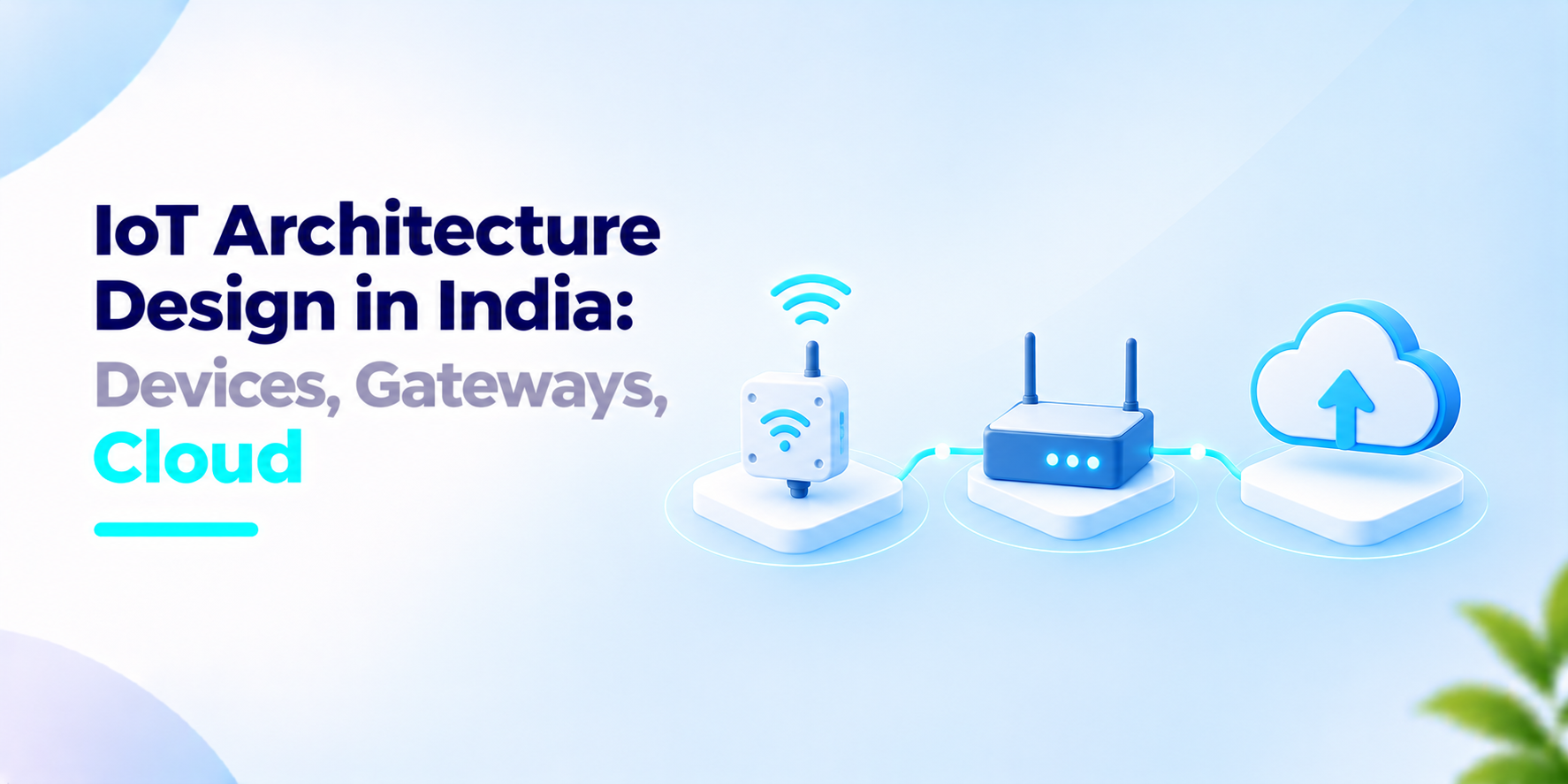
Sometimes projects will behave well in a lab but not perform well in the plant/field/city. This is typically due to choosing an architecture from a diagram rather than considering what is available at the site. This post considers the considerations for devices, gateways and cloud.
What the India rules say
It was announced on 27 October 2020 via an ETSI press release that “India's Telecom Engineering Centre announces adoption of the TSDSI transposition of oneM2M standards as standards for IoT and M2M”. This allows for a standards-based approach to help with interoperability, security and multi-vendor solutions. “We have now ‘agnostic’ platforms with common service functions,” stated the Director General of TSDI.
Consider this a press release. There are quotes from those involved but nothing about which version of the oneM2M standards were adopted. It doesn’t state when the standards come into effect, or if they are mandatory. There are no technical details so the only thing this should influence is to consider if your platform is using an open standard.
Choosing each layer of the IoT architecture
We recommend the following:
Devices. Choose the right sensor for the measurements required. Consider power, range and the environment (heat, dust, vibration). Ensure you know how the devices will be updated.
Gateways. A gateway device sits between the devices and the network. It can convert protocols, store data during outages and filter data. If there is poor connectivity at the site, then this becomes more important than the cloud.
Cloud Platform. Ensure you know how data will be ingested, devices managed, stored and costs for 10 times the current number of devices. How would you exit? Using an open standard (like oneM2M) will reduce the cost of changing vendors.
Consider what works for your site. Not just what the datasheet says. For example, a device may work well on a bench but not at 45o on the roof. A gateway may work in an office but not on the factory floor. Note down what won’t work for each layer. What is lost if there is a link outage for a day? What can be accessed if a device is stolen?
What to ask before you finalise the design
- What must be measured, how often and with what accuracy?
- How do devices connect on site? What if that fails?
- What does the gateway do locally? What goes to the cloud?
- Does the platform follow a standard?
- How are devices secured, updated and retired?
- What will running costs be, at ten times the device count?
How We Approach IoT Architecture
We run our IoT service in 6 phases; Discovery & Requirements, Design & Architecture, Prototyping & Validation, Development & Integration, Deployment & Maintenance & Support. During the design phase, we will finalise the architecture once requirements are agreed. This means we can test device, gateway & cloud decisions early on using real site conditions.
If your team is designing an architecture, then we’d love to chat!
Frequently asked questions
What are the three main layers of an IoT architecture?+
A typical architecture includes devices and sensors that collect data, gateways or edge systems that connect and process device data, and a cloud or backend platform that manages devices, stores information and supports applications and analytics. Not every deployment needs a separate physical gateway.
What is the role of an IoT gateway?+
An IoT gateway connects devices to other networks or platforms. Depending on its capabilities, it can translate protocols, aggregate data, filter messages, perform local processing and temporarily store data during connectivity interruptions.
What is oneM2M in IoT?+
oneM2M is a global standards initiative that defines common service-layer specifications for IoT and machine-to-machine systems. Its specifications address areas such as architecture, interoperability, protocols and security.
Is oneM2M mandatory for IoT projects in India?+
TEC's adopted oneM2M national standards are voluntary unless made mandatory through a regulation, government directive or applicable reference. Organisations should check the requirements relevant to their specific project and sector.
What should be considered when selecting IoT devices?+
Consider measurement accuracy, operating range, power consumption, connectivity, environmental conditions, calibration, firmware updates, security and expected device lifespan.
Design Your IoT Architecture Around Real-World Conditions
Plan and validate your devices, gateways, connectivity and cloud platform around your site's operational and technical requirements.