IoT Support Services in India: Maintenance After Deployment
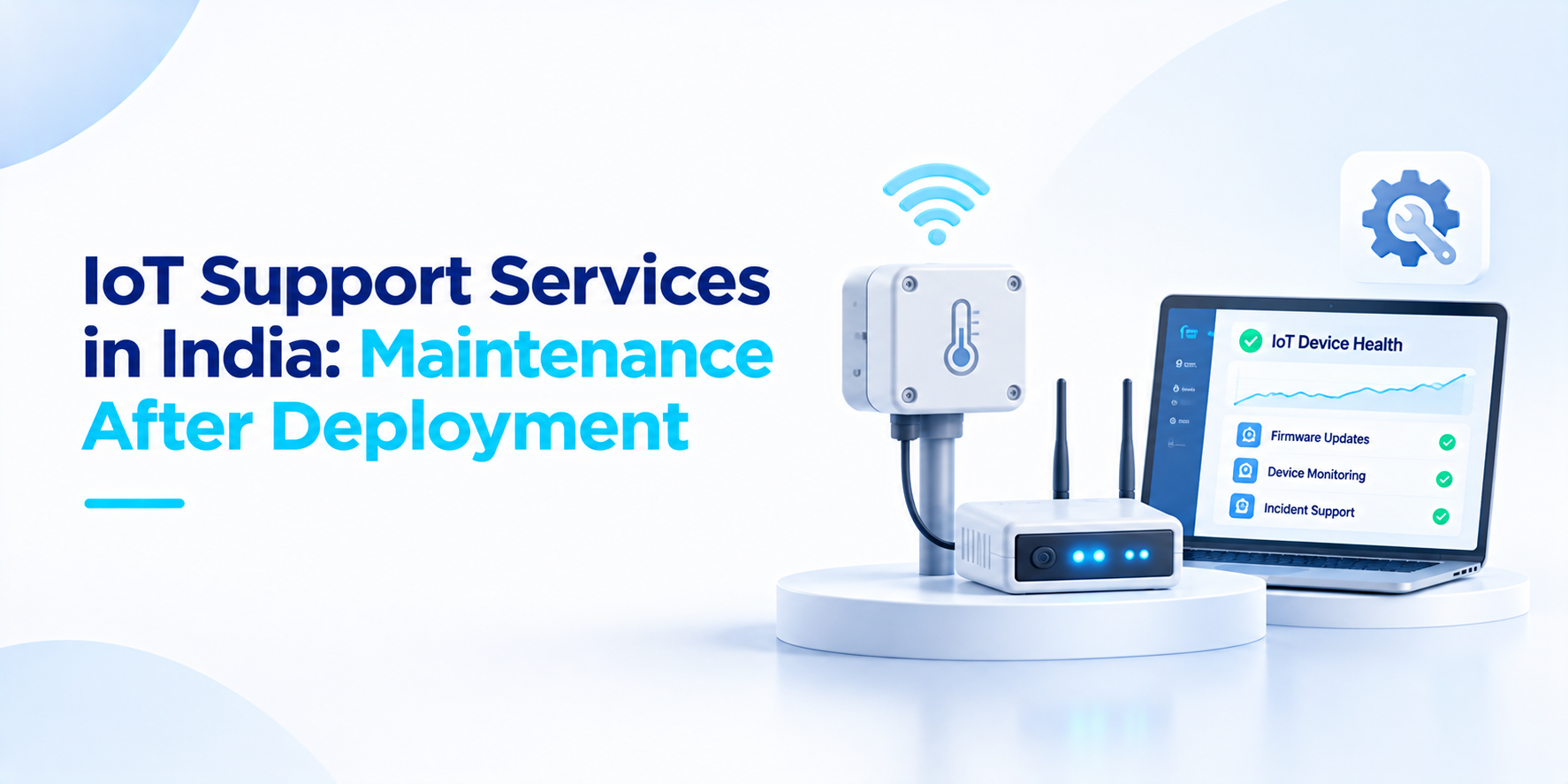
Deploying IoT devices is only the beginning. Learn how ongoing support, firmware updates, device monitoring, gateway maintenance, and security help keep IoT systems running after deployment.
 By Ankit Rawat·Published: November 8, 2026 at 6:03 PM IST
The pilot goes well. The devices are installed. The project team moves on. Then a sensor starts drifting. A gateway loses its connection. A firmware update is needed on devices scattered across cities. This is where IoT support services in India come in. This long-tail work is often the part no one budgets for.
What the India data says
A NASSCOM Centre of Excellence for IoT article, "TechVoice: How NASSCOM CoE IoT & ICANN Are Contributing To The Future of The Internet in India," talks about a project on automated firmware updates for IoT devices using IPv6. It says IIT Hyderabad managed to update firmware on several devices under different conditions but the results were mixed. The final report came out in January 2020. A second project was being reviewed. The article also warns about secured IoT devices being hijacked, referencing the 2016 Mirai botnet attack.
Three cautions. The page lacks a publication date. The references suggest it was written around 2020. It describes a research effort, not real-world enterprise usage. So it offers no data on failure rates or cost. It only covers firmware updates, not sensors, batteries, connectivity or help desk support.
What IoT support services in India should cover
This section reflects our perspective. After the launch, support involves a set of tasks. It’s best to define them before signing a contract.
- Patches: Updates must reach every device. They must be tested first. They should be reversible. The article’s "varying levels of success" is a warning. Remote updates can behave differently on devices and in different environments.
- Device health: Someone must monitor battery levels, signal strength, seen time and data quality. A device that is online but sending data is still a support case.
- Gateways: Most problems happen between the device and the cloud. Keep a list of SIM cards, networks and gateway details for each site.
- Security hygiene: Change default passwords. Remove devices that can’t be updated. Maintain an inventory of what is deployed.
- Spares and site visits: Decide who travels, how fast they go and what parts are kept in stock in each city.
- Escalation: Agree on who responds to device alerts at night. Decide when the vendor, the network provider or your own team steps in.
- What to ask before you buy IoT support services in India
- Which faults does the service cover: device, gateway, network, cloud or all four?
- How are firmware updates tested, staged and rolled back?
- What response and fix times apply? How are they measured?
- Who keeps the device inventory and the login credentials?
- How are site visits handled in cities where we have no staff?
- What reports will we receive each month?
How We Approach IoT Support Services in India
Our IoT work follows six phases: discovery and requirements, design and architecture, prototyping and validation, development and integration, deployment and maintenance and support. We treat the phase as part of the design. So the support model is discussed early, not after go-live.
If your team is planning support services in India, we’d welcome the conversation. See more on our services page.
Frequently asked questions
Q1. What are IoT support services?+
IoT support services cover the ongoing maintenance and management of connected devices, gateways, networks, and software after deployment. They can include device monitoring, firmware updates, troubleshooting, security maintenance, and technical support.
Q2. Why do IoT devices need ongoing maintenance?+
IoT devices can experience connectivity problems, sensor drift, hardware failures, battery issues, and software vulnerabilities. Regular maintenance helps identify these problems and keeps the connected system reliable.
Q3. What does IoT device maintenance include?+
IoT device maintenance can include monitoring device health, checking battery levels and connectivity, updating firmware, maintaining device inventories, troubleshooting faults, and replacing faulty hardware when required.
Q4. How are IoT firmware updates managed remotely?+
Remote firmware updates are generally delivered through a device management platform or gateway. Updates should be tested on representative devices, deployed in stages, monitored for errors, and supported by a rollback or recovery process where possible.
Q5. How can businesses monitor the health of IoT devices?+
Businesses can monitor device connectivity, battery levels, signal strength, last-seen timestamps, sensor readings, and data quality. Alerts can help identify devices that have stopped reporting or are sending unusual information.
Q6. Can IoT support services cover multiple cities in India?+
Yes. Depending on the provider's support model, IoT services can cover remote monitoring and technical assistance across multiple locations, with on-site support arranged where necessary. Businesses should confirm the actual geographic coverage and response commitments.
Q7. How can businesses improve IoT device security after deployment?+
Businesses should maintain an accurate device inventory, change default passwords, restrict access, apply tested firmware and security updates, monitor unusual activity, and plan how unsupported devices will be replaced or isolated.
Keep Your IoT Systems Running After Deployment
EICE provides IoT services covering planning, integration, deployment, maintenance, and ongoing support to help businesses manage connected systems throughout their lifecycle.