How EICE Technology Builds Next-Generation Engineering Software for Oil and Gas Equipment Manufacturers
Acquisitions can leave oil and gas equipment manufacturers with fragmented engineering tools and inconsistent processes. Learn how EICE Technology approaches the modernization of ESP design, analysis and monitoring software.
 By Ankit Rawat·Published: September 14, 2026 at 6:33 PM IST
Why ESP manufacturers built through acquisitions end up with fragmented design tools
Electrical submersible pump (ESP) companies often grow by acquiring other companies. With this, they also inherit all the tools that those companies were using. For example, one company uses their own spreadsheet while another uses different commercial software. For the same design and analysis work, engineers can use different methods. Over time, this creates so many different processes and tools. So it becomes tougher for companies to follow a standard way for designing, analysing, and monitoring ESP systems.
What building next-generation ESP design software actually involves
In an engagement, the client had grown through many acquisitions to become one of the world’s largest ESP vendors, with a strong position in Russia and China. The first step is studying how the company is working instead of starting to build software. It includes:
- Reviewing the company’s existing spreadsheets.
- Checking the commercial software that is already used.
- Studying competitor software.
- Taking interviews across the company
From these kinds of discussions, the team gets help in understanding how engineers were doing ERP analysis, design and monitoring day-to-day. The information which get collected from this assessment is used to plan the new software platform that can bring all these tools into one centralised platform.
What the resulting platform looked like
The platform was built as a web application running on Microsoft Azure. It used a proprietary orchestration engine to handle the underlying analysis logic; the frontend that is used HTML5 and jQuery and**** WCF RESTful services were used to connect the different parts of the system. The main focus was to provide engineers with a modern, web-based platform for ESP analysis, design and monitoring rather than using multiple tools based on acquired company they came from.
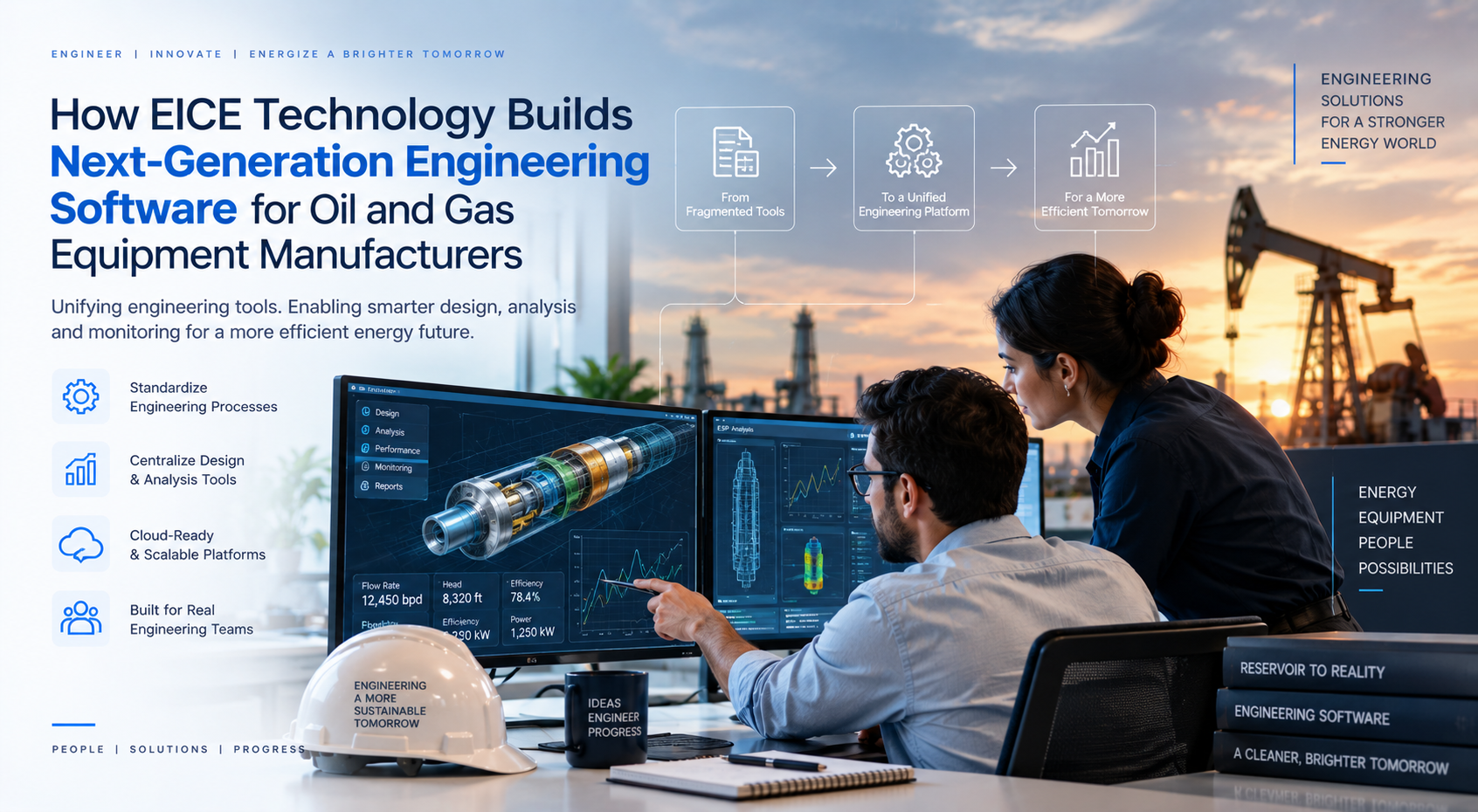
How EICE Technology builds next-generation engineering software for oil and gas equipment manufacturers
As an IT company, we led the assessment and design of this platform, including the proprietary XWORK engine that is used to power the analysis capabilities. Our processes are supported by ISO 27001 and ISO/IEC 20000 certifications, along with CMMI Level 3 and ISO 9001. The same structured approach was used to review legacy tools and design a replacement platform; this is consistent with how we approach engineering software work generally. If your company has grown through acquisition and is dealing with fragmented, inconsistent engineering tools, we’d be happy to connect. See our Services Page.
Frequently Asked Questions
Q. Why do ESP manufacturers need to modernize their engineering software?
A. Engineering software development involves building specialized applications that support engineering workflows such as equipment design, analysis, monitoring, and technical decision-making. For oil and gas equipment manufacturers, these platforms can bring previously fragmented tools and processes into a more centralized environment.
Q. Why do ESP manufacturers need to modernize their engineering software?
A. ESP manufacturers that have grown through acquisitions can inherit different spreadsheets, commercial applications, and engineering processes. Modernizing these tools can help create a more standardized platform for ESP design, analysis, and monitoring across the organization.
Q. What is ESP design software used for?
A. ESP design software supports engineers in designing and analyzing electrical submersible pump systems. A centralized platform can bring design and analysis capabilities together rather than requiring engineers to work across multiple disconnected tools.
Q. How does EICE Technology approach engineering software modernization?
A. EICE Technology begins by assessing existing tools and engineering workflows before defining the new platform. In this engagement, EICE led the assessment and platform design, including the proprietary XWORK engine that powers the analysis capabilities.
Q. What technologies can be used to build engineering software platforms?
A. The technology stack depends on the engineering requirements and existing systems. In this engagement, the platform used Microsoft Azure, HTML5, jQuery, WCF RESTful services, and the proprietary XWORK orchestration engine.
Have fragmented engineering tools across acquired businesses?
Talk to EICE Technology about assessing legacy engineering workflows and designing a centralized software platform for your engineering, analysis and monitoring requirements.