SaaS Onboarding in India: How First Use Shapes Retention
SaaS onboarding shapes how quickly new users discover a product’s value and whether they continue using it. Learn how to simplify setup, define activation milestones and use onboarding analytics to identify friction and improve retention.
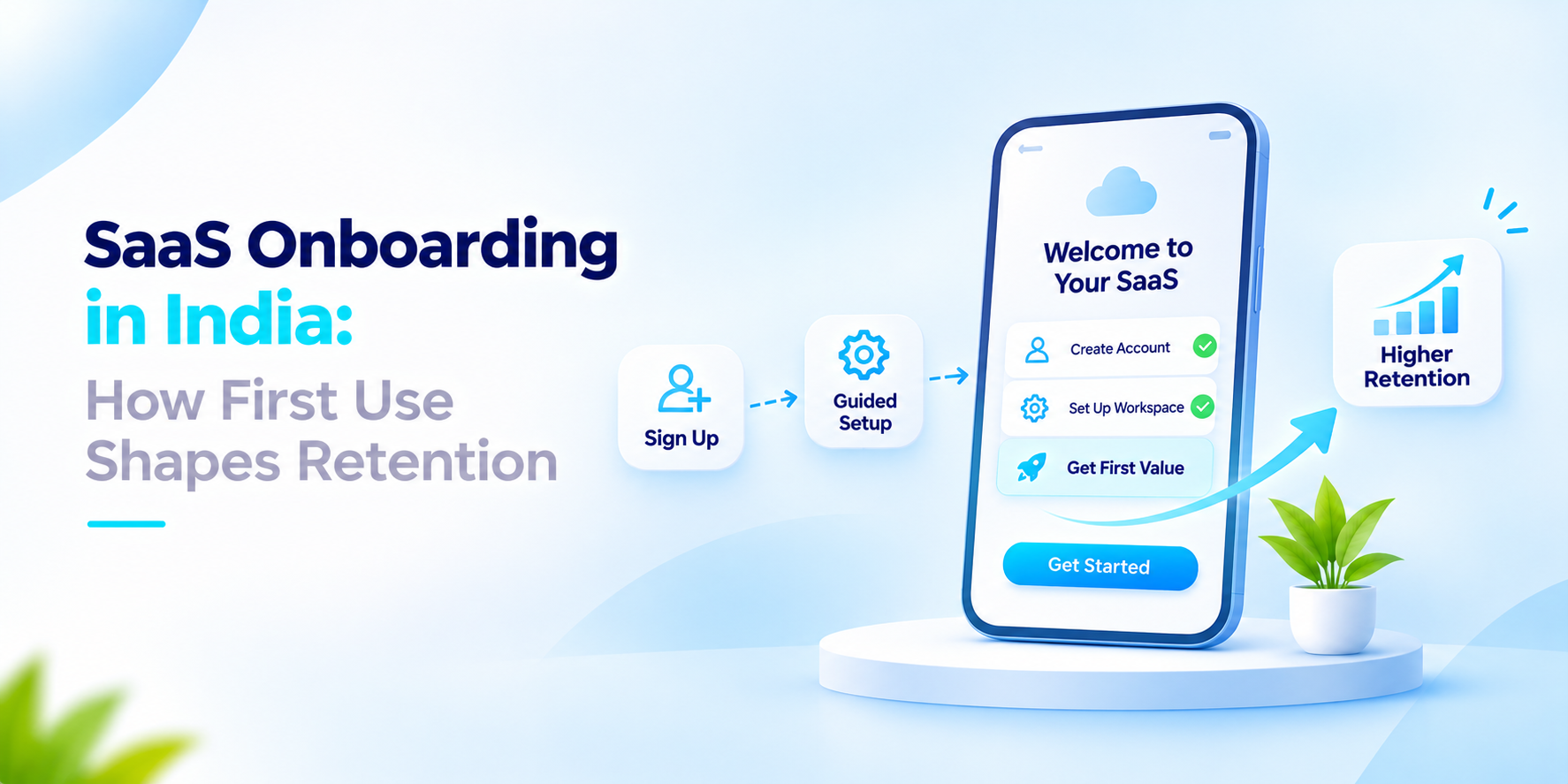
A customer signs up, logs in a time and never comes back. The product works. The first session did not. SaaS onboarding is the route from sign‑up to the moment a user receives value and for most products it decides whether that user remains.
What the India data says
According to KPMG's May 2019 report, Customer Success: An Indian Perspective, this research was conducted between August 2018 and February 2019. This report has found many different metrics for SaaS businesses. According to Gartner, a new customer costs 5 to 12 times more than selling to an existing customer. The report has said that the Indian Saas market will reach USD 4.4 billion by 2022.
There are some points to remember: this report does not show the real figures for onboarding time, churn and retention. This supports these metrics' importance but does not provide benchmarks to follow them. The customer acquisition cost figure comes from Gartner and is global. The report does not explain how the figure was calculated. This report was from 2019 and it does not provide the details of respondents.
Where SaaS onboarding goes wrong
This section reflects our view. Most failures arise when the new user is asked to do much before seeing a result.
Long sign‑up forms. SaaS onboarding should ask for what the first session needs. SaaS onboarding can collect the rest later.
An empty product. A blank dashboard offers nothing for a user to react to. Sample data or a ready template demonstrates what good looks like.
No defined first win. Decide what "value" means for your product, such as the report sent or the first invoice raised and measure how many new users reach it and how long it takes.
Setup that needs your team. If a customer must wait for a person to configure the account the first‑use experience stalls. Move setup into the product.
Review SaaS retention by sign‑up cohort. If users from one month stay longer than those from the next, examine what changed in the week. Fix the session before spending on win‑back campaigns.
What to ask before you redesign SaaS onboarding
- What is the first value moment? How long does a new user take to reach it?
- Where do users leave between sign‑up and that moment?
- Which setup steps can the product do without a person?
- Do we track activation by cohort or total sign‑ups?
- Who owns the product onboarding flow after launch?
- How will we know a change helped?
How We Approach SaaS Onboarding
Our App Development practice includes SaaS Development, on cloud‑native foundations (AWS, Azure or GCP) delivered in two‑week sprints. We treat the onboarding flow as part of the product, not an add‑on. We start by agreeing on what the first value moment is, then plan the first‑use screens and the events that measure it.
If your team is reworking SaaS onboarding, we’d welcome the conversation.
Frequently asked questions
What is SaaS onboarding?+
SaaS onboarding is the process of helping new users understand a software product, complete necessary setup and reach their first meaningful outcome. It can include guided steps, templates, sample data, tooltips and contextual help.
Why is onboarding important for SaaS retention?+
If users struggle to understand a product or cannot reach the outcome they signed up for, they may stop using it. Clear onboarding can reduce early friction, although long-term retention also depends on product quality and continuing value.
What is the first value moment in SaaS?+
The first value moment is the point at which a user experiences a meaningful benefit from the product. For one product, it might be generating a report; for another, it could be sending an invoice or completing a booking.
What is time-to-value in SaaS?+
Time-to-value measures how long it takes a user or customer to realise a defined benefit from a product. Teams should specify the starting point, the value event and the measurement window so the metric is consistent.
How can SaaS companies improve onboarding?+
They can simplify sign-up, remove unnecessary setup steps, provide relevant templates or sample data, guide users toward one clear outcome and measure where users abandon the flow.
Turn First-Time Users Into Active Customers
Create a smoother SaaS onboarding experience with clear first-use flows, useful setup guidance and measurable activation events. Let’s identify where users get stuck and plan a better path to value.