SaaS Pricing Models in India: Subscription, Usage and Tiered
Choosing the right SaaS pricing model affects customer adoption, recurring revenue, and billing complexity. Compare subscription, usage-based, and tiered pricing to understand which approach may fit your product and customers.
 By Anjali Daksh·Published: October 22, 2026 at 9:23 PM IST
A lot of founders spend many months just building a product and a very small amount of time deciding on pricing. But the pricing also matters; it affects who buys the product, how much they pay, and whether they are going to continue using it. So, it is important to choose the right SaaS pricing models when building a successful product.
What the India data says
According to the Nasscom community post from July 2020, it shared some figures about India's SaaS industry. It reported that:
- India's SaaS revenue was $3.5 billion in FY2020.
- The industry was growing at 30%.
- Global customers contributed 75% of the revenue.
- India had more than 1,000 SaaS companies focused on SaaS products.
This post suggested Indian Saas companies to offer them a flexible pricing and invest in sales and marketing. But the things to be noted are, this post is from 2020 with no name of author. This does not explain the three pricing models. Also, since 75% of the reported revenue came from global sales, the numbers have nothing to tell about how much Indian customers are going to pay.
SaaS pricing models: how the three compare
This is our view: the correct pricing order depends on the products and how the customers use them.
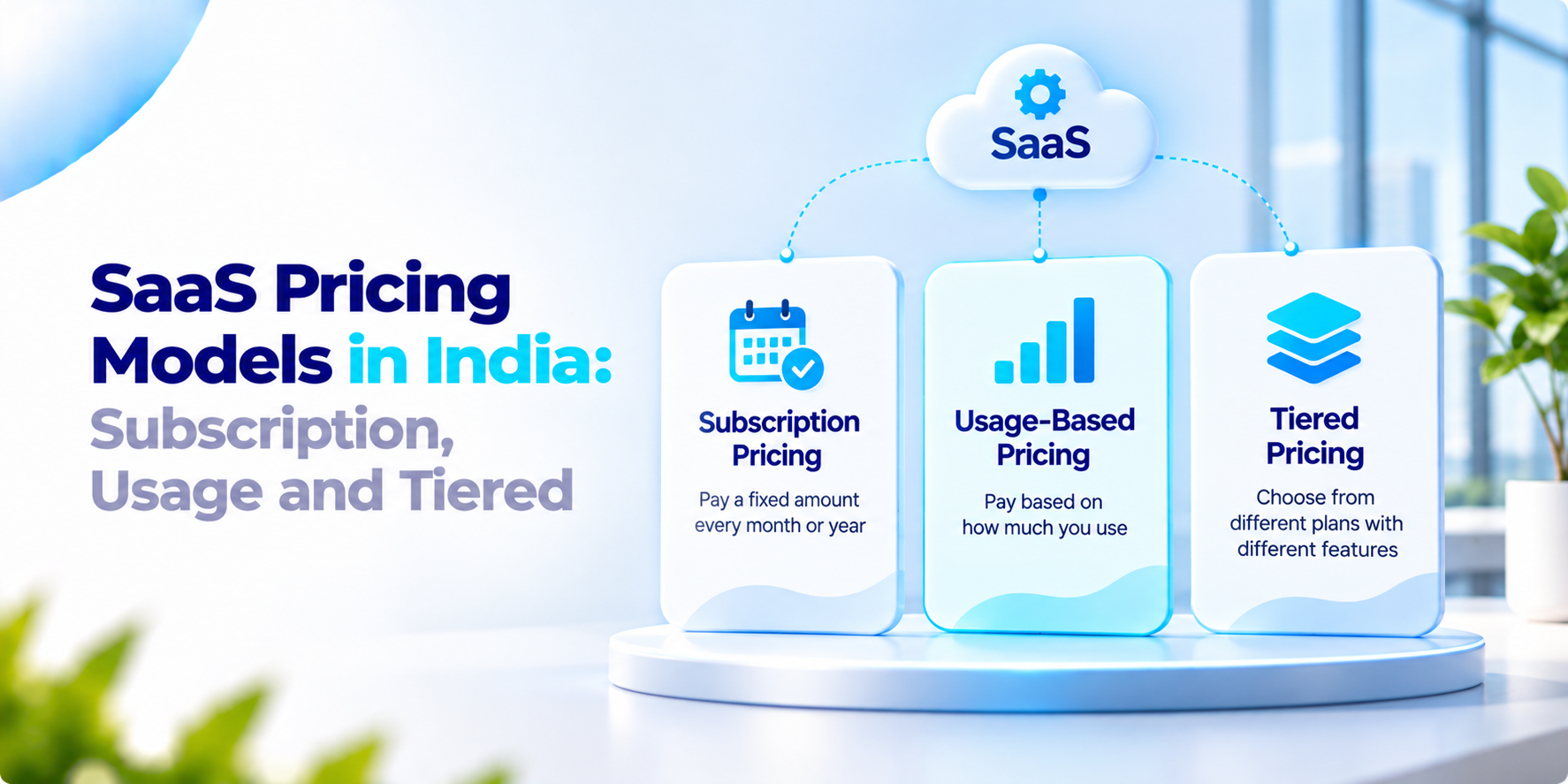
Subscription Pricing: Customers have to pay a fixed amount every month or year. This is easy to understand, and it provides help to businesses in planning the income. It works well when most customers get similar value from the product.
Usage-Based Pricing: Customers usually pay according to their use of the product. For example, they may pay for the number of messages sent or records stored. This works when the use changes from one customer to another. So, bills can be different every month, and it can make costs hard to plan for customers.
Tiered Pricing: Customers have to choose from different plans and different prices. Every plan has its own usage limits and features. This provides help to smaller businesses with a basic plan to start and larger businesses to choose an advanced one.
There are some points to note. If there are a lot of options, users can get confused, which can lead to difficulty in choosing. Some businesses combine these models. For example, they may offer a monthly usage limit and charge more if customers go over it.
In India, businesses should also consider price sensitivity, monthly payments, local payment methods, and GST when setting their prices. It is very important to test pricing with real users before finalizing it.
What to ask before you set a price
Ask these questions before choosing a pricing model,
- What do customers value most about our product?
- Who pays for the product, and who decides to buy it?
- Will customers be able to predict their monthly bills?
- Can customers easily upgrade or downgrade their plans?
- Can our system calculate and collect payments using this pricing model?
And the final question is important. Your product should be able to calculate bills based on the chosen pricing model. At least talk to 10 customers about your prices before finishing the plans. You should review the pricing every few months and make changes according to customer feedback. So, remember, the first price is your starting point, and the real customers can guide you on what works.
How We Approach SaaS Pricing Models
SaaS development is part of our App Development service. We build cloud-based products using AWS, Azure, and GCP. We work in a deployment cycle of two weeks and create features one by one. In the development process, we also plan billing features. This includes the pricing plans, usage limits, and tracking how much each customer uses. For SaaS pricing models, first we try to understand what the customer is actually paying. After this, we build the billing system to match the pricing model. If you're planning a SaaS product and need help choosing or building its pricing system, we’d be happy to discuss your requirements.
Frequently asked questions
What are the main SaaS pricing models?+
The three common SaaS pricing models covered in this article are subscription-based pricing, usage-based pricing, and tiered pricing. Subscription pricing charges a fixed recurring fee, usage-based pricing depends on consumption, and tiered pricing offers plans at different prices with different features or limits.
What is subscription-based SaaS pricing?+
Subscription-based pricing charges customers a fixed amount monthly or annually. It makes costs easier to predict and can work well when customers receive similar value from the product.
What is usage-based pricing in SaaS?+
Usage-based pricing charges customers according to how much they use a product. For example, a business might charge based on the number of messages sent or records stored. Customers pay according to consumption, but their bills may vary from month to month.
What is tiered pricing in SaaS?+
Tiered pricing offers multiple plans at different price points, with each plan providing specific features, usage limits, or service levels. It can help businesses serve customers with different needs, from smaller teams to larger organisations.
Which SaaS pricing model is best for a startup?+
There is no single best model for every startup. Subscription pricing can provide predictable recurring revenue, usage-based pricing can align charges with consumption, and tiered pricing can accommodate different customer segments. Startups should test their options with real customers before deciding.
Building a SaaS product?
Talk to EICE about designing a billing system that supports your pricing plans, usage limits, and customer requirements.