AI Legacy Modernization in India: Why Discovery Comes First
AI legacy modernization starts with understanding the systems already in place. Learn how code discovery, dependency mapping, risk assessment, and human review can help teams plan safer modernization.
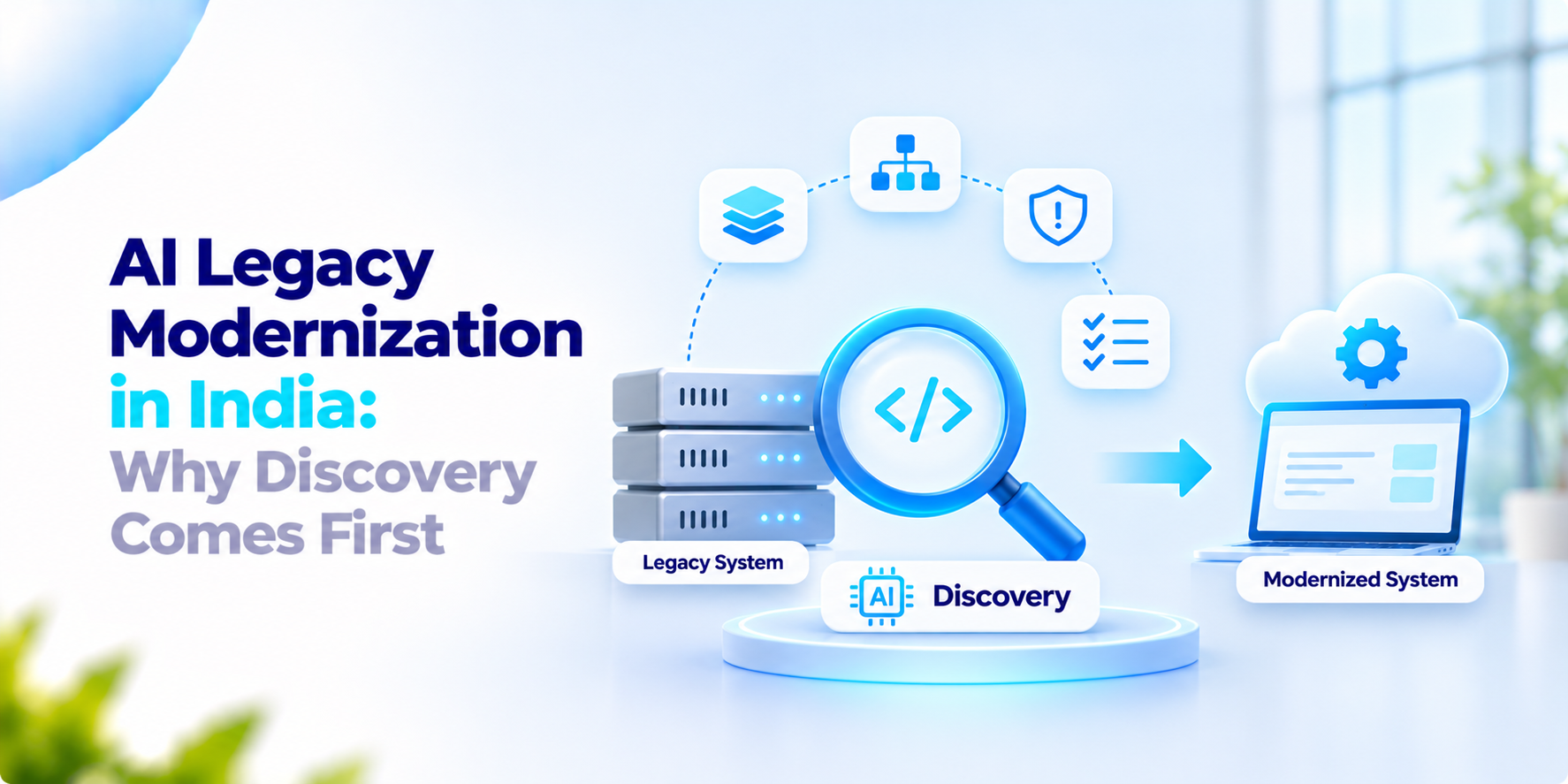
 By Anjali Daksh·Published: October 22, 2026 at 9:24 PM IST
Replacing the old software system is not always the hardest part. The main thing is to understand how it works. The developers who worked on it may have left, the documentation can be outdated, and maybe nobody knows about the systems depending on it. AI legacy modernization is helpful in making the process work faster. But at first, the team needs to understand what they actually have.
What the India data says
A survey by Rackspace Technology in partnership with AWS was covered by CXOToday on July 24, 2023. The survey included 1,420 IT leaders from around the world, with data collected in April and May 2023. For India, the report shared:
- 75% of respondents agreed that they would not benefit from AI if they failed to modernize their legacy applications and data.
- 24.09% of legacy infrastructure had not yet been assessed.
- Only 30% of local respondents used cross-functional teams for modernisation.
This shows why it is important to understand the current system and involve the right people while planning the modernisation.
But there are some points to keep in mind: the survey was from 2023 and was commissioned by two technology vendors. The article does not mention the number of respondents specifically from India, and it does not clearly state whether every figure applies only to India.
AI legacy modernization: what discovery means
This is our view: before changing any code, teams should be able to answer these questions.
- What is in the system? List all applications, modules, databases, and background jobs, including those that have not been used or reviewed for years.
- What depends on what? A small change in one module could affect a report or another application. Mapping these connections helps prevent unexpected problems.
- What is risky? Some code contains important business rules that are not documented anywhere else. These parts need extra care.
- What should be changed first? Start with parts that are well understood and low risk before moving on to more complex areas.
AI can be helpful for teams to read large codebases, explain how the modules work, and explain possible dependencies quickly. But this can also misunderstand the code or miss the details. The findings need human review, and every change going into production should be approved by a person.
What to ask before you modernize
Ask these questions before modernizing the project. This will help you with reducing the risk of common problems while modernisation.
- Do you have an up-to-date list of your applications and their owners?
- Which systems would cause the biggest problems if they failed?
- Who understands the business rules in the old code?
- How will you check that the new system works like the old one?
- Who will approve each change?
How We Approach AI Legacy Modernization
EICE Catalyst is our integrated enterprise AI platform. It offers AI-powered modernization for legacy code discovery, dependency mapping, refactoring, and migration. The Agentic delivery process includes human review at the defined checkpoints instead of leaving reviews until the end. For AI legacy modernization, we start by understanding the existing system and mapping its dependencies before making changes.
If your team is planning to modernise older systems, we’d welcome a conversation about how we can help.
Frequently asked questions
What is AI legacy modernization?+
AI legacy modernization is the process of using AI to help understand, improve, refactor, or migrate older software systems. It can assist with code analysis and dependency discovery, while human review helps validate findings and approve changes.
Why should discovery come before legacy modernization?+
Discovery helps teams understand existing applications, databases, background jobs, dependencies, and undocumented business rules before making changes. This reduces the risk of unexpected issues during modernization.
How can AI help with legacy code discovery?+
AI can analyze large codebases, explain how modules work, identify potential dependencies, and help developers understand unfamiliar code faster. Its findings should be reviewed by experienced developers because AI can miss details or misinterpret code.
What is dependency mapping in software modernization?+
Dependency mapping identifies how applications, modules, databases, and other system components interact. It helps teams understand which components may be affected when a particular part of the system changes.
What are the main risks of modernizing legacy systems?+
Common risks include undocumented business logic, unknown system dependencies, outdated documentation, insufficient testing, and changes that affect other applications. Discovery, dependency mapping, testing, and human review can help reduce these risks.
Planning to modernize a legacy system?
Talk to EICE about discovery-first AI modernization, dependency mapping, and human-reviewed code changes.
Related in AI & Machine Learning
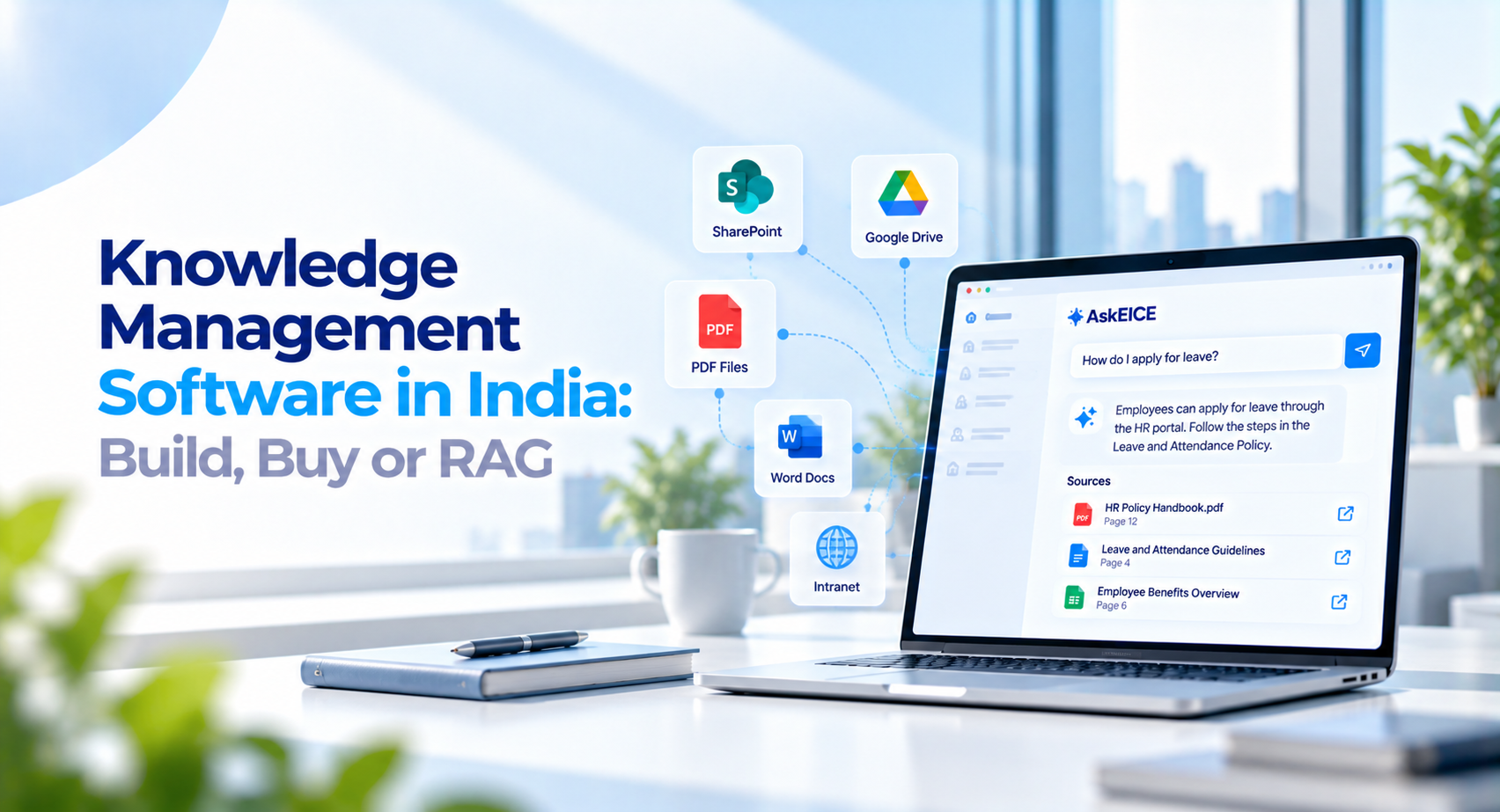
Knowledge Management Software India: Build, Buy or RAG
Should you buy knowledge management software, build a custom system, or use RAG to search existing company documents? Compare the options, evaluate source citations and access controls, and choose an approach that fits your team's needs.
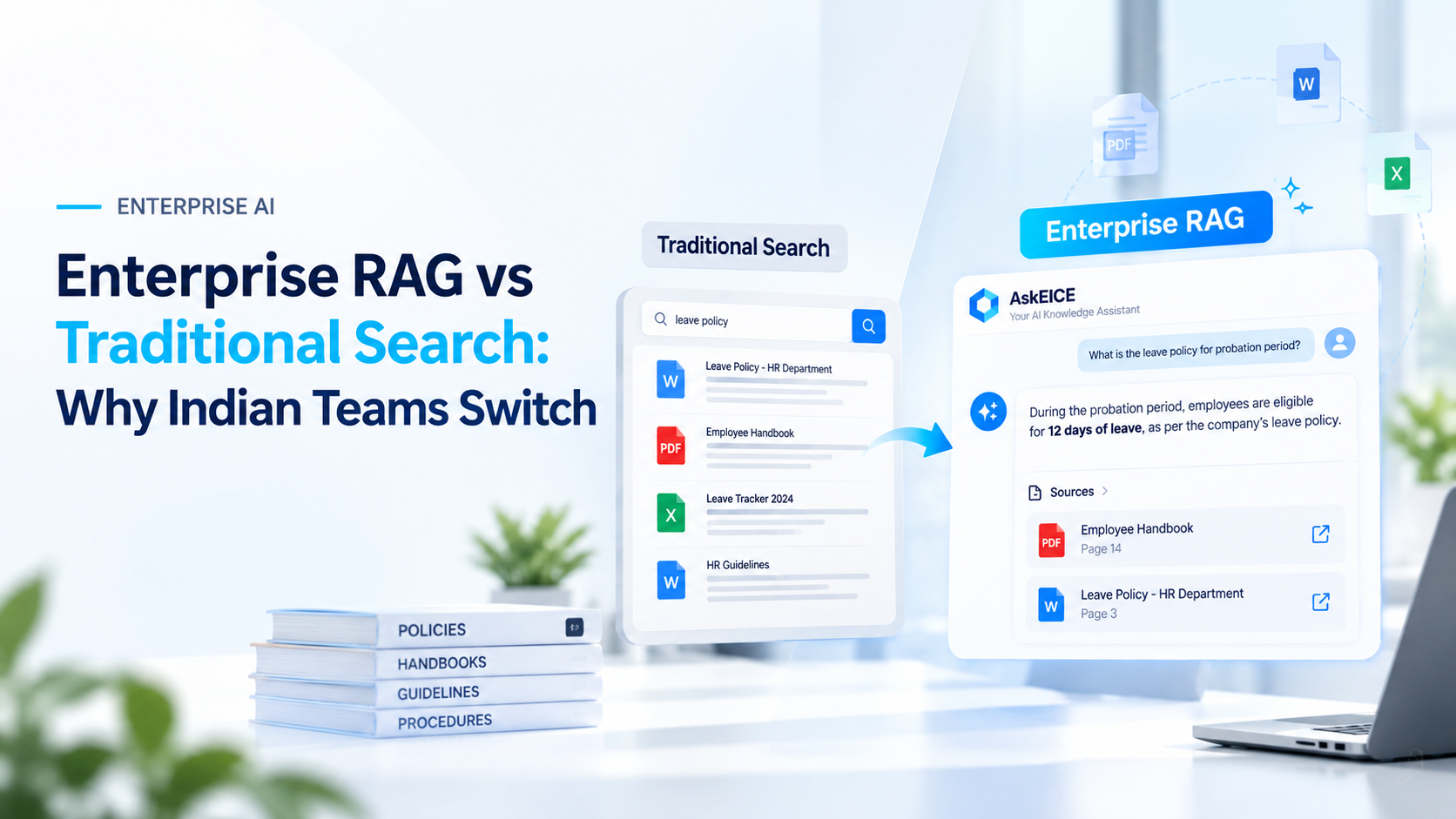
Enterprise RAG vs Traditional Search: Why Indian Teams Switch
Traditional search helps employees find documents, while enterprise RAG can answer questions using information retrieved from company knowledge sources. Learn how they differ, what to evaluate, and when a combined approach makes sense.