Turn an Internal Tool into a SaaS Product in India: What Changes
An internal tool may work perfectly for one team, but turning it into a SaaS product requires more than making it available online. Explore the changes needed in architecture, tenant isolation, security, onboarding, pricing and customer support before launching to external customers.
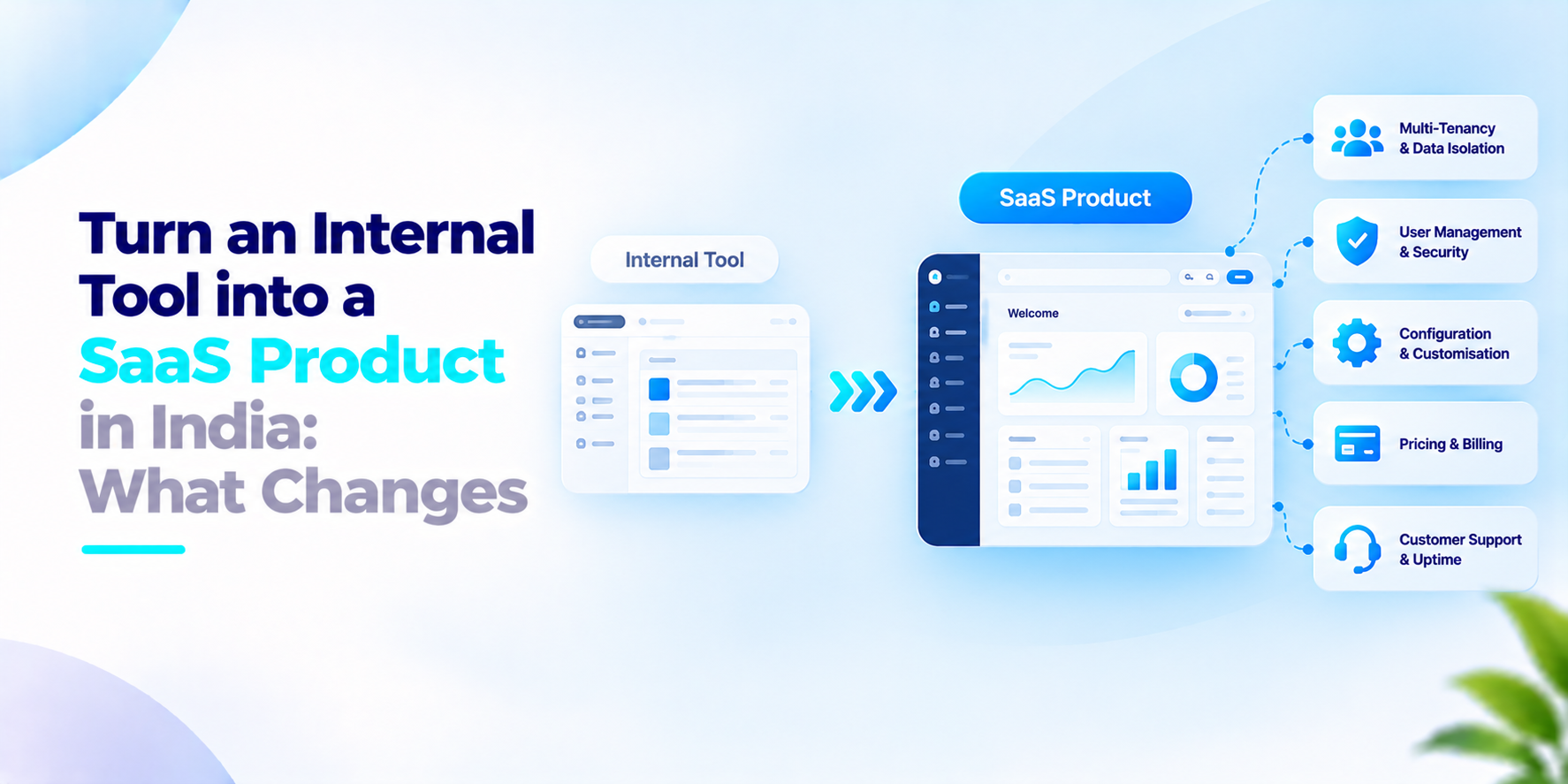
Many teams have a tool built for themselves. It works well. Then a customer sees it. Asks to use it. The idea to turn a tool into a SaaS product sounds good. The tool was built for one user group. It was built for one set of data. It was built for one team that knows its quirks. This post covers what changes are needed when you take a tool and turn it into a SaaS product.
What the India data says
Bain's India SaaS Report 2021 published on 7 December 2021 says investment in Indian SaaS rose to $4.5 billion in 2021. It also says that 35 Indian SaaS companies had annual recurring revenue above $20 million. On what winners do it says they invest time in the product-market fit. They also invest in pricing and go-to-market actions to support the product.
There are three cautions. The page does not state its sources, sample or method. It is a 2021 snapshot. That is now years old.. It does not discuss moving an internal tool to a product. So it supports the point that fit and pricing matter. It says nothing on the build itself.
What changes when you turn a tool into a SaaS product
This section is our view. An internal tool trusts its users. A product cannot.
Tenancy. One company's data must never appear to another. Decide early whether tenants share a database or each gets its own.
Identity. Roles, sign-in, password reset and audit trails need to work for people you have never met.
Onboarding. Your team learned the tool from a colleague. A customer needs a guided use and clear errors.
Plans. Decide what is free, what is paid and how usage is measured.
Support and uptime. Customers expect a response and a status page. Someone has to own them.
Configuration. Coded rules that suit your company must become settings.
Before you build, ask whether a second customer would use the tool as it is. If three of five core flows are specific to your company, you may be building a product. Not packaging the one. Talk to likely buyers first. Their questions will show which parts of the tool are general and which are yours.
What to ask before you turn a tool into a SaaS product
- Who is the customer and have they seen the tool?
- Which parts are specific to us and can they become settings?
- How will we separate each customer's data?
- Who owns support, upgrades and incidents after launch?
- How will we price it. How will we measure usage?
- Does the existing code have tests and documentation we can build on?
How We Approach Turning an Internal Tool into a SaaS Product
Our App Development service includes SaaS development on native architecture across AWS, Azure and GCP. We build security around OWASP practices. We deliver in two-week sprints. We start by reviewing the tool. Then we agree which parts become the product. Then we plan the work in sprints.
If your team is weighing how to turn a tool into a SaaS product, we'd welcome the conversation.
Frequently asked questions
Can an internal business tool be turned into a SaaS product?+
Yes. An internal tool can become a SaaS product if it solves a problem shared by other businesses and can be adapted to support multiple customers, secure data separation, onboarding, billing and ongoing support.
What is the difference between internal software and SaaS software?+
Internal software is generally designed for a known organisation, its users and its workflows. SaaS software must support external customers, different configurations, independent access, customer data separation, subscription management and ongoing product operations.
What is multi-tenant architecture in SaaS?+
Multi-tenant architecture allows one application to serve multiple customers, called tenants, while keeping each tenant's data and access appropriately separated. Depending on security, compliance, scale and cost requirements, organisations can choose shared or dedicated infrastructure.
Should every SaaS product use a multi-tenant database?+
No. A shared database with tenant-level data separation is one option, but some products may need separate databases or dedicated environments for particular customers. The choice depends on isolation requirements, compliance, operating costs and scalability.
What features should an internal tool have before becoming SaaS?+
It should be evaluated for authentication, role-based permissions, tenant isolation, onboarding, configuration, billing, usage tracking, monitoring, backups, support and documentation. Not every feature must exist before the first release, but the product roadmap should account for them.
Ready to Turn Your Internal Tool into a SaaS Product?
Evaluate your existing application, identify product-ready features and plan the architecture, security and development roadmap needed to serve multiple customers.