Website Speed Optimisation in India: Why Page Speed Matters
Discover why website speed matters for Indian businesses, how to measure mobile performance with Core Web Vitals, and how image optimisation, caching, and performance budgets can help keep pages fast as websites evolve.
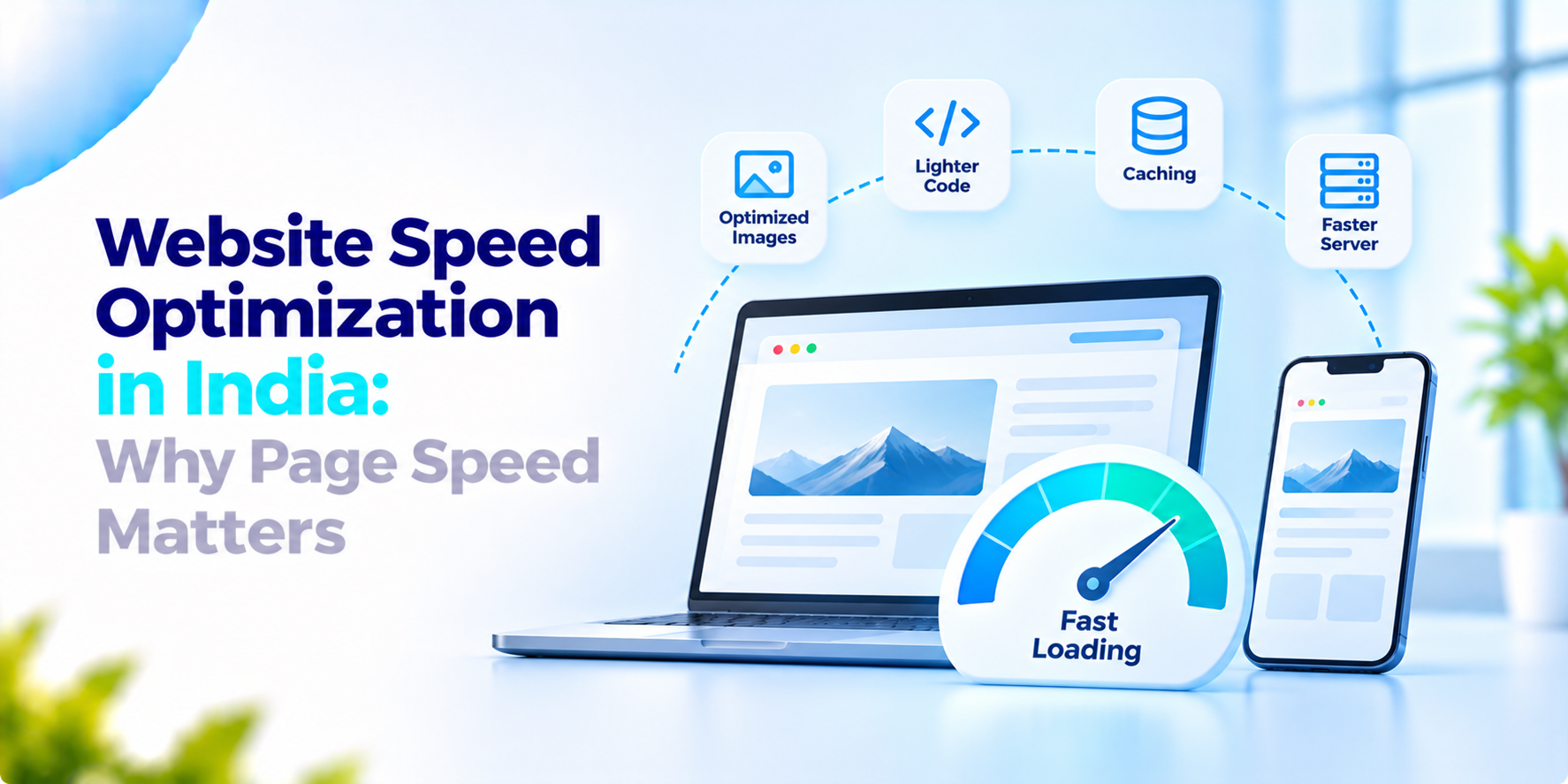
I believe visitors do not wait. When a page is slow, they leave. They rarely come back to explain why. Website speed optimisation is the process of making pages load and respond quickly. In India, where many visitors browse on phones over networks, this matters even more.
What the India data says
The Masters of Mobile study conducted by Accenture Interactive for Google and published in December 2018 evaluated 110 mobile websites across financial services, retail, e-commerce and travel. Indian sites scored 55% on speed the lowest of the four categories. Product and page design scored 80%, registration and conversion 73% and findability 69%. The report also cites that 53% of people leave a site that takes longer than 3 seconds to load.
Three cautions. The data is from 2018, now networks and phones have changed. Speed was scored against an Asia‑Pacific benchmark not in seconds. The 53% figure is a general statistic quoted in the coverage not a result measured on those 110 sites. Use it as a guide.
Where website speed optimisation starts
Slow pages usually share some causes: oversized images, too much script from trackers and widgets, a slow server response, no caching and heavy pages loaded in full for every visitor.
Measure first. Use Core Web Vitals. Test on a mid‑range phone over a mobile connection not on office Wi‑Fi. Fix the item first. One 2‑MB banner image costs more than ten small code tweaks. Then measure again after every release because pages gain weight over time as people add features and tags.
Speed is also a design and content decision. Every video, font and widget costs something. Someone needs to own the budget. Set a rule, such as a maximum page weight or a load‑time target on a mid‑range phone and check new content against it before it goes live. A rule that everyone can see is easier to keep than a clean‑up a year later.
What to ask before you commission website speed optimisation
1. Which pages and devices will you. Over what connection?
2. Which numbers will we track, before and after?
3. Will the work change our design or content?
4. Who stops the site slowing down again after release?
5. Will you fix the causes? Only add a caching layer on top?
6. How soon will we see a change?
How We Approach Website Speed Optimisation
Our Web Development service builds business websites and web applications with React and Next.js. We agree on speed targets with you at the start so they are part of the brief and not a late fix. We check each release against them.
If your team is planning website speed optimisation we welcome the conversation.
Frequently asked questions
What is website speed optimisation?+
Website speed optimisation is the process of improving how quickly a website loads, responds to user interactions, and displays content. It can involve image compression, script optimisation, caching, server improvements, and reducing unnecessary page resources.
Why does website speed matter for Indian users?+
Visitors in India may access websites using different mobile devices and network conditions. Testing performance on realistic mobile connections helps businesses identify problems that may not appear during testing on fast office Wi-Fi.
What are Core Web Vitals?+
Core Web Vitals are Google's metrics for assessing important aspects of user experience. They cover loading performance through Largest Contentful Paint (LCP), interactivity through Interaction to Next Paint (INP), and visual stability through Cumulative Layout Shift (CLS).
How can I improve my website's loading speed?+
Start by measuring performance on important pages. Then investigate oversized images, unnecessary JavaScript, slow server responses, caching, and resources that block rendering. Re-test after each significant change to confirm that the improvement is measurable.
Does image optimisation improve website speed?+
It can. Compressing images, choosing appropriate formats and dimensions, and loading below-the-fold images when needed can reduce the amount of data a page needs to download. The benefit depends on the original page and its assets.
Make Every Page Faster and More Responsive
Improve website performance with a focus on mobile experience, efficient page delivery, and measurable speed targets. Explore EICE Web Development services to build performance into your website from the start.