Enterprise RAG vs Traditional Search: Why Indian Teams Switch
Traditional search helps employees find documents, while enterprise RAG can answer questions using information retrieved from company knowledge sources. Learn how they differ, what to evaluate, and when a combined approach makes sense.
 By Ankit Rawat·Published: October 17, 2026 at 12:40 AM IST
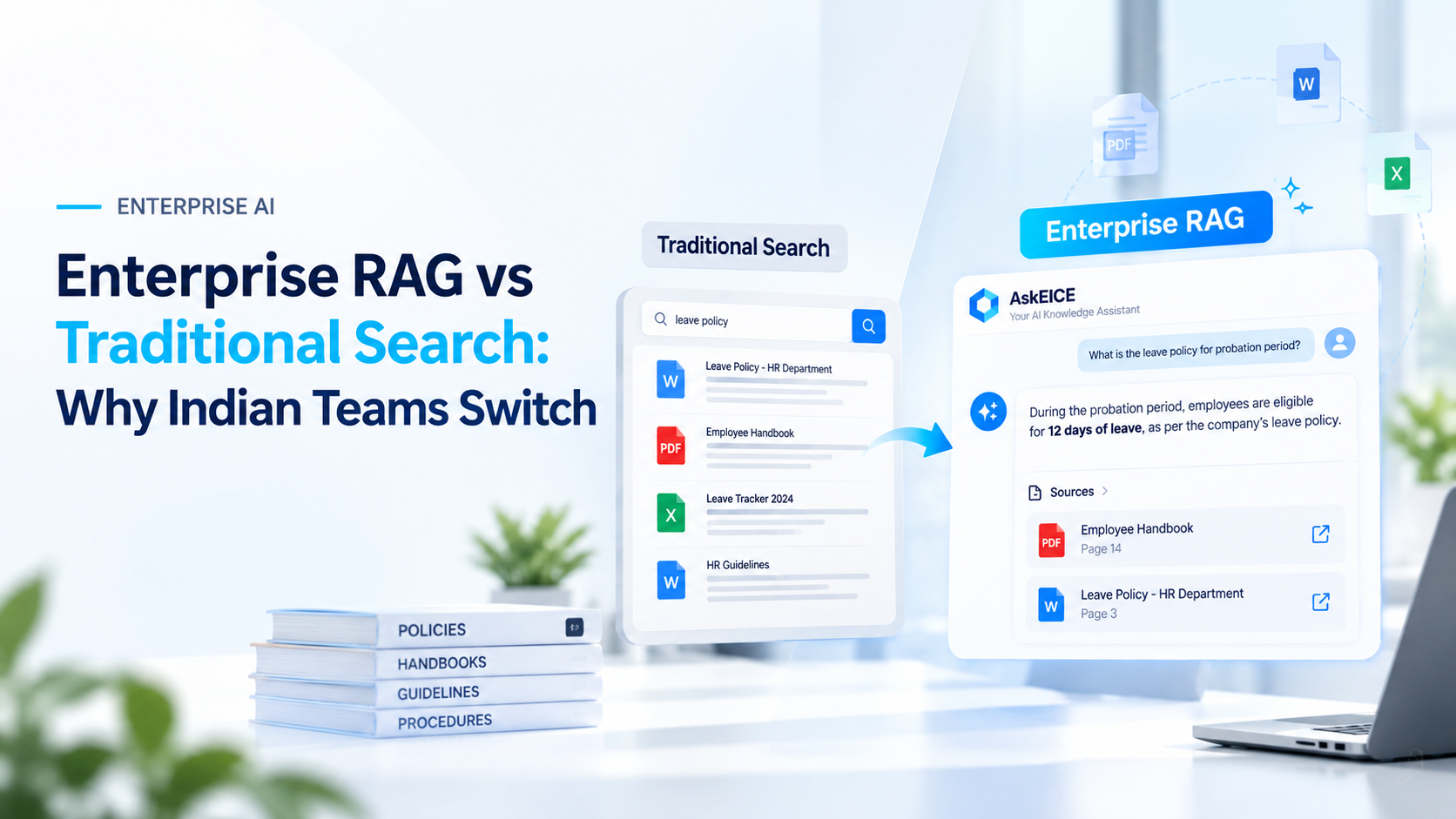
Type a question into a company search box and you get a list of documents. Ask a colleague and you get an answer. Enterprise RAG vs traditional search is largely that difference: one hands you files to read, the other reads them for you and replies in plain words.
Here is what the original research says, and where each approach fits.
What the Original RAG Research Says
According to a 2020 paper by Patrick Lewis and colleagues, large language models store facts in their parameters, but their ability to reach that knowledge precisely is limited. The paper adds that “providing provenance for their decisions and updating their world knowledge remain open research problems.” Its answer was retrieval-augmented generation, or RAG: a model paired with an external memory, in their case a dense vector index of Wikipedia, reached through a neural retriever. The authors report state-of-the-art results on three open-domain question-answering tasks, and say RAG models generated “more specific, diverse and factual language” than a model without retrieval.
Three cautions. This is 2020 research tested on Wikipedia, not on a company’s own documents. The abstract treats provenance and updating as open problems, not solved ones. And it holds no data on Indian enterprises, so nothing here shows that Indian teams are switching. That part is our observation.
Enterprise RAG vs Traditional Search: Where Each Fits
This section is our view. The two do different jobs.
- Exact lookups: If you know the policy number, the clause or the part code, traditional search is fast, predictable and easy to audit. RAG adds little.
- Questions in plain words: If the answer is spread over several documents, or the document uses different words than the question, RAG is the better fit.
- Sources shown: A RAG answer you can’t trace to a page is a risk. Look for answers that point back to the document.
- Permissions kept: Both must respect who is allowed to see what.
Many companies need both. Start small. Take twenty real questions your staff asked last month, run them through each approach, and check every answer against the source document. The results will tell you where each one belongs.
What to Ask Before Choosing Enterprise RAG
- Does every answer link to its source document and page?
- How do new and changed documents get indexed?
- Can it read scanned files and images?
- How does it respect document-level permissions?
- Where do the documents and the model run?
- What does it say when it doesn’t know?
- How will we measure whether answers are right?
How We Approach Enterprise RAG vs Traditional Search in India
AskEICE is our knowledge agent. It uses RAG to answer employees’ questions from the organisation’s own documents, and the product page says each answer links back to its exact source document and page. Documents are ingested and indexed from existing systems, and built-in OCR makes scanned files searchable.
Staff can ask through a web portal or on WhatsApp, with role-based access down to document level. The page states that data stays within the customer’s infrastructure. Our AI/ML service covers the wider work of building and tuning such systems.
If your team is weighing enterprise RAG vs traditional search, we’d welcome the conversation.
Frequently asked questions
Q1. What is the difference between enterprise RAG and traditional search?+
Traditional search helps users find documents using keywords or phrases. Enterprise RAG retrieves relevant information from company knowledge sources and uses AI to generate a conversational answer, ideally with source references.
Q2. How does enterprise RAG work with company documents?+
Enterprise RAG retrieves relevant content from connected documents and knowledge sources, then provides that context to an AI model to generate an answer. The quality depends on retrieval accuracy, document quality, and the model's response.
Q3. Can enterprise RAG provide links to source documents?+
Yes. An enterprise RAG solution can be designed to provide source links or document references alongside its answers. The implementation should be tested to ensure that references genuinely support the generated responses.
Q4. How does enterprise RAG handle document permissions and privacy?+
It should enforce existing access permissions so employees can only retrieve information they are authorized to view. Businesses should also verify data storage, model hosting, logging, and retention policies before deployment.
Make Company Knowledge Easier to Access
Explore how AskEICE can help your employees find answers from company documents with source references and permission-aware access.
Related in AI & Machine Learning
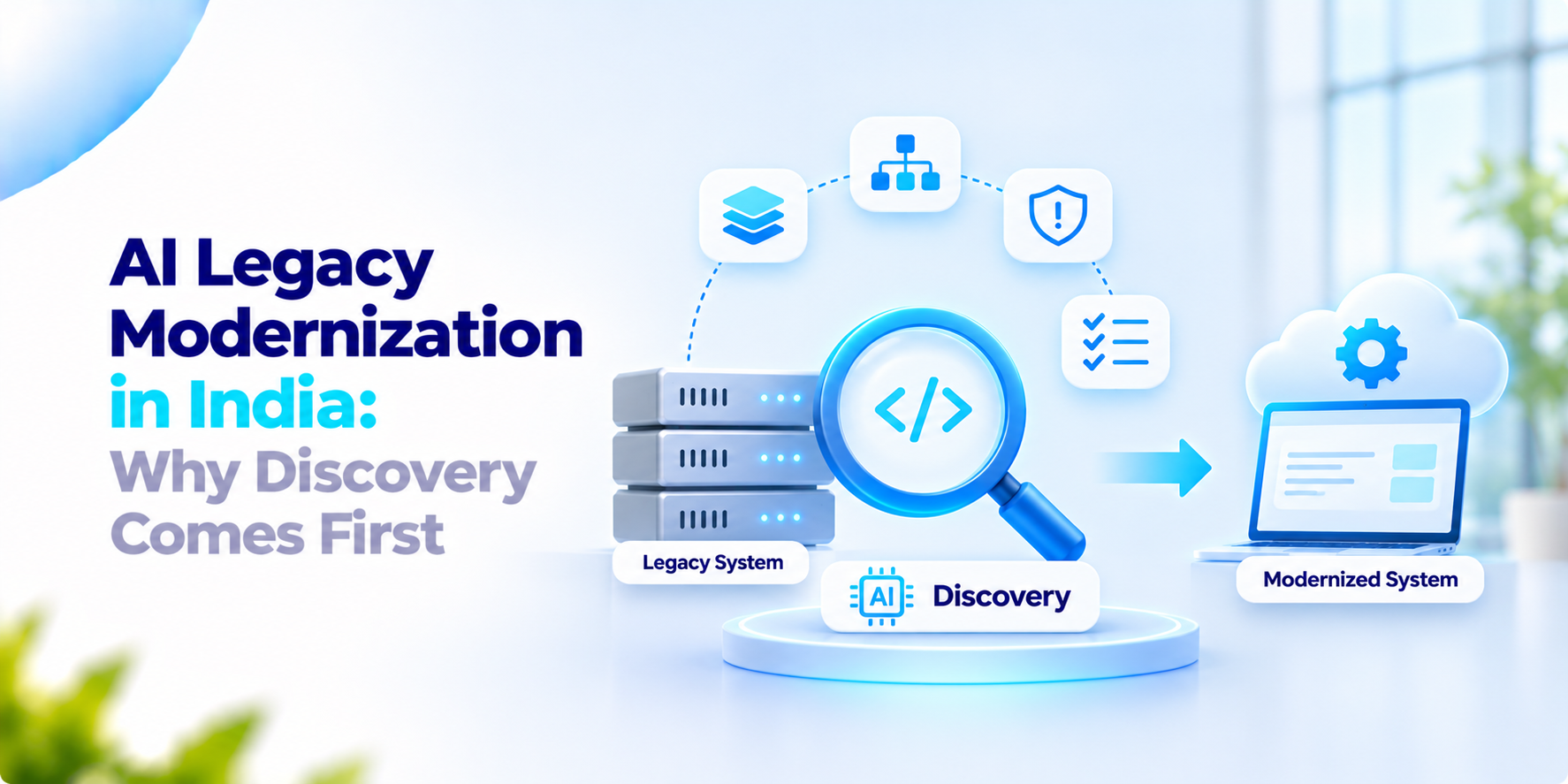
AI Legacy Modernization in India: Why Discovery Comes First
AI legacy modernization starts with understanding the systems already in place. Learn how code discovery, dependency mapping, risk assessment, and human review can help teams plan safer modernization.
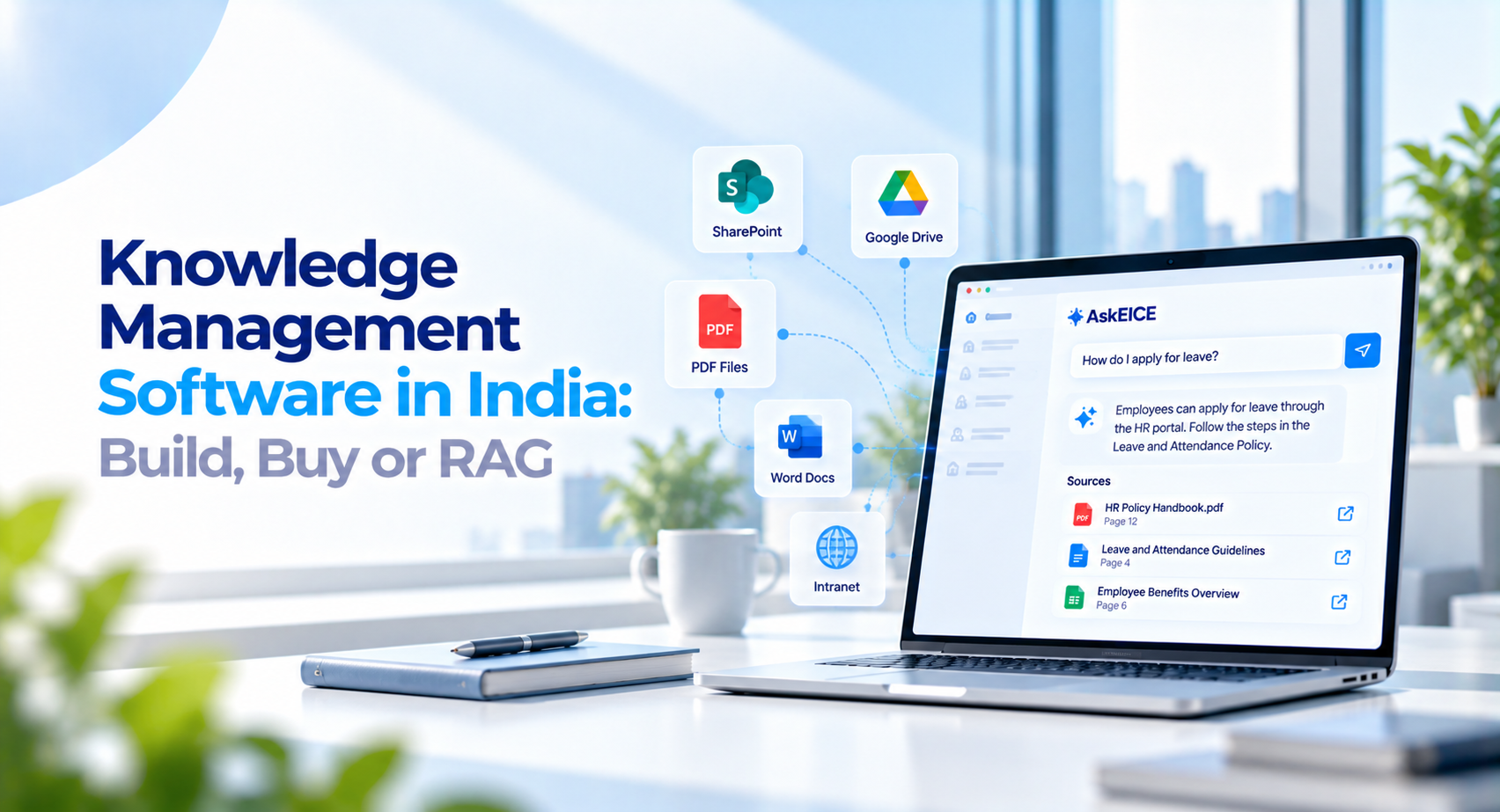
Knowledge Management Software India: Build, Buy or RAG
Should you buy knowledge management software, build a custom system, or use RAG to search existing company documents? Compare the options, evaluate source citations and access controls, and choose an approach that fits your team's needs.