Cloud vs On-Premises Cost in India: A 2026 Comparison
Cloud subscriptions are only one part of your IT spending, and owning servers brings its own costs. Compare cloud and on-premises infrastructure over three years, including storage, data transfer, hardware, staffing, backup, and disaster recovery.
 By Ankit Rawat·Published: October 17, 2026 at 10:13 PM IST
Cloud premises can look affordable, but as the data grows, the cost can also grow with it. You use more storage or move data between systems. On the other side, running your own servers can also increase costs. To manage all, you need hardware, electricity, space, and people. A proper comparison between cloud vs on-premises cost in India should cover all these costs over many years instead of just the monthly bill.
Let's have a look at the latest figures and what businesses should choose.
What the Cost Data Says
According to the Gartner press release dated 1 June 2026. In 2026, spending on public cloud services in India was expected to reach around USD 17.5 billion. This was USD 13.7 billion in 2025. This was a growth of 28.1%. Spending on cloud infrastructure services was expected to grow by 40%. Gartner also highlighted the need to manage cloud costs, follow clear rules, and control risks.
A Cloudian survey of 212 senior IT decision-makers was conducted in February 2026 and found that:
- 84% had spent more than their cloud storage budget.
- 46% said data transfer charges were a huge cost.
- 45% pointed to rising costs as data volumes grew.
- 43% reported higher prices for regions that meet data storage location rules.
- 75% had moved some workloads away from public cloud in the previous two years.
There are some points to remember. Gartner’s figures were a forecast for cloud spending; it is not a comparison with on-premises costs. Cloudian sells on-premises storage, and the survey does not focus on India. It also looks at storage costs instead of the full cost of running all IT systems.
Cloud vs On-Premises Cost in India: What to Count
This is our view: before taking any decision, businesses should look at all costs.
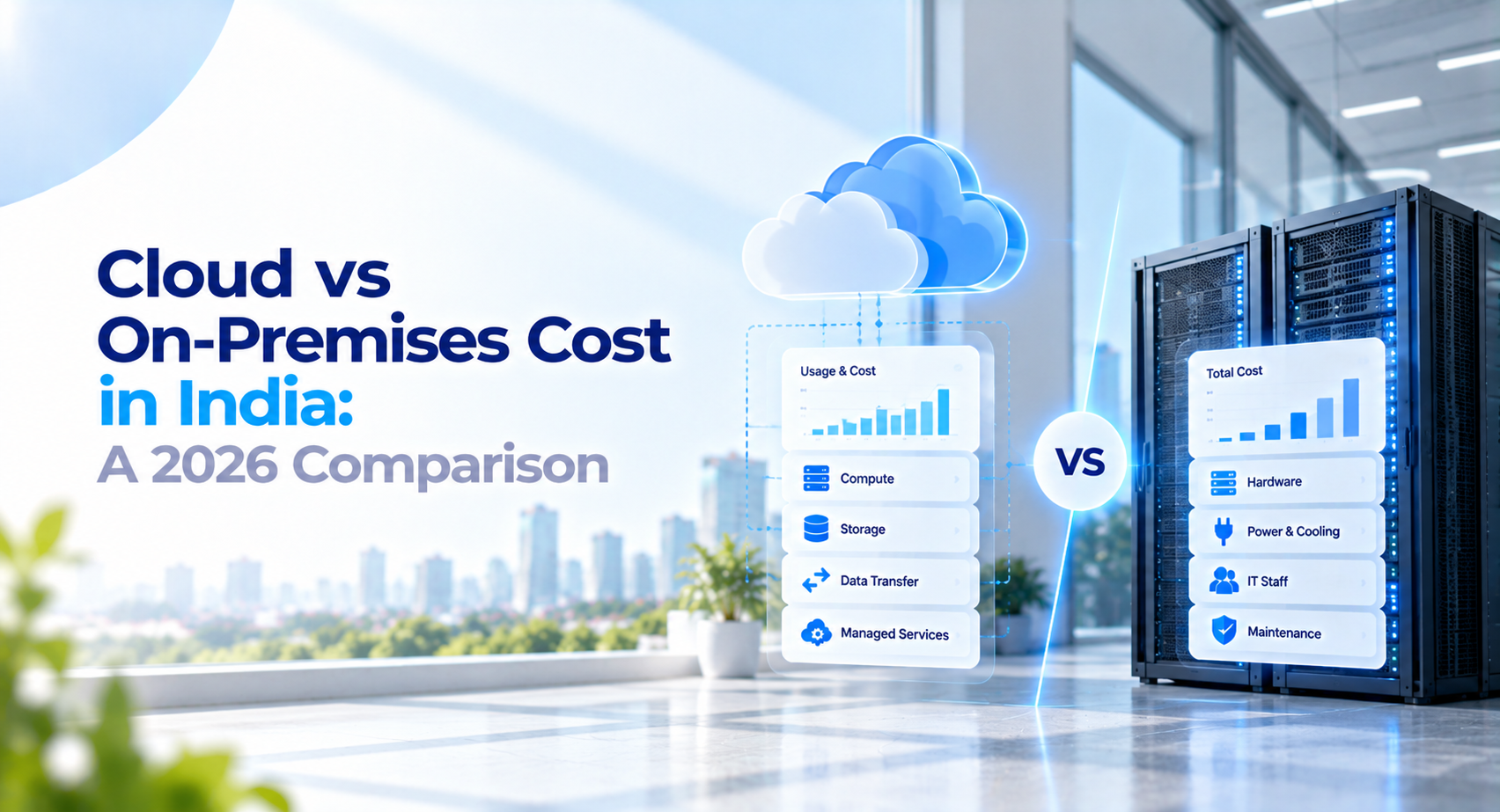
- Cloud costs. This includes computing, storage, backups, data transfer, support plans, and extra charges for storing data in specific regions. Also include the cost of the people managing the cloud.
- On-premises costs. This includes servers, hardware, office space, electricity, cooling, repairs, and replacements. You should also count disaster recovery systems and the cost of keeping extra capacity for busy times.
- Your workload. If your systems need steady resources every day, owning your hardware may make sense. If demand changes often, cloud services may be a better fit. Some businesses may benefit from using both.
You can start with one workload. Calculate all the costs in both setups for three years. Including staff costs and use your usage data. Before doing this, make a list of your servers, storage, and software licences. This will help you understand what you are paying for today.
What to Ask Before Choosing Cloud or On-Premises
Ask these questions before making any decision. This will help you to compare both options.
- What will the total cost be over three years?
- How much will data transfer cost?
- Are there rules about where our data can be stored?
- How much capacity do we need during busy periods?
- What will backup and disaster recovery cost?
- Do we have the right people to manage the system?
- How easy will it be to move to another setup later?
How We Approach Cloud vs. On-Premises Cost in India
Our cloud services begin with a review of your current IT setup. We identify where cloud services may help and prepare a plan for moving forward. It depends on your requirements; you may move everything to the cloud, move only some systems, or keep your current setup. We help you migrate applications, data, and workloads with minimal downtime. Our services include AWS, Azure, and GCP, along with backups, disaster recovery, security, monitoring, and DevOps automation.
If your team is comparing cloud and on-premises costs in India, we’d be happy to discuss your needs and help you explore the right approach. See more on our services page.
Frequently asked questions
Q1. What is the difference between cloud and on-premises infrastructure?+
Cloud infrastructure uses computing resources provided through a cloud service provider. On-premises infrastructure runs on hardware managed at an organisation's own facilities or designated premises. The two models differ in ownership, management responsibilities, pricing, scalability, and operating costs.
Q2. Is cloud cheaper than on-premises infrastructure?+
Not always. Cloud can reduce upfront hardware investment and provide flexible capacity, but recurring usage, storage, data transfer, support, and staffing costs can add up. On-premises infrastructure requires investment in hardware, facilities, maintenance, and replacement. The lower-cost option depends on the workload and operating requirements.
Q3. How should businesses compare cloud and on-premises costs?+
Compare the total cost of ownership over a consistent period, such as three years. Include hardware or subscriptions, storage, data transfer, electricity, cooling, staff, maintenance, backups, disaster recovery, security, and expected capacity growth.
Q4. What are the hidden costs of cloud computing?+
Potentially overlooked costs include data egress, storage requests, backups, premium support, monitoring, idle resources, specialised hosting regions, and the staff needed to manage cloud environments. The exact costs depend on the provider and workload.
Q5. When does on-premises infrastructure make sense?+
It may suit workloads with predictable resource requirements, specific control or data-location requirements, existing infrastructure investments, or specialised operational needs. Businesses should also account for refresh cycles, redundancy, staffing, and disaster recovery.
Q6. Is a hybrid cloud approach a good option?+
A hybrid approach combines on-premises infrastructure with cloud services. It can help businesses place different workloads where they best meet cost, performance, security, and operational requirements. It also introduces integration and management complexity that should be included in the assessment.
Q7. How can infrastructure monitoring help control IT costs?+
Infrastructure monitoring helps teams identify assets, resource utilisation, performance issues, and capacity needs. Better visibility can support cost planning, although monitoring alone does not guarantee lower infrastructure spending.
Understand Your Infrastructure Costs Before You Scale
EICE can help you assess your current infrastructure, evaluate cloud and on-premises options, and plan migration or hybrid environments around your operational needs.