How Indian DevSecOps Teams Help US Law Firms Automate Security Remediation Workflows
See how an Indian DevSecOps team helped a US law firm automate the flow of security findings into Azure DevOps, eliminate duplicate tickets and maintain remediation traceability.
 By Ankit Rawat·Published: September 22, 2026 at 6:28 PM IST
The real cost of tracking security findings by hand
For any security scanning tool, finding the security risks is the first part; the next is to turn every finding into work, which is properly tracked, fixed and recorded. When it is a manual process, someone has to review, create a ticket, track it and close it every time and it can create many problems such as delays in creating tickets, people tracking findings in different ways, duplicate tickets for the same finding and incomplete audit records, which makes it difficult to justify that a problem has been resolved.
There is a technical problem also. Moving a large number of findings between a security tool and an engineering backlog can run into API concurrency limits and throttling risk. There is not a good way to manage all this with manual processes.
What an automated findings-to-backlog pipeline actually does
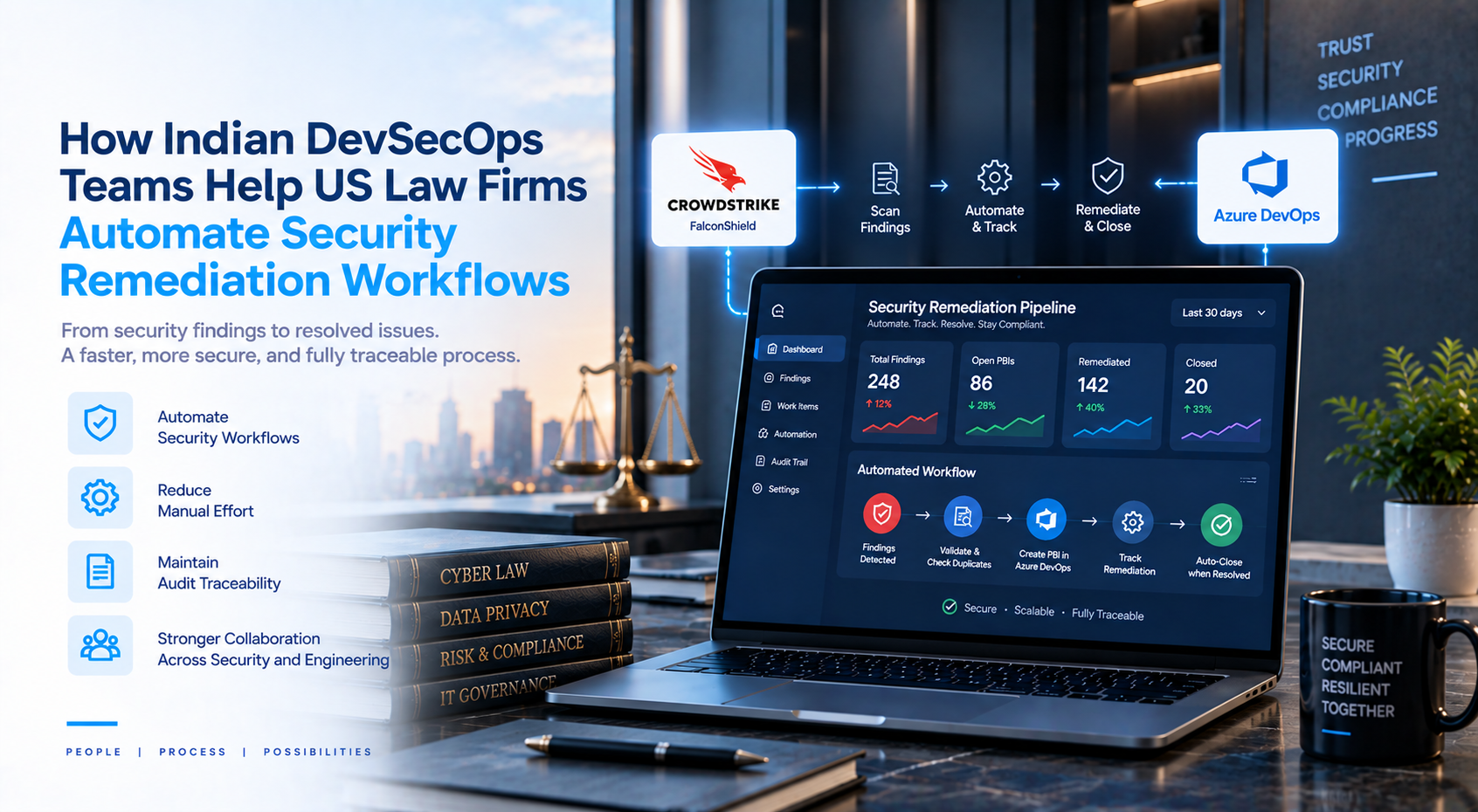
In an engagement, a US law firm's security team used CrowdStrike FalconShield to find risks in its Workday environment. But there is no automated way that can move these findings to the engineering team's workflow. The solution gets findings automatically from the CrowdStrike API and if a finding fails a check, it creates Azure DevOps Product Backlog Items (PBIs). Because of this, there is no need to create a backlog item manually.
The system also stops duplicate tickets from being created for the same finding. If CrowdStrike marks the finding as Passed or Dismissed, the PBI that is related to it is automatically closed. There is no need to close it manually. It keeps Security audit comments and traceability maintained throughout the process, which helps the audit trails to stay complete even when the process is automated.
How the system handles security and scale
There are two most important things to be handled through the system to work in production instead of just in demo.
- First are credentials. Secrets are stored in Azure Key Vault, while Managed Identity handles authentication. This means that API credentials are not stored inside the application code.
- Second is scale: a timer-based synchronisation engine keeps CrowdStrike and Azure DevOps in sync on a schedule. While handling the large number of findings, it uses the scalable processing model and controlled processing methods to manage the API concurrency limits and throttling risk. The solution runs through the Azure Function App inside the firm’s Azure environment. Instead of someone starting the process manually, it syncs the system on a schedule.
How EICE Technology builds security automation platforms for US law firms
As an Indian IT company, we are specialised in security automation platforms and DevSecOps automation services. For this project, we built the integration using NET 10 and Azure Functions. It connects the CrowdStrike FalconShield API with the Azure DevOps REST API. Azure Key Vault and Managed Identity handle credential security and JSON processing connects the data between the systems. CrowdStrike and Azure DevOps are third-party platforms. We built the custom automation layer between them, not the platforms. Our work is supported by ISO 27001 and ISO/IEC 20000 certifications, along with CMMI Level 3 and ISO 9001. The result we get is less manual ticket work, better auditability, better teamwork between security and engineering, and a security automation setup that can handle growth without becoming a bottleneck. See more on our Services Page.
Frequently Asked Questions
Q. What is security remediation automation?
A. Security remediation automation connects security findings with engineering workflows so that identified issues can be converted into actionable work, tracked through remediation and automatically closed when the underlying finding is resolved.
Q. How can DevSecOps teams automate security findings?
A. DevSecOps teams can connect security platforms with engineering systems through APIs and automation workflows. Findings can be evaluated automatically, converted into backlog items, checked for duplicates and updated when their security status changes.
Q. Why is automated security remediation useful for US law firms?
A. It can reduce manual ticket creation, improve coordination between security and engineering teams, maintain traceability and provide a more consistent record of how security findings move through remediation.
Q. How does EICE Technology automate security remediation for US law firms?
A. We built the custom automation layer between security and engineering platforms. In this engagement, the team connected the CrowdStrike Falcon Shield API with Azure DevOps using .NET 10 and Azure Functions. Azure Key Vault and Managed Identity handle credentials, while scheduled synchronization manages findings, duplicate prevention and PBI status updates. The solution is supported by ISO 27001, ISO/IEC 20000, CMMI Level 3, and ISO 9001.
Turn Security Findings Into Actionable Remediation
Still moving security findings into engineering backlogs manually? EICE Technology can help automate the flow from security detection to remediation, tracking, and closure—while maintaining traceability and secure credential handling.