Digital Transformation in Indian Healthcare: Beyond Telemedicine
Digital transformation in healthcare goes beyond video consultations. Discover how digital patient records, connected hospital systems, better use of data, and improved patient experiences can help healthcare organisations modernise their operations.
 By Ankit Rawat·Published: October 21, 2026 at 10:57 PM IST
While thinking about digital transformation in healthcare, people usually think about the video consultation, but it is not like this, that is much more than that. Hospitals also need digital patient records, connected systems, and reliable data. This provides help to doctors in finding the correct information so they can work efficiently.
What India has built
According to a Press Information Bureau factsheet, as of 29 February 2024, India’s Ayushman Bharat Digital Mission (ABDM) reported the following:
- More than 56.67 crore ABHA accounts had been created.
- Over 34.89 crore health records had been linked.
- Around 2.35 lakh health facilities had been verified.
- More than 2.84 lakh health professionals were listed.
Because of the ABHA app, people can digitally store their medical reports and can connect with registered healthcare professionals. But there are some points to keep in mind. These numbers are from February 2024, so now there is a chance they may have changed. Creating an account or linking a record does not mean it is being used during treatment. It is not clearly explained by the factsheet how hospitals should connect their system.
Digital transformation in Indian healthcare: where the work is
This is our view: hospitals should focus on these four points.
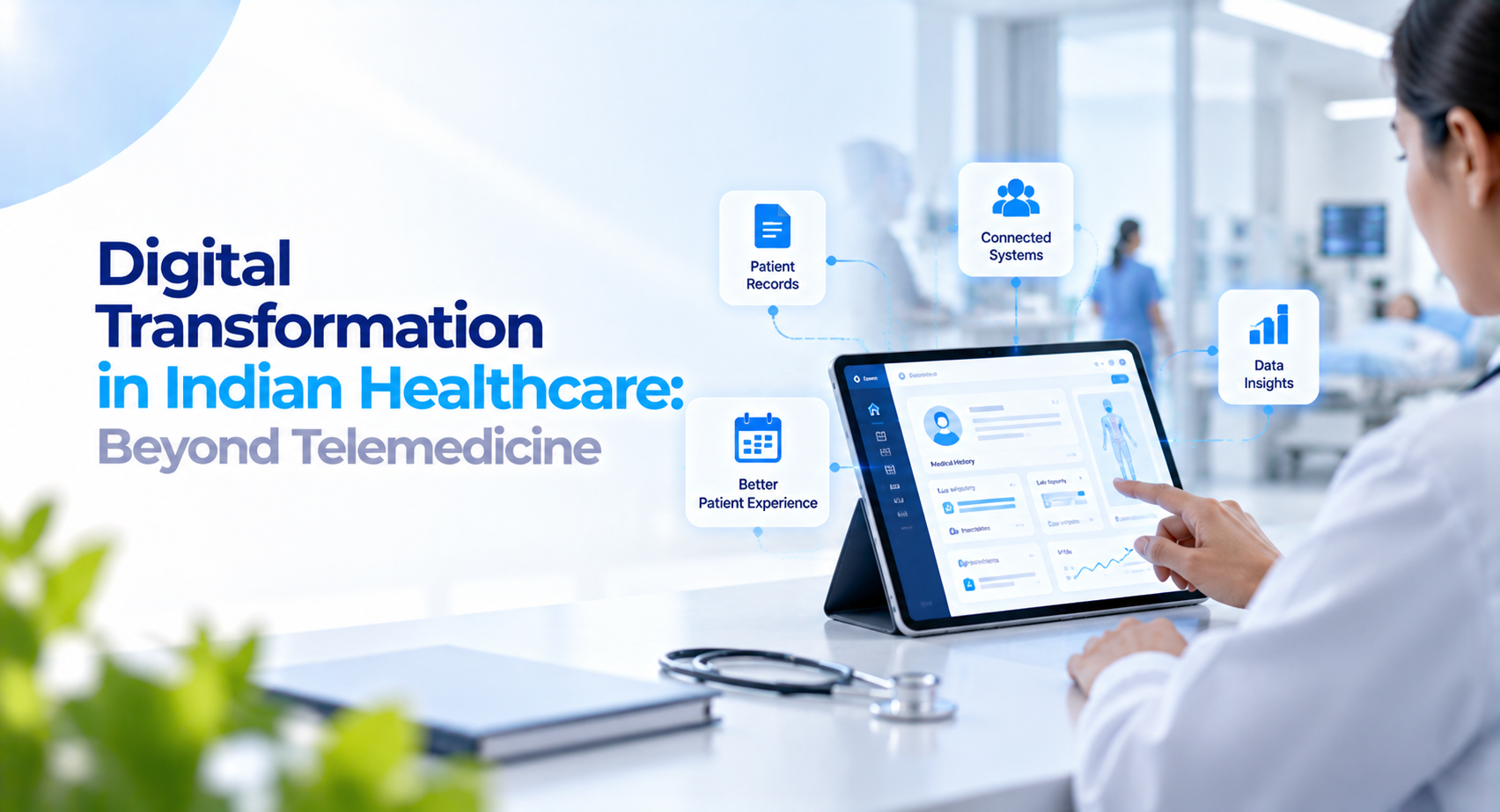
- Patient Records: Usually, the patient's details are stored in multiple systems for registration, lab tests, billing and medicines. If you bring all these into one place, it can save time and employees' effort with fewer mistakes.
- Connected Systems: A new software should be able to work with the existing systems of the hospitals. If the systems are not able to share details, staff will need to enter every detail again.
- Using Data Better: If the data is fully organized, hospitals can track waiting time, bed availability and repeat visits. This is helpful in finding problems and improving services.
- Better Patient Experience: Every patient needs easy ways to book appointments, receive reminders, and access reports. A digital process can make this experience smoother.
Hospitals should start with only one problem first. Like patient admission or discharge. It can save time while fixing one issue first and staff can become comfortable using the new system. Once this change works well, hospitals can slowly move forward.
What to ask before you start
Ask these questions before starting any digital transformation. This can help you with the projects and avoid common problems.
- Which process wastes the most staff time?
- Where is patient data stored?
- Can our existing systems share information?
- How will we protect patient data and manage consent?
- Who will check that the data is correct?
- How will we train staff and measure results?
How We Approach Digital Transformation in Indian Healthcare
Our Digital Transformation service focuses on three areas: digital innovation, data-driven insights, and digital experience design. We work using an agile approach and technologies like AI and IoT. Our healthcare case study includes diagnostic AI and telemedicine. For digital transformation in Indian healthcare, we first understand the main problem and the system involved. We help you in that process before going to other areas also. If your hospital or healthcare business is planning a digital transformation, we’d be happy to discuss your needs and help you get started. See more on our services page.
Frequently asked questions
Q1. What is digital transformation in healthcare?+
A. Digital transformation in healthcare involves using digital technologies to improve clinical workflows, hospital operations, information management, and patient experiences. It can include digital patient records, connected hospital systems, data analytics, appointment management, and telemedicine.
Q2. Why is digital transformation important for Indian hospitals?+
A. It can help hospitals reduce repetitive data entry, improve access to patient information, coordinate workflows, and identify operational bottlenecks. The benefits depend on how well the systems are integrated and adopted by staff.
Q3. What is the Ayushman Bharat Digital Mission (ABDM)?+
A. ABDM is an Indian government initiative designed to support the development of a connected digital health ecosystem. Its components include ABHA accounts and mechanisms for linking health records and participating healthcare facilities.
Q4. How can hospitals connect their existing digital systems?+
A. Hospitals can assess their current systems, identify information-sharing gaps, and implement suitable integrations and interoperability standards. Data quality, security, access permissions, and staff workflows should be considered during implementation.
Q5. How can AI and data analytics support healthcare digital transformation?+
A. AI and data analytics can help organisations analyse operational patterns, identify bottlenecks, and support selected clinical or administrative workflows. Their usefulness depends on data quality, validation, privacy safeguards, and appropriate human oversight.
Build a More Connected Healthcare Experience
Explore how EICE's digital transformation services can help your healthcare organisation improve workflows, connect systems, and make better use of operational data.