L1 L2 L3 Support Escalation in India: Stop Tickets Getting Lost
Tickets can get stuck when support responsibilities and escalation rules are unclear. Learn how an effective L1, L2, and L3 support escalation process improves ticket handoffs, deadline alerts, and accountability, and what to look for in an IT help desk tool.
 By Anjali Daksh·Published: October 15, 2026 at 8:19 PM IST
A very common support problem is that a ticket is with the wrong person for a long time. No one ignored it, but it still has not reached the right person who can fix it. A clear L1, L2, L3 support escalation process can help to avoid this. It helps you define who should manage the ticket next, when it should go to the next level, and how the next person will be alerted. Let's have a look at the market data about service desks in India and what you actually need for a smooth escalation process.
What the Market Data Says About Service Desks in India
According to Mordor Intelligence, in 2025, India’s IT service management market was valued at USD 0.52 billion. By 2031, it is expected to reach USD 1.91 billion, growing 24.08% every year from 2026. In 2025, Service desk and incident management was the largest segment, accounting for 32.73% of the market. According to the same report, more basic support tickets are handled through automation, which helps support teams to focus on complex issues and exceptions. The page also cites Freshworks data showing that 47% of IT tickets come after business hours.
There are some points to keep in mind: these figures are market research estimates; they are not from a survey of Indian support teams. This does not show where the Freshworks figure comes from or confirm whether this applies especially in India. It also does not provide data about L1, L2, and L3 support levels.
What a Good L1 L2 L3 Support Escalation Needs
This is our view. It is helpful to have a different support system when everyone knows how the ticket moves between them.
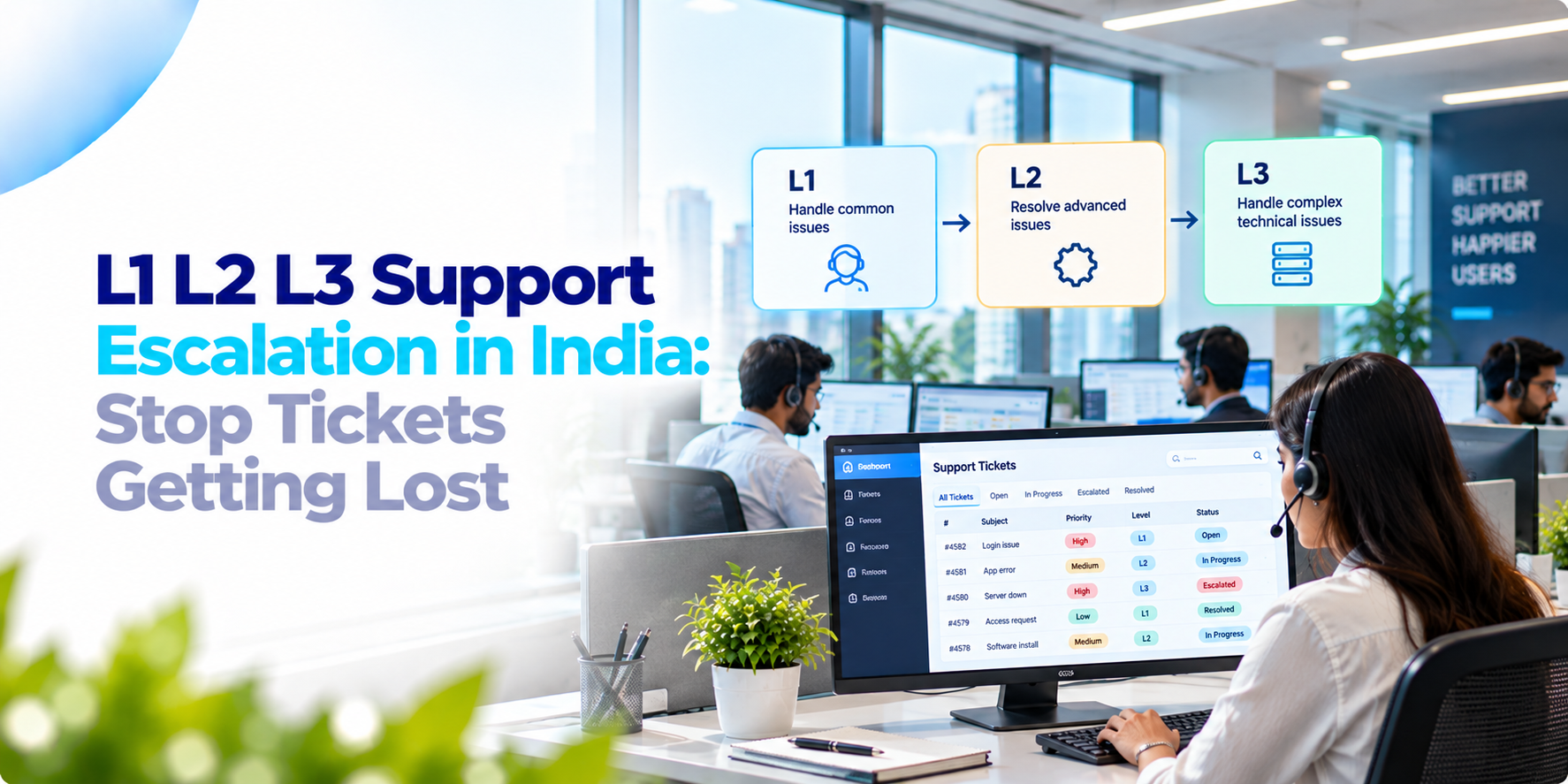
Clear support levels. L1 handles common problems and new tickets. L2 handles more difficult issues. L3 deals with complex technical problems or problems that need human support.
A clear handoff. When a ticket goes to the next level, the next person should be able to check what has already been done in the ticket. This helps in saving time and avoiding extra effort.
Alerts before deadlines. The team should get an alert before the deadline, not after it gets missed.
A complete record. The system should be able to show who actually handled the ticket, what they did, and when.
It is not important to make the process just get started. You just have to note down what qualifies as a Level 1, Level 2, or Level 3 issue, who will be responsible for each level, and for how long the ticket can stay there. After all this, review tickets in the next month; you will see where things went wrong. Some tickets may have no clear owner. Others may keep moving between two people without being resolved. Some of them may still sit there untouched just because the next level of support is only available during the day, even though tickets continue to arrive at night also. Fixing these issues can help you make your support smoother.
What to Ask Before Choosing L1, L2, L3 Support Escalation Tools
Ask these questions before choosing any support tool. This will help you to understand whether a tool is actually able to support your team or not.
- Can we define where a ticket goes at each support level?
- Does the system track handoffs between levels?
- Can the next person see the work already done on a ticket?
- Do alerts arrive before deadlines are missed?
- Does the system keep a complete activity timeline?
- How are tickets handled outside working hours?
- Can we track and compare the performance of each support level?
How We Approach L1, L2, L3 Support Escalation in India
EiceOps is our ITIL 4-aligned IT help desk platform. It tracks ticket handoffs between L1, L2, and L3 and sends automatic alerts as deadlines get close. The platform keeps a record of messages and actions that have been taken on every ticket. This provides help to the next person to understand the problem without starting it again.
If you want to improve L1, L2, and L3 support escalation in India, get in touch with us. We’d be happy to discuss your needs and show how EiceOps can help.
Frequently asked questions
What is L1, L2, and L3 support escalation?+
L1 support generally handles common issues, L2 handles issues requiring deeper investigation, and L3 handles complex technical problems that need specialist expertise.
When should a ticket be escalated from L1 to L2?+
Escalate a ticket when it exceeds L1's defined scope, requires additional expertise, or approaches an agreed escalation threshold. The specific criteria should be documented in the support process.
What should an IT support escalation process include?+
It should define support responsibilities, escalation criteria, handoff information, deadline alerts, ticket ownership, and an activity history.
How can a help desk tool improve ticket escalation?+
A suitable tool can route tickets between support levels, track handoffs, send deadline alerts, and record actions taken throughout the ticket lifecycle.
What should businesses check before choosing an escalation tool?+
Check whether the tool supports configurable routing, SLA tracking, handoff visibility, activity history, after-hours workflows, and reporting by support level.
Request an EiceOps Demo
Are support tickets getting stuck between teams or missing their deadlines? EiceOps helps IT support teams track L1, L2, and L3 handoffs, monitor SLAs, and maintain a complete record of ticket activity.