GPS Vehicle Tracking in India: What Deviation Alerts Prevent
GPS vehicle tracking is about more than knowing where a vehicle is. Discover how route deviation, unexpected-stop and delivery delay alerts help Indian fleet teams identify issues, respond sooner and improve day-to-day logistics visibility.
 By Ankit Rawat·Published: October 10, 2026 at 6:58 PM IST
Why GPS Vehicle Tracking Is Becoming Standard in India
GPs vehicle tracking is no more a choice but a mandatory push from Ministry of Road Transport and Highways. It's part of compliance now and fleet owners are expected to adopt it.
According to DIMTS, the Mistry of Road Transport and Highways notified the important AIS-140 standards where GPS has been made the de fecto standard for commercial vehicle tracking and mandatory for three-wheeler, taxis and Grameen Seva vehicles.
A Dot on a Map Isn't Enough
This is our own analysis and not some finding. It would not be possible for a dispatcher with a 50-truck fleet to track the one vehicle that has left its route. For these the tracking tool comes handy and only warns you beforehand when things are not as per plan or any uncertain situation arrives. That's exactly the job of alerts. Let's understand more about them.
What Should GPS Vehicle Tracking System Alerts Tell You?
There can be few bunch of notifications but not every is useful. It's the alerts which earns it's place and reaches to the one who can act quickly and reverse the situation which could go out of plan:
There are 3 important Alerts for today's fleet operation:
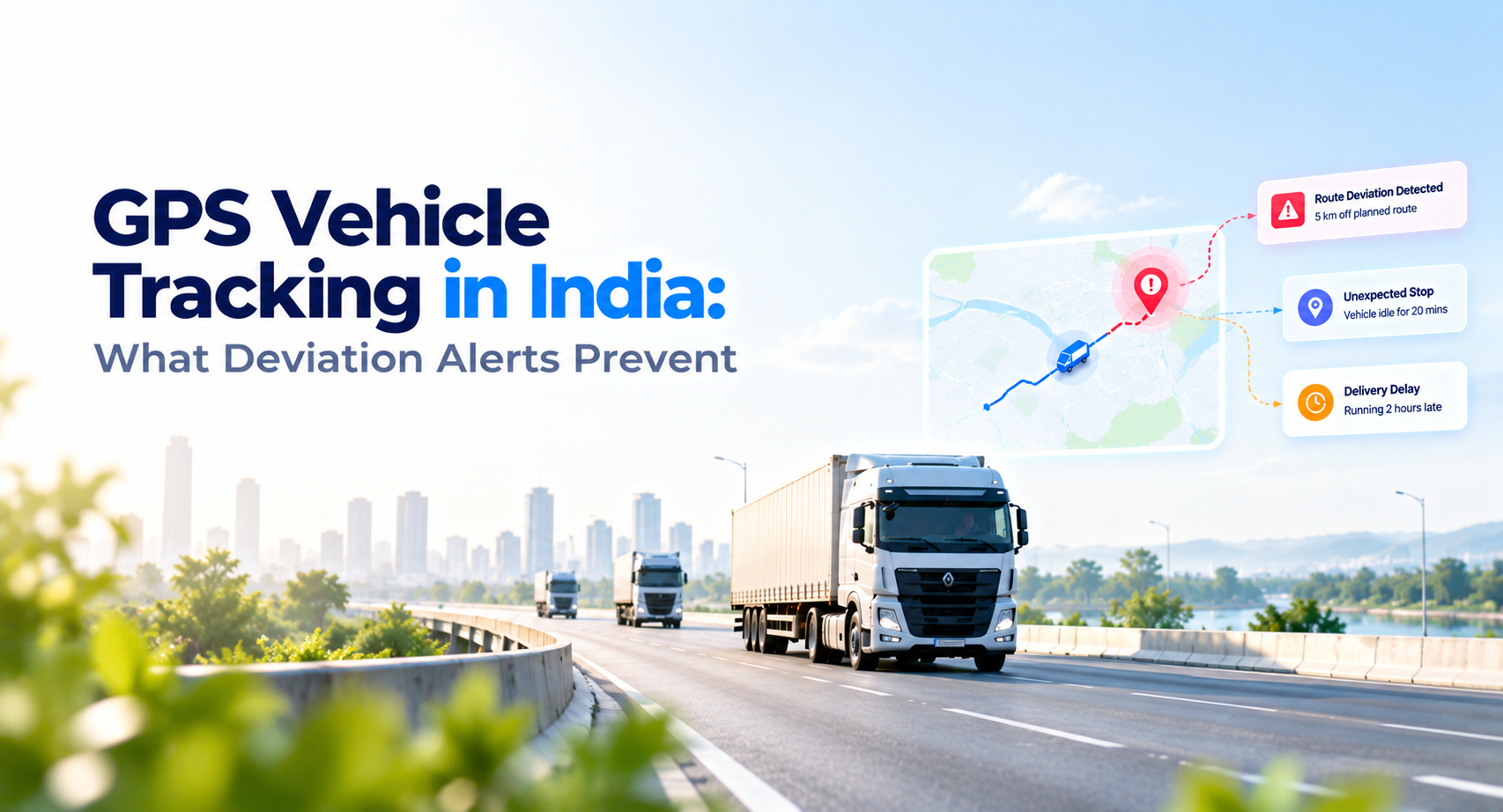
- Route deviation alert: A route deviation alert is an automated notification triggered when a tracked vehicle moves outside the planned route corridor by more than a defined distance threshold.
- Breakdown and unexpected-stop alerts: This alert notifies when a vehicle stops somewhere it shouldn't. It also alerts if some breakdown or malfunction occurs, allowing maintenance teams to respond quickly.
- Delay alerts: A delayed delivery alert is visibility. It is not control. This distinction matters more than many logistics dashboards acknowledge. Knowing that a shipment is late tells the team what has already happened.
An alert is there to shorten the gap between something going wrong and someone is taking a note of it, that's why a call to the driver can still change the outcome.
What to Ask Before Choosing a GPS Vehicle Tracking System in India
Choosing a GPS vehicle tracking system involves more than comparing maps and dashboards. The system also needs to fit the way your team works.
Before planning, consider these questions:
- How are alerts configured and who would recieve them?
- Can drivers report updates from the road?
- Can you review past trips?
- Does it integrate with your existing tools through an API?
How Easylogy Approaches GPS Vehicle Tracking in India
Easylogy is EICE Technology’s comprehensive logistics management platform designed to simplify transport operations through automation, real-time tracking, and intelligent insights. Built for logistics companies, distributors, and transport aggregators, Easylogy enables end-to-end control, from booking to delivery — through a single, mobile-first interface.
If your team is evaluating a GPS vehicle tracking system in India, Easylogy offers an opportunity to explore how live tracking, driver reporting, operational alerts and billing can work together on one platform.
Want to see how Easylogy could fit your fleet operations? Get in touch with EICE Technology to start a conversation.
Frequently asked questions
Q. What is a route deviation alert?+
A. A route deviation alert notifies the fleet team when a vehicle moves outside a configured route boundary or distance threshold.
Q. How do GPS tracking alerts help fleet managers?+
A. Alerts help fleet managers identify route changes, unexpected stops and delivery delays sooner, allowing them to investigate and coordinate a response.
Q. What is AIS-140 vehicle tracking in India?+
A. AIS-140 is an Indian automotive industry standard associated with vehicle location tracking devices and emergency buttons for specified transport applications. Applicable requirements depend on the vehicle category and relevant regulations.
Q. What should businesses check before choosing a GPS vehicle tracking system?+
A. Evaluate alert configuration, recipient settings, trip history, driver communication, integration options, reporting and suitability for your fleet's operating requirements.
Q. Can GPS vehicle tracking help reduce delivery delays?+
A. Tracking can improve visibility into vehicle movements and help teams identify potential delays. Actual outcomes depend on the causes of delays and how quickly teams respond.
Q. How does Easylogy support logistics operations?+
A. Easylogy is our logistics management platform. Businesses can explore its confirmed tracking, driver reporting and workflow capabilities to assess fit for their operations.
Improve Fleet Visibility with Easylogy
Explore how Easylogy can help your team bring vehicle tracking, driver updates and logistics workflows together in one platform.
Related in Logistics Technology

Container Loading Optimisation in India: How 3D Weight-Balance Algorithms Cut Freight Damage Claims
Discover how 3D container loading software helps freight forwarders and 3PL providers plan cargo placement, check weight distribution, manage stacking constraints and generate warehouse loading instructions.