Healthcare UI/UX Design in India: Clarity Under Pressure
Healthcare applications need to work for patients, caregivers and medical professionals with different devices, languages and levels of digital experience. Explore how healthcare UI/UX design in India can improve navigation, simplify forms, support accessibility and create clearer digital healthcare experiences through real-user testing.
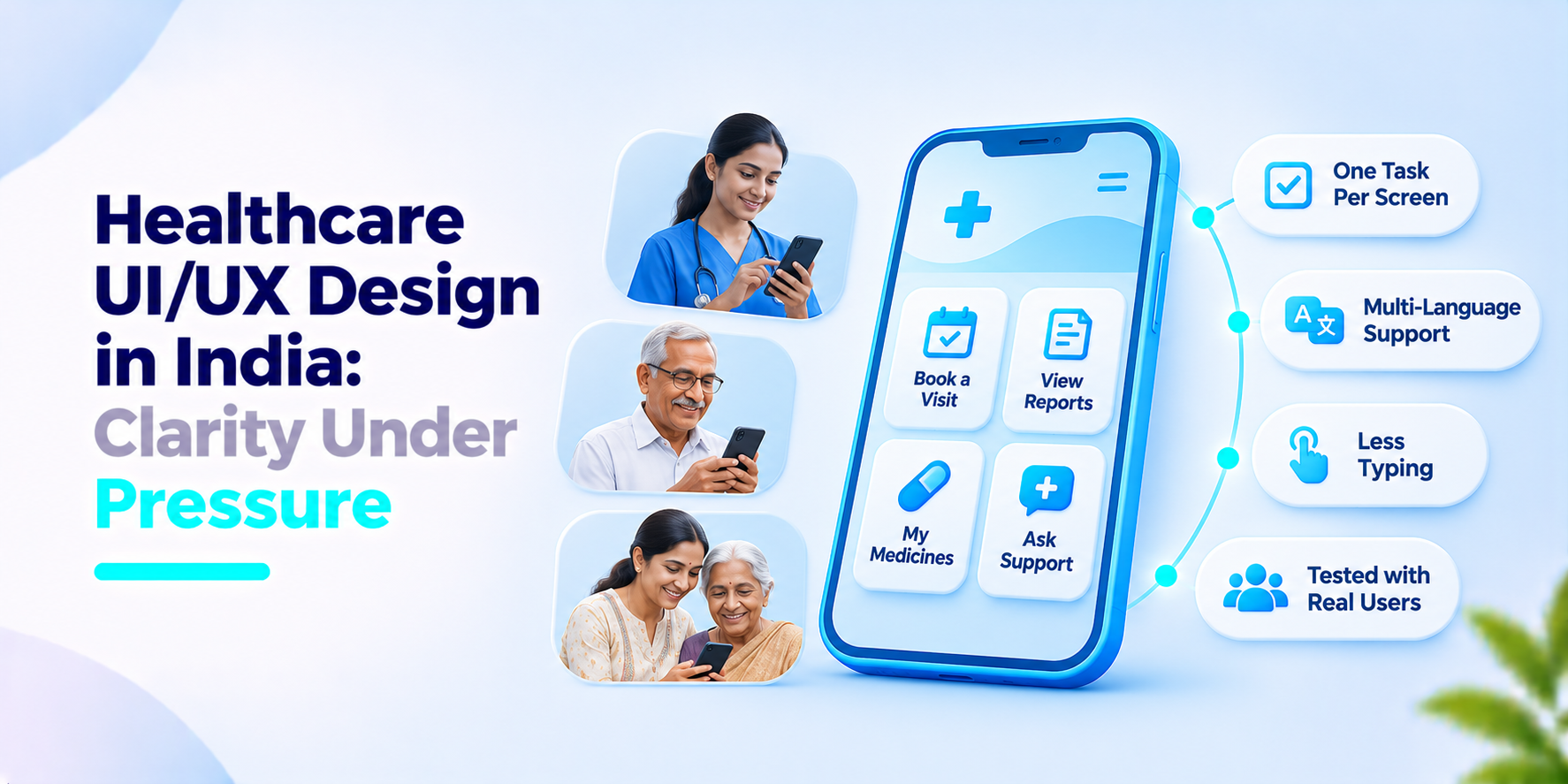
You have many users who will be looking to access your solution; people like nurses, patients with older phones or family members completing forms for the patient. UI/UX design needs to be easy to understand for anyone using the application when tired, in a hurry or unfamiliar with smartphones. This article looks at one study.
What the India data says
A study was done to evaluate a mental health application created for users in India. Conducted from NIMHANS in Bengaluru, users from 5 districts in Karnataka. A total of 190 users joined the study but only 109 completed the final evaluation. Of these, 26 (23.8%) said the ease of navigation was poor, 41 said it was average and 42 had a high score. Comments included that users found the application difficult to navigate as they did not have much knowledge of smartphones, there was too much typing required and users would prefer more Indian languages.
The study has some limitations as it only looked at one mental health application. The sample was also a convenience sample, meaning there were fewer males, working professionals and those over the age of 35. It was also completed over 2 weeks and self-reported. The authors also note these are preliminary findings.
Healthcare UI/UX design in India: our view
In healthcare, having a confusing screen will take up time and can cause loss of trust.
Only show one task per screen. This will reduce stress for the user, as they won’t have to search for what to do next.
Keep it simple. Use clear labels such as ‘Book a visit’ rather than the terms you use internally. Provide the languages that your users speak.
Reduce typing. Where possible, use buttons and dropdowns. Ensure buttons are large and text is easy to read for those on smaller or older devices.
Ensure things that cannot be undone are clearly confirmed.
Test with real users. Test early on with a few users from each group to see how they get on without assistance. This will teach you more than just reviewing the design. We aren’t making any clinical claims and design decisions should never be used over clinical judgement. Clinical content and safety guidelines should be discussed with your clinical and compliance teams.
What to ask before you commit to healthcare UI/UX design in India
- Who are your users? What device, language and confidence level do they have?
- What tasks need to be done in under a minute?
- What actions cannot be undone? How are they confirmed?
- What languages do we need to provide?
- Have the screens been tested with real users?
- How will we identify and resolve issues once live?
How We Approach Healthcare UI/UX Design in India
We offer a full UI/UX service including strategy and consultancy, user research (surveys, interviews and usability testing), information architecture, wireframing and prototyping, UI/UX audits and ongoing improvements. We begin with understanding who your users are and what they need to complete. Once we have agreed on which screens to test first, we will begin.
If your team is looking to do Healthcare UI/UX Design in India, we’d love to talk to you.
Frequently asked questions
Why is UI/UX design important in healthcare applications?+
Healthcare applications are used by patients, caregivers and medical staff with different levels of technical experience. Clear navigation, accessible content and well-designed workflows help users complete tasks more confidently.
What makes a healthcare app user-friendly?+
A user-friendly healthcare app has clear navigation, readable text, understandable labels, minimal unnecessary typing, accessible controls and helpful error messages.
How can healthcare apps reduce form-filling difficulties?+
Designers can use appropriate dropdowns, date pickers, saved information, clear field labels and inline validation. Forms should collect only the information required for the task.
Why is multilingual support important in healthcare UX design in India?+
Users may be more comfortable interacting in their preferred language. Localised interfaces can improve comprehension, but translations must preserve medical meaning and should be reviewed appropriately.
How do you conduct usability testing for healthcare applications?+
Testing involves giving representative users realistic tasks and observing how they complete them. Teams can measure completion rates, errors, task time and assistance required.
Design Healthcare Experiences That Work for Everyone
Create healthcare applications that are easier to navigate, understand and use. From user research and wireframing to usability testing and interface design, build experiences around the real needs of patients and healthcare professionals.
Related in UI/UX Design & Product Experience
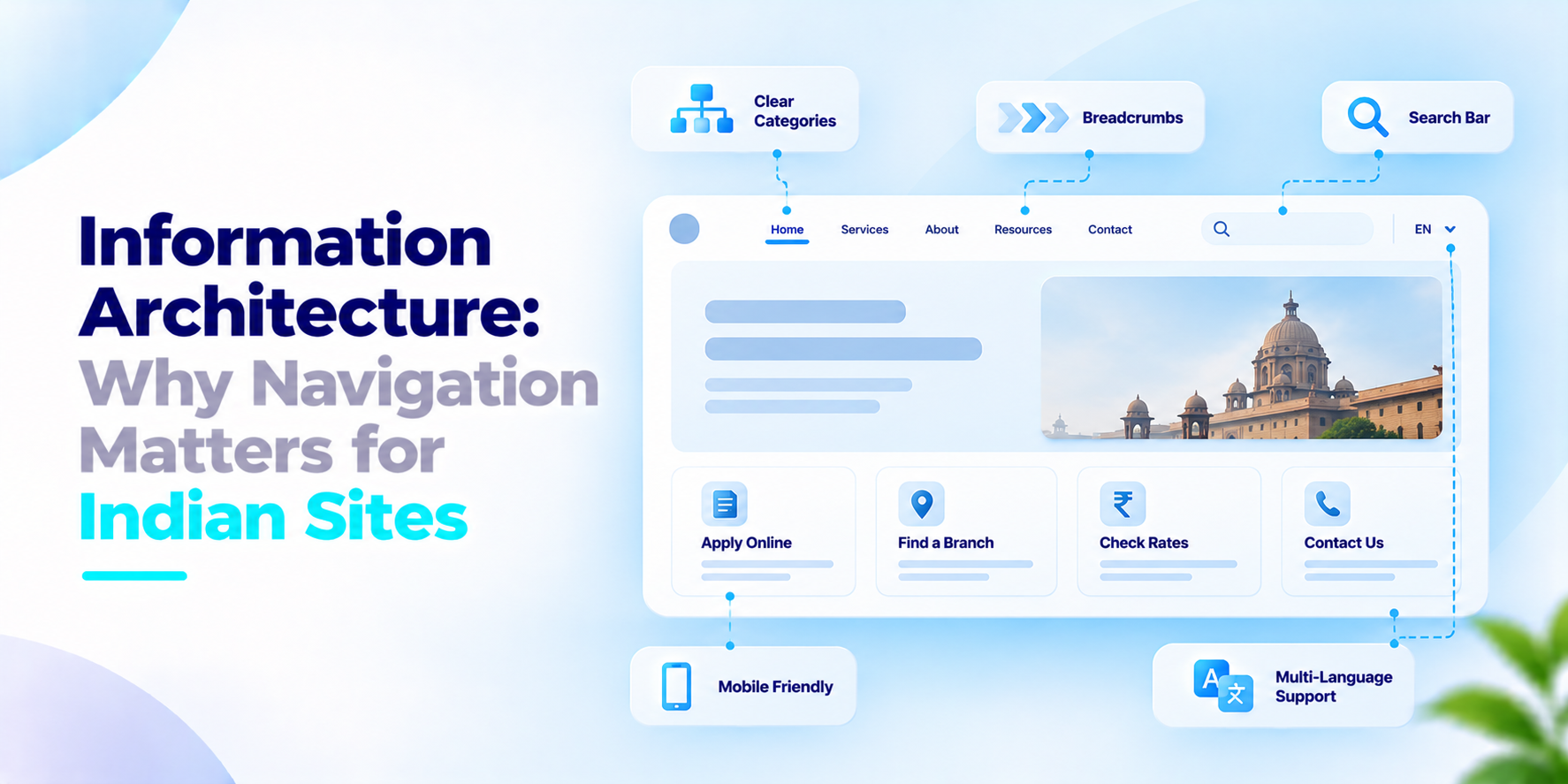
Information Architecture: Why Navigation Matters for Indian Sites
Good information architecture helps visitors find the information they need without getting lost in complicated menus. Explore how website structure, navigation labels, search, multilingual content and usability testing can improve the experience of Indian websites.