Information Architecture: Why Navigation Matters for Indian Sites
Good information architecture helps visitors find the information they need without getting lost in complicated menus. Explore how website structure, navigation labels, search, multilingual content and usability testing can improve the experience of Indian websites.
 By Ankit Rawat·Published: November 11, 2026 at 12:23 AM IST
When a visitor lands on your site, they will have a specific task in mind such as finding a price, completing a form, finding a branch or finding out about a policy. If the navigation doesn’t make sense to the visitor, they will leave the site and contact someone. Information Architecture is the process of organising, labelling and linking content so visitors can find the right information. This post will discuss the guidelines set by the government and what to look out for.
What the India guidance says
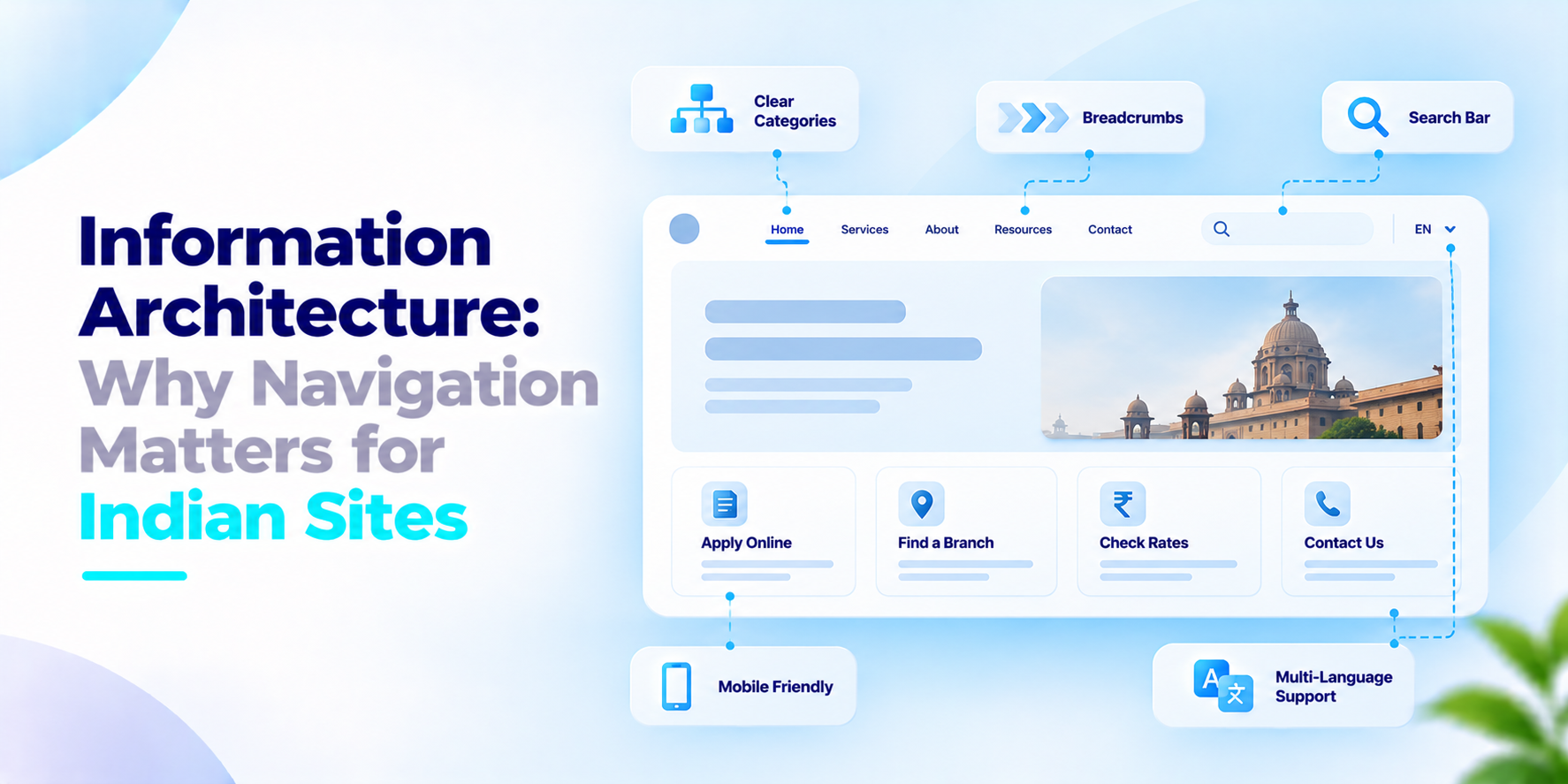
The guidelines website (guidelines.india.gov.in) has an Information Architecture guideline. It states that navigation is the ‘foundation’ of a government website. To ensure good navigation, the guideline suggests having a menu with content organised into relevant categories, using breadcrumbs to let people know their location, including a search bar and having a language toggle. It also suggests conducting usability tests, taking feedback from users and using analytics.
There are some issues with this. Firstly there is no date on the page. Secondly there are no statistics or survey results to back up the advice given. Thirdly this information is aimed at government sites and as such will have different objectives from a business site. Finally the GIGW standard isn’t mentioned on this page.
Information architecture in practice
Here are some of our thoughts on Information Architecture:
- Organise by what the visitor wants to do: When looking for loans, a visitor won’t know which department owns them. They will just want to find those loans.
- Use common terms: Use ‘Contact us’ rather than ‘Get in touch with us’ or ‘Reach out to us’. Ensure you test your labels with users.
- Keep it shallow: If it takes 5 clicks to reach your main page or the categories aren’t correct.
- Consider multiple languages: Many Indian websites will have many languages. This means your labels could be longer and in some scripts. Ensure your menu is still visible on mobile.
- Search should be considered: If many visitors are searching for something with no results, it means there is a missing page.
Ensure you review your structure when adding new product lines. As menus grow they become difficult to scan through.
What to ask before you redo your information architecture
- What are the top 5 tasks visitors want to do?
- Where do people drop off?
- Are our menu labels matching what people are searching?
- How many clicks to reach main pages?
- Is the structure still visible on a mobile screen? With multiple languages?
- Who approves the pages so they won’t change?
How We Approach Information Architecture
We provide a UI/UX service including user research (surveys, interviews & usability testing), information architecture, wireframes, prototyping and UI/UX audits. Usually we will begin by identifying what tasks your visitors want to complete. We will then agree on a structure and test it.
If your team is looking to improve your information architecture, we would love to chat.
Frequently asked questions
What is information architecture in website design?+
Information architecture is the practice of organising, structuring and labelling website content so visitors can find information and complete tasks easily. It covers page hierarchy, navigation, categories, labels and relationships between content.
Why is information architecture important for a website?+
Good information architecture helps visitors understand where information is located and how different sections relate to one another. It can reduce navigation confusion and make important information easier to discover.
What are the main elements of information architecture?+
Common elements include content organisation, navigation systems, labelling systems, search functionality, page hierarchy and relationships between pages.
What is the difference between information architecture and navigation design?+
Information architecture defines how content is organised and connected. Navigation design determines how users move through that structure using menus, links, breadcrumbs and other navigation controls.
How do you create an information architecture for a website?+
Start by identifying user tasks, reviewing existing content, grouping related information and defining clear labels. Create a sitemap, validate the structure through card sorting or tree testing, and refine it using usability testing.
Make Your Website Easier to Navigate
Organise your website around visitor needs with user research, clear content structures, intuitive navigation and usability testing.
Related in UI/UX & Digital Experience

Healthcare UI/UX Design in India: Clarity Under Pressure
Healthcare applications need to work for patients, caregivers and medical professionals with different devices, languages and levels of digital experience. Explore how healthcare UI/UX design in India can improve navigation, simplify forms, support accessibility and create clearer digital healthcare experiences through real-user testing.