UX Optimisation in India: Improve Your App After Launch
Launching an application is only the beginning of improving its user experience. Discover how UX analytics, session recordings, user interviews and usability testing can help identify friction points, improve important user journeys and guide continuous UX optimisation in India.
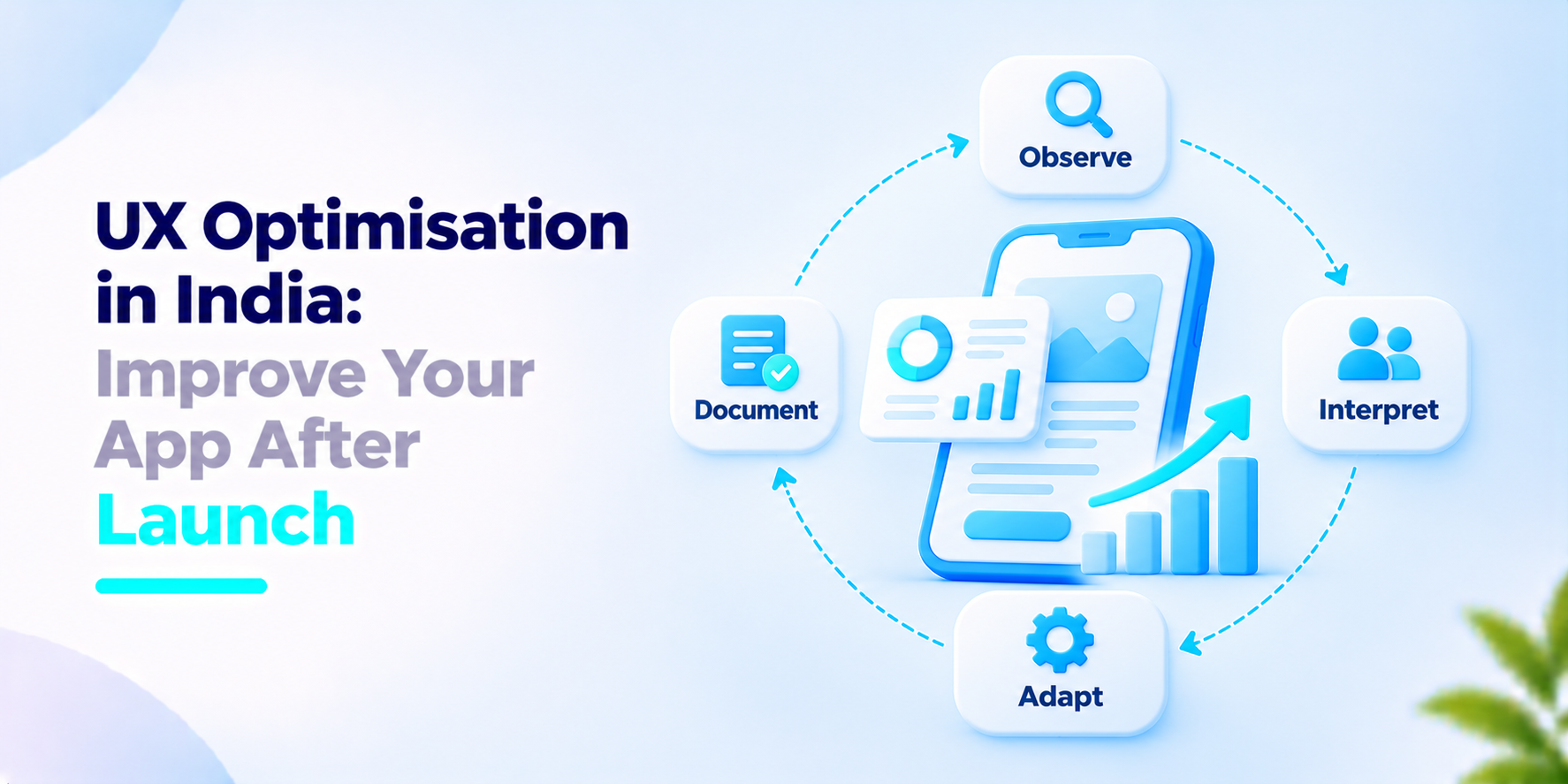
After launching your application, the true test of your design begins. Real users will interact with your design in ways and places you didn't consider. You can use UX Optimisation in India to improve these areas by using data from real users. Here is an example of how to complete a basic loop.
What the India data says
The mobile analytics company UXCam has published a case study on their blog showing how the team has used session recordings to improve feature adoption. From looking at sessions, they saw that many users wanted to search for many cities but the search bar was making it difficult. After the redesign, they were able to allow multiple locations to be selected and saw an increase in multi location searches from around 20% to 40%. They looked at between 50-100 sessions per day.
However, this is from a marketing page so the data isn't objective. There is no date shown on the page and it just has a copyright from 2025. The headline also shows a 20% increase but the content says between a 20% increase and 40%. There is no indication that this was due to the redesign.
A post-launch loop for UX optimisation in India
We feel the post launch process should be a micro loop.
Observe. Identify the top 3 journeys that you want to improve on (e.g., sign-up, search, payment). See where there are exit points, loops and repeated taps.
Interpret. Numbers only tell you where the issue is. Watch some session recordings and speak to a few users to understand why.
Adapt. Make a single change to fix the most obvious issue. Once you have launched the change, you can monitor that journey again. If you make 5 changes at once, you won't know which change was effective.
Document. Keep a brief record of what you saw, what you changed and what happened. This means the team doesn't solve the same issue twice.
UX analytics review: where to look first
Start with the journeys that earn or lose money. A short UX analytics review of drop-off points, error messages and support tickets usually points to two or three fixes worth doing first.
What to ask before you invest in UX optimisation in India
- What are the top 3 journeys?
- What tool are you using to capture real sessions? Who are watching them?
- Who are talking to users and how often?
- How will we know if our changes have been effective?
- Who is making the decisions on what to change?
- Where are we recording our learnings?
How We Approach UX Optimisation in India
Our UI/UX service includes audits, user research (surveys, interviews, usability) and continuous improvement. We begin by identifying the journeys you care about. We then look at your analytics and users to agree on a few quick changes to make and track.
If your team is looking to complete UX Optimisation in India, we would love to talk!
Frequently asked questions
What is UX optimisation after app launch?+
UX optimisation is the ongoing process of analysing real user behaviour, identifying usability problems, implementing improvements and measuring their impact after an application goes live.
Why is session replay useful for UX optimisation?+
Session replay helps teams understand how users navigate screens, interact with controls and encounter friction. It can reveal behaviour that aggregate analytics alone may not explain.
Which user journeys should be optimised first?+
Start with high-impact journeys such as registration, search, checkout, payments and core product features. Prioritise based on business impact, user friction and the number of affected users.
How often should UX optimisation be performed?+
It should be an ongoing process. Teams can review analytics regularly, conduct user research periodically and prioritise improvements based on the volume and importance of observed problems.
How do you measure UX improvement?+
Use metrics such as task completion, conversion rates, feature adoption, time to complete tasks, error rates and user feedback. Select metrics that directly relate to the problem being addressed.
Turn Real User Feedback into Better Experiences
Improve your application after launch through UX audits, user research, usability testing and continuous design improvements.
Related in UI/UX Design & Product Experience
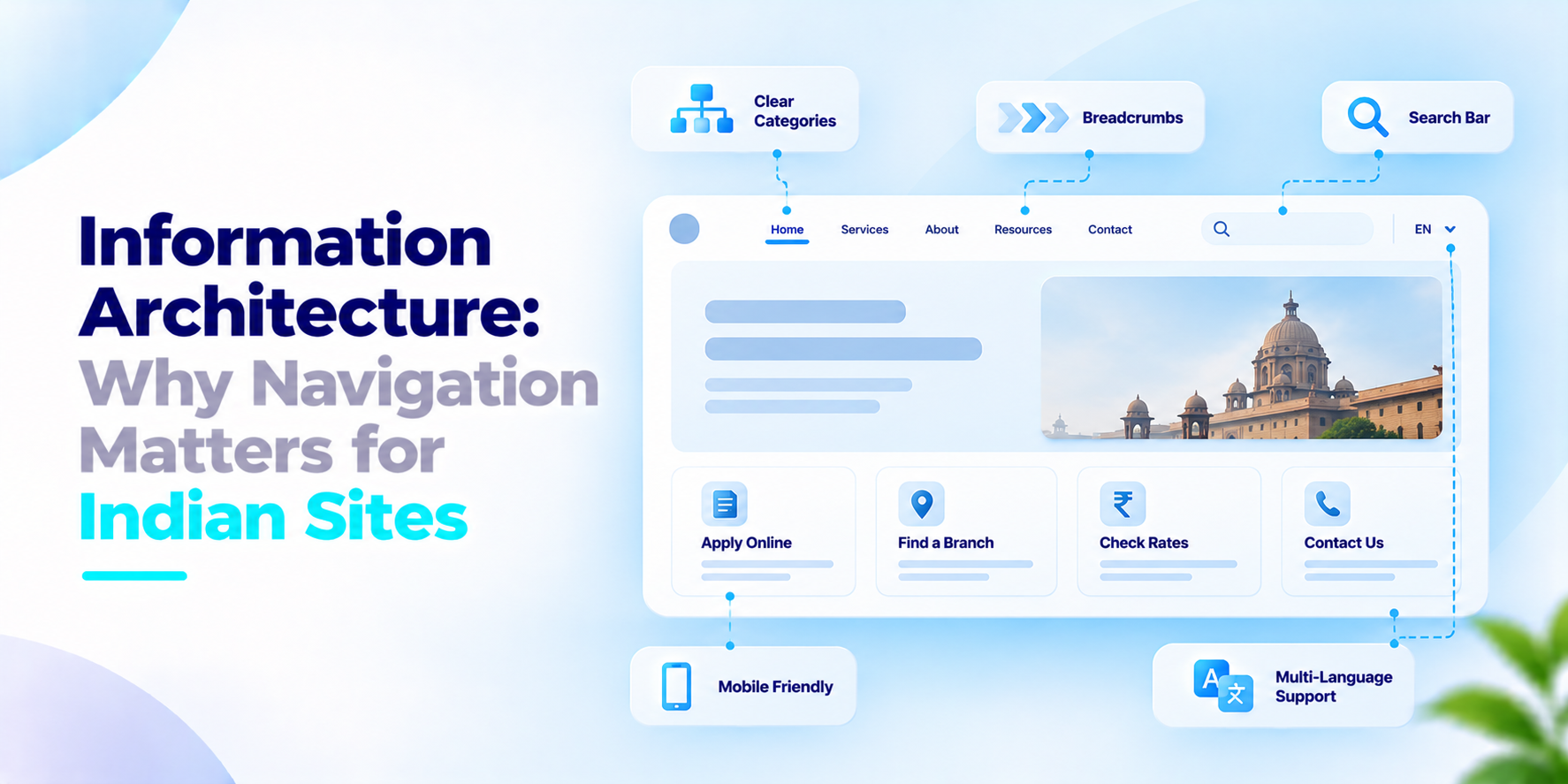
Information Architecture: Why Navigation Matters for Indian Sites
Good information architecture helps visitors find the information they need without getting lost in complicated menus. Explore how website structure, navigation labels, search, multilingual content and usability testing can improve the experience of Indian websites.

Healthcare UI/UX Design in India: Clarity Under Pressure
Healthcare applications need to work for patients, caregivers and medical professionals with different devices, languages and levels of digital experience. Explore how healthcare UI/UX design in India can improve navigation, simplify forms, support accessibility and create clearer digital healthcare experiences through real-user testing.